The Future of Education: Innovations and Challenges
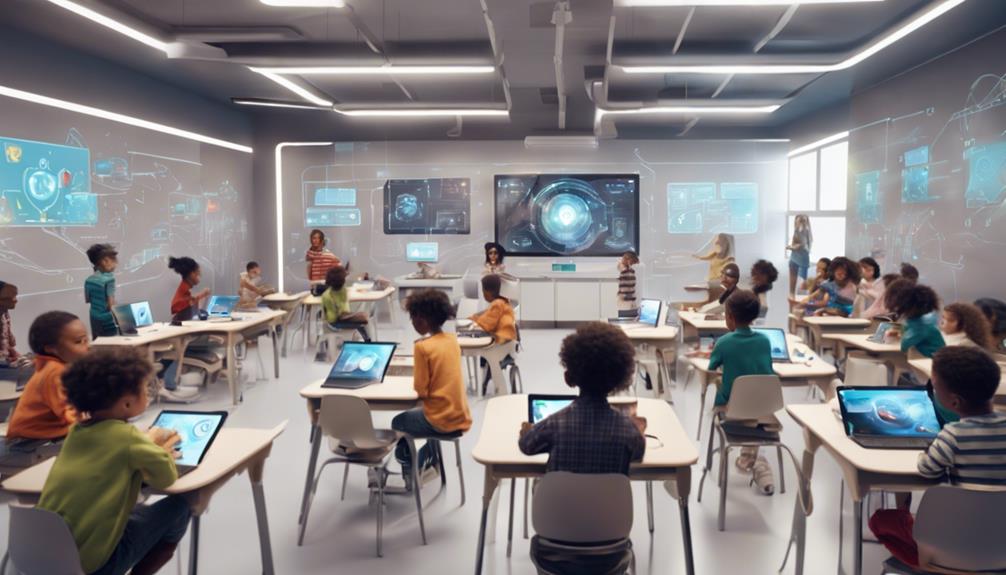
The future of education is undergoing a profound transformation, driven by innovations that prioritize student-centered learning, adaptive technologies, and collaborative skill-building. Redefining the classroom experience, educators are embracing flexible scheduling, collaborative projects, and responsive approaches to cater to 21st-century students' needs. Meanwhile, personalized learning is on the rise, utilizing adaptive technology to optimize learning pathways and empower students to take ownership. Yet, challenges persist, including unequal access to digital tools and the need to equip students with skills like technological literacy, critical thinking, and adaptability. As the educational environment continues to evolve, a deeper exploration of these innovations and challenges is necessary to shape the future of education.
Redefining the Classroom Experience
Redefining the Classroom Experience
As educators and administrators seek to prepare students for success in a progressively intricate and interconnected world, the traditional classroom model is undergoing a significant transformation. The one-size-fits-all approach is giving way to more student-centered and adaptive learning environments. This shift is driven by the need to promote critical thinking, creativity, and problem-solving skills in students.
Flexible scheduling is one key aspect of this transformation. By allowing students to work at their own pace and on their own timetable, educators can cater to different learning styles and needs. This approach also empowers students to take ownership of their learning, making them more independent and self-directed.
Collaborative projects are another vital component of the redefined classroom experience. By working on real-world problems in teams, students develop crucial skills such as communication, collaboration, and conflict resolution. These projects also encourage students to think creatively, take risks, and learn from their failures. Additionally, they provide opportunities for students to develop a sense of empathy and insight, crucial for thriving in an increasingly interconnected world.
Ultimately, the redefined classroom experience is about creating a learning environment that is responsive to the needs of 21st-century students. By incorporating flexible scheduling and collaborative projects, educators can help students develop the skills, knowledge, and attitudes necessary to succeed in an ever-changing world. As the traditional classroom model continues to evolve, one thing is clear: the future of education lies in creating learning environments that are student-centered, adaptive, and collaborative.
The Rise of Personalized Learning
Educators' growing recognition of individual variations in learning styles, abilities, and prior knowledge has sparked a seismic shift in favor of personalized learning, where technology and data-driven insights converge to tailor educational experiences to each student's distinct needs and strengths. This paradigm shift acknowledges that uniform approaches are no longer effective, and instead, educators must adapt to meet the diverse needs of their students.
At the core of personalized learning lies adaptive technology, which uses real-time data and analytics to adjust the difficulty level, content, and pace of instruction to optimize student learning. This technology enables teachers to create tailored lesson plans that cater to each student's strengths, weaknesses, and learning preferences. As a result, students are more engaged, motivated, and empowered to take ownership of their learning.
Tailored instruction is another key component of personalized learning. Teachers use a variety of strategies, including project-based learning, peer-to-peer instruction, and competency-based progression, to create customized learning pathways that meet each student’s distinct needs. This approach not only enhances academic outcomes but also nurtures critical thinking, creativity, and problem-solving skills. Additionally, educators often incorporate motivational strategies for students to foster a more engaged and dynamic learning environment. By recognizing individual interests and strengths, teachers can design activities that resonate personally with students, further enhancing their investment in the learning process. This intentional focus on tailoring instruction ultimately cultivates a positive mindset and encourages lifelong learning habits.
Overcoming the Digital Divide
As the educational environment increasingly relies on digital tools and online resources, a persisting concern is that not all students have equal access to these opportunities, thereby exacerbating existing inequalities. This digital gap can have far-reaching consequences, including limiting educational outcomes and hindering social mobility. To address this issue, it is crucial to focus on bridging the divide between those who have access to technology and those who do not.
One key strategy is to improve technology access for underprivileged students. This can be achieved through initiatives such as providing affordable devices, internet connectivity, and digital literacy training. Furthermore, educators and policymakers must work together to develop inclusive learning environments that cater to diverse student needs. This may involve creating digital content that is accessible on a range of devices, and providing alternative formats for students who may not have access to digital tools at home.
Embracing New Teaching Methods
Beyond bridging the digital gap, the next step in shaping the future of education lies in utilizing the potential of innovative teaching methods that can engage and inspire students in this new era of digital learning. Embracing new teaching methods is vital in creating an environment that encourages active learning, collaboration, and critical thinking. One such approach is the integration of interactive technology, which enables teachers to create immersive and interactive lessons that cater to diverse learning styles. For example, virtual and augmented reality can transport students to virtual labs, historical sites, or other environments that would be challenging to replicate in a traditional classroom setting.
Another innovative approach is the flipped classroom model, where students are introduced to course material at home through pre-recorded lectures or readings, and then participate in hands-on activities and discussions in the classroom. This approach allows teachers to focus on facilitating learning rather than lecturing, and enables students to take a more active role in their learning process. By embracing these new teaching methods, educators can create a more student-centered and personalized learning experience that prepares students for success in the digital age. As education continues to evolve, it is essential that teachers and educators stay up-to-date on the latest innovations and adapt their teaching methods to meet the changing needs of their students.
Skills for the Future Workforce
The future workforce will require students to possess a distinct set of skills that enable them to navigate the challenges of a rapidly changing, technology-propelled economy. As automation and artificial intelligence continue to transform industries, workers will need to be equipped with skills that complement these technological advancements.
To thrive in this environment, students must develop the following crucial skills:
- Technological literacy: The ability to proficiently use digital tools and platforms to solve problems and complete tasks.
- Adaptability skills: The capacity to adjust quickly to changing circumstances, priorities, and technologies.
- Critical thinking: The ability to scrutinize complex information, identify patterns, and make well-informed decisions.
- Collaboration skills: The ability to work effectively with others, including those from diverse backgrounds and with varying perspectives.
- Data analysis and interpretation: The ability to gather, analyze, and interpret large data sets to inform decisions and drive innovation.
Frequently Asked Questions
How Will Ai-Powered Grading Impact Teacher Workload and Job Security?
Like a master chef relinquishing control of the kitchen, teachers may initially feel uneasy about AI-powered grading, wondering if it will supplant their role. AI grading can actually serve as a sous chef, assisting with tedious tasks and freeing teachers to focus on high-touch, high-value support. By taking over administrative burdens, AI grading can reduce teacher workload, allowing them to concentrate on providing personalized instruction and emotional support, in the end enhancing the learning experience.
Can Online Education Replace Traditional Brick-And-Mortar Universities?
Although online education has made significant strides, it is unlikely to completely replace traditional brick-and-mortar universities. Instead, a hybrid learning model that combines the benefits of both online and offline learning may emerge as a preferred approach. This blended model can enrich student engagement by providing personalized learning experiences, flexibility, and access to a broader range of courses and resources.
What Role Will Virtual Reality Play in the Future of Education?
As Albert Einstein once said, 'Imagination is more important than knowledge.' Virtual reality is poised to transform education by unleashing the full potential of immersive learning. Interactive simulations will transport students into virtual labs, historical events, and even the human body, making complex concepts more engaging and accessible. This technology will redefine the classroom, allowing students to explore, experiment, and learn in ways previously unimaginable, thereby nurturing a deeper insight into the subject matter.
How Will Education Prepare Students for Jobs That Don't Exist Yet?
As the job market continues to evolve, preparing students for unknown careers is essential. Education must focus on nurturing skill adaptation and future readiness by integrating dynamic, interdisciplinary curricula. This enables students to develop transferable skills, think critically, and approach problems creatively. By doing so, education can equip students with the agility to thrive in emerging industries and occupations that may not yet exist, ensuring they remain relevant and competitive in the ever-changing job market.
Will Automation Replace Human Teachers in the Future Classroom?
A million miles away from the traditional chalkboard, the future classroom is poised to transform the way we learn. In terms of the question of automation replacing human teachers, the answer lies in the harmonious marriage of AI vs. Teachers. Although AI can process vast amounts of data, it lacks the emotional intelligence and creativity that human teachers bring to the table. Future classroom innovations will likely involve AI-assisted learning, with human teachers at the helm, guiding and nurturing young minds.

Related Posts

Why Understanding the Context Matters in Today’s News

The Power of Curiosity in Uncovering Hidden Stories