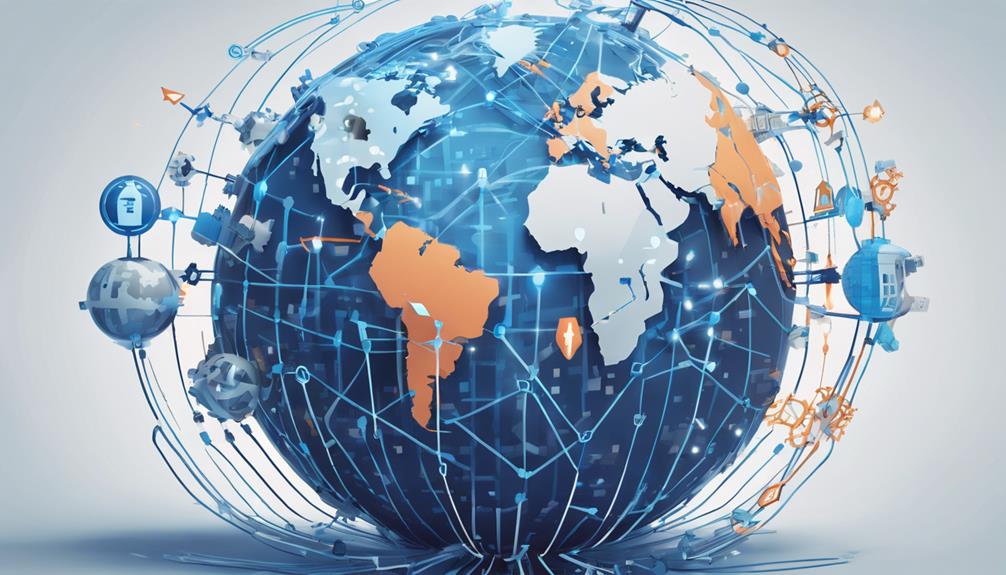
Understanding the Impact of Global Economic Trends
Global economic trends have become increasingly intricate and interconnected, driven by globalization, shifts in trade policies, and the emergence of new economic powerhouses. The world's economy is characterized by rising protectionism, bilateral agreements, and regional trade blocs, with emerging markets like China and India reshaping global trade flows. Commodity price volatility, technological advancements, and changing demographics are also shaping economic growth. Central banks and governments are managing these intricacies to maintain financial stability, all the while concerns around sustainability and environmental degradation are growing. As the world maneuvers through these multifaceted trends, a deeper grasp is vital for informed decision-making and strategic planning.
Globalization and Economic Interdependence
As the world's economies have become increasingly intertwined, globalization has nurtured a deepening sense of economic interdependence, where the fortunes of one nation are inextricably linked to those of others. This phenomenon has far-reaching implications, extending beyond the domain of economics to shape political and cultural landscapes. Economic interdependence, in particular, has significant political implications, as nations are compelled to collaborate and negotiate to guarantee mutually beneficial outcomes. The rise of global value chains, for instance, has created a complex web of trade relationships, making it crucial for countries to work together to address common challenges.
Globalization has also had profound cultural impacts, as the free flow of goods, services, and ideas has facilitated the exchange of cultural practices and values. While this has led to a more interconnected and diverse world, it has also raised concerns about cultural homogenization and the loss of traditional practices. Moreover, the increased mobility of people and goods has created new opportunities for cultural exchange, but has also posed challenges for national identities and social cohesion. As the world continues to grapple with the intricacies of globalization, it is vital to understand the intricate relationships between economic interdependence, political implications, and cultural impacts to navigate the challenges and opportunities that lie ahead.
Shifts in Trade Policies and Agreements
In recent years, a significant shift has occurred in trade policies and agreements, driven by growing concerns over national security, economic competitiveness, and social welfare. This shift has led to a reevaluation of traditional trade relationships and the emergence of new economic alliances.
3 Key Developments:
- Rise of Protectionism: The increasing use of trade barriers, tariffs, and quotas has become a prominent feature of modern trade policies. This trend is driven by concerns over domestic industries and job protection.
- Bilateral Agreements: In response to the decline of multilateral trade agreements, countries are increasingly turning to bilateral agreements to secure trade deals that benefit their national interests.
- Regional Trade Blocs: The formation of regional trade blocs, such as the United States-Mexico-Canada Agreement (USMCA) and the Thorough and Progressive Agreement for Trans-Pacific Partnership (CPTPP), is becoming a popular approach to trade cooperation.
These shifts in trade policies and agreements have significant implications for businesses, policymakers, and consumers alike. As trade relationships evolve, companies must adapt to new rules, regulations, and tariffs to remain competitive. Policymakers must navigate the complex web of trade agreements to balance national interests with global economic cooperation. In the end, these changes will shape the future of global trade and commerce, with far-reaching consequences for economic growth, employment, and social welfare.
Rise of Emerging Markets and Economies
The rise of emerging markets and economies has reshaped the global economic terrain, as traditional giants face increasing competition from new players. This shift is driven by the rapid growth of economies such as China, India, and Brazil, which are increasingly claiming a larger share of global trade and investment. As a result, the traditional dominance of Western economies is being challenged, and new economic giants are emerging to redefine the global economy.
Market Share Shifts East
Economic powerhouses like China and India are swiftly reshaping the global market terrain, commanding an increasingly large share of international trade and investment. This shift in market share is a proof of their growing regional dominance, which is redefining the global economic scenery.
Here are three key takeaways:
- Rise of new trade hubs: Emerging markets are increasingly becoming major centers for international trade, with countries like China and India leveraging their vast populations and strategic locations to dominate regional trade flows.
- Rebalancing of trade imbalances: The growing economic clout of emerging markets is also leading to a rebalancing of trade discrepancies, as these countries become major export destinations and investors in their own right.
- New opportunities and challenges: The market share shift east presents both opportunities and challenges for businesses and policymakers alike, requiring them to adapt to new market realities and capitalize on emerging trends.
As emerging markets continue to assert their influence on the global economy, it is vital to understand the implications of this shift and its potential to reshape the future of international trade and investment.
New Economic Powerhouses
Beyond the traditional strongholds of economic influence, a new generation of emerging markets and economies is swiftly ascending the ranks, fueled by their abundant natural resources, youthful demographics, and strategic investments in infrastructure and technology. These rising economic giants are positioning themselves to challenge the long-standing dominance of traditional economic behemoths. Countries such as China, India, and Brazil are leveraging their vast populations, rich natural endowments, and rapid industrialization to establish industry dominance in sectors such as manufacturing, energy, and technology.
As these emerging markets continue to grow, they are reshaping the global economic terrain. Their rise is driven by a combination of entrepreneurial spirit, government support, and strategic partnerships. By investing heavily in education, innovation, and infrastructure, these countries are creating an environment conducive to economic growth and attracting foreign investment. As a result, they are becoming increasingly influential players in global trade, finance, and politics. Their emergence is redefining the balance of economic prowess and presenting new opportunities for collaboration, competition, and growth.
Growth Outside Traditions
As the global economy continues to evolve, a paradigm shift is underway, with emerging markets and economies breaking free from conventional growth patterns and forging their own paths to prosperity. This shift is driven by innovative approaches and a readiness to broaden markets, capitalizing on distinctive strengths and opportunities.
Here are three key factors contributing to the rise of emerging markets and economies:
- Innovation hubs: Cities like Bangalore, Shenzhen, and Santiago are becoming hubs for entrepreneurship, attracting talent and investment from around the world.
- Market broadening: Countries like Vietnam, Indonesia, and Mexico are reducing their reliance on traditional trade partners, instead forming new relationships and exploring undiscovered markets.
- Digital leapfrogging: Many emerging economies are skipping traditional stages of development, leveraging digital technologies to swiftly construct modern infrastructure and services.
As these emerging markets and economies continue to grow, they will play an increasingly important role in shaping the global economic terrain. By grasping their unique strengths and strategies, businesses and investors can position themselves for success in this new era of expansion beyond traditional boundaries.
Commodity Price Volatility and Inflation
Fluctuations in global commodity prices have a significant impact on inflation rates, as changes in the costs of vital goods and services can have far-reaching consequences for consumers and businesses alike. Commodity price volatility can lead to increased production costs, which are often passed on to consumers in the form of higher prices. This, in turn, can erode purchasing influence and reduce consumer spending, ultimately affecting economic growth.
The supply chain and demand dynamics play a pivotal role in shaping commodity prices. Disruptions to the supply chain, such as natural disasters or logistical issues, can lead to price shocks. Conversely, changes in demand dynamics, driven by factors like population growth or shifting consumer preferences, can also influence prices. For example, increasing demand for renewable energy sources has led to a surge in prices for certain metals, such as copper and lithium.
Central banks and governments closely monitor commodity prices to gauge inflationary pressures and make informed monetary and fiscal policy decisions. In response to rising commodity prices, they may implement measures to mitigate the impact on inflation, such as adjusting interest rates or implementing price controls. Grasping the intricate interplay between commodity prices, supply chain dynamics, and demand factors is vital for policymakers and businesses to navigate the challenges posed by commodity price volatility and inflation. By doing so, they can develop effective strategies to mitigate the negative consequences and capitalize on opportunities arising from these trends.
Impact of Technological Advancements
The rapid pace of technological advancements is reshaping the global economic environment, driving transformative changes in industries, markets, and societies. This phenomenon has far-reaching implications for businesses, policymakers, and individuals alike. As technological innovation continues to accelerate, it is fundamental to grasp its impact on the global economy.
Here are three key ways technological advancements are influencing the economy:
- Automation and Job Displacement: The increasing use of automation and artificial intelligence is revolutionizing the workforce, rendering certain jobs obsolete while creating new ones. This shift requires workers to develop new skills to remain relevant in the evolving job market.
- Digital Disruption and New Business Models: Technological innovation is enabling the emergence of new business models, disrupting traditional industries and creating new opportunities for entrepreneurs and startups. This digital disruption is compelling established companies to adapt and innovate to remain competitive.
- Increased Productivity and Efficiency: Technological advancements are propelling productivity gains and efficiency improvements across various sectors, leading to enhanced competitiveness and economic growth.
As technological innovation continues to shape the global economy, it is vital for individuals, businesses, and policymakers to be aware of these changes and adapt accordingly. By grasping the impact of technological advancements, we can utilize their potential to drive economic growth, improve productivity, and create new opportunities for all. Moreover, embracing the role of innovation in the economy can lead to the development of new industries and the transformation of existing ones, ensuring a dynamic market responsive to changing consumer needs. As we prioritize education and skill development, we can better prepare the workforce for the jobs of tomorrow, fostering an environment where creativity and cutting-edge solutions thrive. Ultimately, recognizing and harnessing the role of innovation in economy will be crucial for fostering sustainable growth and enhancing the quality of life for communities worldwide.
Changing Global Demographic Trends
Global population trends are undergoing a significant shift, driven by factors such as declining fertility rates, increasing life expectancy, and urbanization, which will have profound implications for the global economy. The world is experiencing a dramatic change in its population structure, with ageing populations becoming a pressing concern. In many countries, the proportion of elderly citizens is increasing, leading to a shrinking workforce and putting pressure on pension systems and healthcare services. This demographic shift will have far-reaching consequences for economic growth, consumption patterns, and investment opportunities.
Urbanization trends are also playing an important role in shaping global demographics. As people move from rural areas to cities, it leads to changes in lifestyle, consumption patterns, and economic activities. Urbanization is driving economic growth, innovation, and entrepreneurship, but it also poses challenges such as increased pressure on infrastructure, housing, and social services. Governments and businesses must adapt to these changing demographics to ensure sustainable economic growth and social stability. Understanding these demographic trends is crucial for policymakers, investors, and business leaders to make informed decisions that cater to the needs of a rapidly changing population. By acknowledging and responding to these demographic shifts, we can create opportunities for growth, innovation, and prosperity in the years to come.
Role of Central Banks and Monetary Policy
Central banks play a pivotal role in shaping the global economy through their monetary policy decisions, which have far-reaching consequences for economic growth, inflation, and financial stability. The effective utilization of monetary policy tools, such as interest rates and quantitative easing, is crucial in responding to economic shocks and maintaining macroeconomic stability. Additionally, central banks' regulatory oversight of the banking system helps to guarantee its resilience and reduce potential risks to the broader economy.
Monetary Policy Tools
In response to economic fluctuations, monetary authorities wield a range of tools to regulate the money supply and stabilize the economy. These tools are essential in maintaining economic stability and promoting growth.
- Interest Rates: Central banks adjust interest rates to influence borrowing costs and consumer spending. Lower interest rates stimulate economic growth, whereas higher rates curb inflation.
- Quantitative Easing: In times of economic stress, central banks inject liquidity into the economy by purchasing government bonds, reducing borrowing costs, and increasing lending.
- Reserve Requirements: By setting reserve requirements, central banks dictate the minimum amount of funds commercial banks must hold in reserve, impacting the lending capacity and money supply.
Banking System Regulation
Through prudent supervision and regulation, central banks play a pivotal role in maintaining the stability and resilience of the banking system, thereby supporting the overall health of the economy. Effective banking system regulation is vital for promoting financial stability and preventing systemic risks. Central banks guarantee regulatory compliance by establishing and enforcing rules, supervising banks, and providing liquidity support when needed.
| Regulatory Objectives | Central Bank Actions |
|---|---|
| Maintain Financial Stability | Establish capital and liquidity requirements |
| Guarantee Regulatory Compliance | Conduct routine bank examinations |
| Prevent Systemic Risks | Implement macroprudential policies |
| Promote Transparency | Disclose banking system data |
| Improve Crisis Management | Develop contingency plans for bank failures |
Currency Fluctuations and Exchange Rates
One of the most notable outcomes of globalization is the heightened sensitivity of national economies to currency fluctuations and exchange rates, which can have far-reaching implications for international trade and investment. Even slight changes in exchange rates can have a significant impact on a country's trade balance, inflation, and economic growth. This increased volatility has led to a rise in currency speculation, where investors bet on the movement of currency values, further intensifying exchange rate fluctuations.
Here are three key implications of currency fluctuations and exchange rates:
- Exchange rate risk: Businesses and investors face notable risks when engaging in international transactions, as exchange rate fluctuations can affect the value of their investments.
- Trade imbalance: A country's trade balance can be greatly impacted by changes in exchange rates, leading to trade deficits or surpluses that can have extensive consequences for the economy.
- Inflation and interest rates: Currency fluctuations can impact inflation and interest rates, as a devalued currency can lead to higher import prices and increased borrowing costs.
To mitigate these risks, businesses and investors must develop strategies to manage exchange rate risk and adapt to currency fluctuations. This may involve hedging against potential losses or diversifying investments to reduce exposure to specific currencies. By grasping the complex dynamics of currency fluctuations and exchange rates, stakeholders can better navigate the challenges and opportunities presented by globalization.
Sustainability and Environmental Concerns
Quickly increasing environmental concerns and sustainability issues have emerged as a pressing consequence of globalization, as the pursuit of economic growth and development has frequently come at the expense of ecological degradation and resource depletion. The alarming rate of climate change, deforestation, and pollution has prompted a shift in focus towards sustainable development and environmentally responsible practices.
In response, companies are increasingly embracing corporate responsibility, recognizing the importance of aligning their business strategies with environmental stewardship. Green investments have become a crucial component of this approach, as firms seek to reduce their carbon footprint and shift towards renewable energy sources. This change is driven by growing consumer demand for eco-friendly products and services, as well as the need to mitigate the risks associated with environmental degradation.
The adoption of renewable energy sources, such as solar and wind energy, is a critical step towards sustainable development. By investing in clean energy, companies can reduce their dependence on fossil fuels, decrease greenhouse gas emissions, and contribute to a cleaner environment. Additionally, governments and international organizations are implementing policies and frameworks to support sustainable development, providing incentives for businesses to adopt environmentally responsible practices. As the global economy continues to evolve, it is crucial that sustainability and environmental concerns remain at the forefront of economic decision-making, ensuring a prosperous and environmentally conscious future.
Frequently Asked Questions
What Is the Ideal Balance Between Economic Growth and Social Welfare?
The ideal balance between economic growth and social welfare is a delicate yet vital consideration. It involves striking a harmonious relationship between economic development and social equity. Achieving a growth-welfare balance is necessary, as unchecked economic growth can worsen social inequalities, whereas overemphasizing welfare can hinder economic progress. A balanced approach guarantees that economic development benefits all segments of society, nurturing inclusive growth and sustainable social welfare.
Can Economic Sanctions Be an Effective Tool for Political Change?
The age-old question: can economic sanctions truly spark political change? The answer, much like a perfectly crafted puzzle, remains elusive. On one hand, sanctions can cripple a nation's economy, forcing leaders to reconsider their stance. On the other, they often harm innocent civilians, sparking resentment rather than reform. As we weigh the effectiveness of sanctions, one thing is clear: their success hinges on careful calibration, lest they become a blunt instrument, yielding more harm than harmony.
How Do Tax Havens Impact the Global Economy and Inequality?
Tax havens have a profound impact on the global economy, perpetuating wealth inequality through tax evasion. By providing secrecy and low-tax environments, these jurisdictions enable individuals and corporations to conceal wealth, avoiding tax liabilities in their home countries. This leads to a significant loss of revenue, exacerbating income disparities and undermining social cohesion. As a result, the wealthy elite benefit at the expense of the general population, further entrenching economic inequality.
What Role Do Non-Governmental Organizations Play in Shaping Economic Policies?
Non-governmental organizations (NGOs) influence economic policy formulation through targeted advocacy efforts. By mobilizing public support and leveraging expert knowledge, NGOs shape policy agendas, often pushing for reforms that benefit marginalized communities. Effective policy advocacy by NGOs can lead to the adoption of more equitable and sustainable economic policies, eventually contributing to a more just and prosperous society.
Can Economic Models Accurately Predict and Prepare for Rare Events?
The age-old quest for predictability in economics! If only crystal balls were reliable. In reality, economic models are limited in their ability to forecast rare events, like black swan occurrences. History has shown that even the most sophisticated models can't anticipate market crashes, rendering risk management strategies obsolete. Economic forecasting is an imperfect science, and we must acknowledge its limitations to better prepare for the unpredictable.

Related Posts

Why Understanding the Context Matters in Today’s News

The Power of Curiosity in Uncovering Hidden Stories