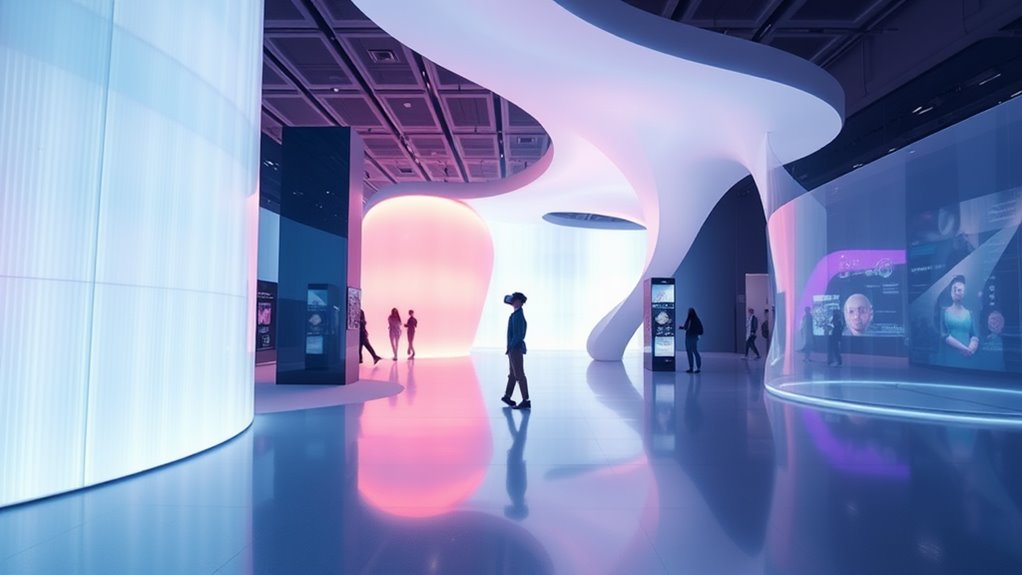
How to Use Immersive Technology to Elevate Brand Experiences
You can utilize the strength of immersive technology to create unforgettable brand experiences that drive engagement, loyalty, and conversion by tapping into the unique preferences and behaviors of your target audience. By comprehending immersive tech basics, setting clear brand objectives, and identifying your audience's needs, you'll be well on your way to crafting compelling storytelling experiences that evoke emotions and interact with users on a deeper level. With the right strategies and tools, you'll be able to overcome technical and budget constraints, stay ahead of the curve, and access the full potential of immersive technology to enhance your brand experience – and that's just the beginning.
Understanding Immersive Technology Basics
With the rising demand for unique brand experiences, immersive technology has become a crucial tool for businesses to captivate their audiences. You're probably wondering what this technology entails. Let's break it down. Immersive technology encompasses virtual reality (VR), augmented reality (AR), and mixed reality (MR). VR creates a fully virtual environment, whereas AR overlays digital information onto the real world. MR combines elements of both to create a seamless experience.
These technologies enable immersive storytelling, which is vital for sensory engagement and user interaction. By utilizing experiential marketing, you can create memorable brand experiences that leave a lasting impression on your audience. As you adopt immersive technology, you'll undergo a digital transformation that enhances your brand's presence. This, in turn, leads to brand immersion, where your audience becomes fully invested in your brand.
To tap into the strength of immersive technology, you need to understand its capabilities and limitations. By doing so, you'll be able to craft customized experiences that meet your audience's needs. With the right approach, you can transform your brand's marketing strategy and stay ahead of the competition. It's time to take the leap and explore the vast possibilities of immersive technology.
Setting Brand Objectives and Goals
You're now ready to set brand objectives and goals for your immersive technology experience. To do this, you'll need to define key performance indicators (KPIs) that align with your brand's overall strategy. By establishing measurable success metrics, you'll be able to track the effectiveness of your experience and make data-driven decisions.
Define Key Performance Indicators
As you initiate creating immersive brand experiences, defining key performance indicators (KPIs) becomes crucial to measuring success. You need to identify the most relevant KPIs that align with your brand objectives, using strategic selection strategies to guarantee accurate performance measurement. Establish a robust performance measurement framework that integrates success tracking tools, empowering you to monitor progress and make data-driven decisions.
Employ advanced data analysis techniques to extract valuable insights from your KPIs, focusing on audience engagement metrics such as time spent, interactions, and social shares. Track brand loyalty indicators like customer retention rates, repeat purchases, and positive reviews. Optimize your conversion rate by analyzing user experience benchmarks, identifying areas for improvement, and refining your strategy accordingly. By defining and tracking the right KPIs, you'll be able to quantify the impact of your immersive brand experiences, refine your approach, and drive business growth.
Establish Measurable Success Metrics
At least 75% of successful immersive brand experiences start with clear, measurable objectives that align with your business goals. You'll want to establish key metrics that track user engagement, brand loyalty, and emotional connection. This means setting specific, achievable targets for data analytics, user feedback, and experience design. By doing so, you'll be able to gauge the effectiveness of your immersive technology adoption and make data-driven decisions to optimize your strategy.
To set these metrics, consider your customer pathway and identify pain points or areas for improvement. Conduct a competitive analysis to understand market trends and benchmark your brand against industry leaders. This will help you pinpoint opportunities to differentiate your brand and create a unique experience that resonates with your target audience. With measurable success metrics in place, you'll be able to track your progress, refine your approach, and eventually drive business growth through immersive technology.
Identifying Target Audience Needs
| Segment | Characteristics | Needs |
|---|---|---|
| Millennials | Tech-savvy, socially conscious, urban dwellers | Experiential, Instagrammable moments |
| Gen X | Busy professionals, family-oriented, practical | Convenience, quality, and reliability |
| Boomers | Retirees, traditional, loyal | Trust, simplicity, and comfort |
| Segment | Characteristics | Needs |
| Gamers | Competitive, tech-enthusiasts, community-driven | Immersive, interactive, and social experiences |
| Health Enthusiasts | Fitness-oriented, wellness-focused, eco-conscious | Educational, personalized, and motivating content |
Choosing the Right Immersive Platform
When selecting an immersive platform for your brand experience, you'll need to weigh your options carefully. You'll want to create a platform comparison checklist to evaluate features, costs, and user experience. With so many immersive tech options available, including AR, VR, and MR, it's crucial to contemplate which one aligns best with your goals and target audience needs.
Platform Comparison Checklist
With numerous immersive platforms vying for your attention, selecting the right one for your brand experience can be a challenging task. To make an informed decision, you need a thorough platform comparison checklist. This checklist should evaluate platform features, such as the type of immersive experience offered, user experiences, and content creation capabilities. You should also consider cost analysis, including development, deployment, and maintenance costs.
Next, assess the platform's integration capabilities, guaranteeing seamless integration with your existing systems and infrastructure. Look into future trends, scalability options, and deployment strategies to confirm the platform aligns with your long-term goals. Furthermore, evaluate hardware requirements, software compatibility, and any necessary upgrades or replacements. By using this checklist, you'll be able to compare platforms objectively, making it easier to choose the one that best fits your brand's needs and goals. This rigorous evaluation will empower you to create immersive experiences that captivate your audience and drive business results.
Immersive Tech Options
You've narrowed down your options using the platform comparison checklist, and now it's time to explore the immersive tech options that best fit your brand's needs. As a powerful player, you know that staying ahead of the curve means embracing state-of-the-art technology. Virtual reality trends, augmented reality applications, and mixed reality experiences are no longer novelty items – they're crucial tools for creating immersive brand experiences.
To take your brand to the next level, consider immersive gaming strategies that put users in the driver's seat. Use sensory engagement techniques to craft user experiences that are both unforgettable and shareable. But don't forget to prioritize user experience design, ensuring seamless technology integration that doesn't overwhelm your audience. With the right content creation tools, you can craft bespoke experiences that leave a lasting impression.
As you weigh your options, keep in mind that the right immersive tech can make or break your brand's momentum. By choosing the perfect platform for your needs, you'll open up new opportunities for engagement, conversion, and brand loyalty. The question is, which immersive tech option will you choose to take your brand to new heights?
Crafting Compelling Storytelling Experiences
One key component of immersive brand experiences is crafting compelling storytelling experiences that transport audiences into new worlds and evoke strong emotions. You'll need to utilize the influence of storytelling techniques to create an emotional connection with your audience. This means developing a clear narrative structure that resonates with your brand's unique identity and values. By doing so, you'll be able to craft a cohesive brand mythology that sets you apart from the competition.
To truly immerse your audience, you'll need to incorporate visual storytelling elements, such as stunning visuals, 3D models, and interactive narratives. These sensory experiences will transport your audience into new and exciting worlds, making them feel like they're an integral part of your brand's story. Character development is equally essential, as it humanizes your brand and creates a relatable connection with your audience.
Creating Interactive Product Demonstrations
You can transport customers into Virtual Product Showcases, where they can explore your products in careful detail, and even manipulate them in 3D space. By creating Hands-on Exploration Zones, you're allowing potential buyers to interact with your products in a highly immersive and engaging way. This level of interactivity can help build trust and confidence in your brand, leading to increased conversions and brand loyalty.
Virtual Product Showcases
By leveraging virtual product showcases, brands can transport customers into immersive environments where they can interact with products in a highly engaging and personalized way. You can create virtual reality showcases that allow customers to explore products from every angle, or augmented reality experiences that bring products to life in their own space. Holographic presentations can likewise be used to create a more futuristic and enchanting experience. With 360-degree views, customers can examine products in detail, making them feel more connected to what they're buying.
To maximize user engagement, incorporate sensory interaction design into your virtual product showcases. This can include features like touch, sound, and even scent to create a multi-sensory experience. By using immersive branding techniques, you can create an emotional connection between customers and your products. Digital twin technology can likewise be used to create realistic simulations of products, allowing customers to see how they work before making a purchase. By staying on top of experiential marketing trends and leveraging product visualization tools, you can create virtual product showcases that drive engagement, increase sales, and set your brand apart from the competition.
Hands-on Exploration Zones
In the heart of your immersive brand experience, hands-on exploration zones can be a game-changer. By creating interactive product demonstrations, you're allowing your audience to engage with your brand on a deeper level. This tactile engagement sparks sensory interaction, encouraging user participation and experiential learning.
| Benefits | Features | Outcomes |
|---|---|---|
| Emotional Connection | Playful Discovery | Increased Brand Loyalty |
| Creative Collaboration | Innovative Design | Improved User Experience |
| Spatial Awareness | Immersive Storytelling | Enhanced Product Comprehension |
| Audience Immersion | Interactive Product Demos | Increased Conversions |
Enhancing Event and Trade Show Experiences
Enhancing event and trade show experiences is crucial for brands to stand out in a crowded industry. You need to create memorable interactions that resonate with your audience and leave a lasting impression. Immersive technology can help you achieve this by elevating your event experience from mere attendance to active engagement.
Virtual reality integration and augmented reality applications can transport your attendees to new worlds, allowing them to explore and interact with your brand in innovative ways. Immersive engagement strategies, such as sensory experience design, can stimulate their senses, creating a deeper emotional connection with your brand. Interactive audience participation, facilitated by gamification techniques, can encourage attendees to take action and share their experiences on social media.
To create a cohesive and impactful experience, you'll need to employ spatial storytelling methods that weave your brand narrative throughout the event. Nevertheless, technology adoption challenges can hinder your progress. To overcome these hurdles, focus on user experience optimization, guaranteeing seamless integration of technology and minimizing technical issues. Most significantly, assure brand storytelling alignment, so your immersive experience stays true to your brand's voice and message.
Measuring Immersive Experience Success
You've crafted a memorable immersive experience, but how do you know it's truly resonating with your audience? To measure success, you need to track the right metrics. Start by analyzing user engagement, such as time spent in the experience, interaction rates, and social media shares. This will give you a sense of whether your audience is invested in your brand.
Next, collect user feedback through surveys, interviews, or focus groups. This will help you understand the emotional impact of your experience and identify areas for improvement. Look for metrics that indicate brand recall, such as whether users can recall your brand's message, values, or key products.
Long-term retention is also essential. Are users returning to your experience, and are they advocating for your brand? To achieve this, focus on creating an immersive narrative structure that resonates with your audience. This can be achieved through experiential design that incorporates sensory interaction, technology adoption, and a clear brand message.
Overcoming Technical and Budget Constraints
Your immersive brand experience is ready to launch, but technical and budget constraints can quickly turn your vision into a watered-down reality. You've invested countless hours and resources into crafting an unforgettable experience, but now you're faced with the harsh reality of limited resources. Don't let these constraints hold you back – there are ways to overcome them and bring your vision to life.
To overcome technical and budget constraints, consider the following strategies:
- Leverage budget friendly solutions: Look for cost-effective tools and DIY immersive options that can help you achieve your goals without breaking the bank.
- Form technical partnerships: Collaborate with experts who can provide scalable technology and innovative solutions that fit your budget.
- Explore resource allocation: Identify areas where you can reallocate resources to maximize your budget and minimize waste.
- Seek out innovation grants and community collaboration: Take advantage of open source platforms, strategic outsourcing, and community-driven initiatives that can help you overcome technical and budget constraints.
Building Immersive Technology Teams
As you immerse yourself in the domain of immersive technology, it's essential to surround yourself with a team that shares your vision and can bring it to life. Building a dream team requires careful consideration of team dynamics, skill development, and role specialization. Identify individuals with diverse strengths and expertise, and empower them to take ownership of their roles.
Develop collaboration strategies that promote open communication, creative brainstorming, and continuous learning. Encourage your team to stay updated on the latest technology integration trends and innovations. A culture of innovation thrives when team members feel motivated to push boundaries and explore new possibilities.
Effective project management is critical to guarantee seamless execution and timely delivery. Assign tasks that play to each team member's strengths, and provide resources for skill development. Emphasize diversity inclusion to bring unique perspectives and ideas to the table. By doing so, you'll cultivate a team that's adaptable, resilient, and capable of driving immersive technology projects forward.
As you build your team, prioritize continuous learning and innovation. Encourage experimentation, provide feedback, and recognize achievements. By doing so, you'll create an environment where creativity flourishes, and your brand experiences come to life in breathtaking ways.
Staying Ahead of the Immersive Curve
To capitalize on the full potential of immersive technology, it is crucial to stay informed about the latest advancements and breakthroughs. This allows you to anticipate future trends and adjust your content strategy accordingly. By doing so, you'll be able to create innovative applications that drive user engagement, nurture brand loyalty, and ultimately, stay ahead of the market competition.
To stay ahead of the immersive curve, consider the following:
- Monitor consumer behavior: Analyze how users interact with immersive experiences, identifying areas of improvement and opportunities for growth.
- Invest in R&D: Allocate resources to exploring new technological advancements, ensuring you're at the forefront of innovative applications.
- Develop sensory experiences: Craft immersive experiences that engage users on multiple sensory levels, creating memorable and impactful interactions.
- Attend industry events: Stay up-to-date on the latest developments and network with industry thought leaders to stay informed about emerging trends.
Frequently Asked Questions
Can Immersive Technology Be Used for Employee Training and Development?
Envision you're a master chef, whipping up a recipe for success. You know the secret ingredient is a well-trained team. That's where immersive technology comes in. You can use virtual reality benefits to simulate real-world scenarios, making employee training more engaging and effective. Augmented reality applications can likewise improve on-the-job learning, boosting confidence and productivity. By incorporating immersive tech into your training strategy, you'll be serving up a team that's truly unstoppable.
How Do I Ensure Consistent Branding Across Multiple Immersive Experiences?
You're crafting multiple immersive experiences, but ensuring consistent branding is essential. Start by establishing clear brand guidelines that outline your brand's voice, visual identity, and tone. Then, map out the user path across each experience, identifying touchpoints where your brand will interact with users. By doing so, you'll create a cohesive brand narrative that resonates with your audience, regardless of the immersive experience they're in.
What Is the Ideal Duration for an Immersive Brand Experience?
You're trying to hit the sweet spot with your immersive brand experience, and timing is everything. Don't be afraid to think outside the box – the ideal experience length is not one-size-fits-all. You need to take into account user engagement factors, like attention span, interaction complexity, and narrative flow. Aim for a duration that leaves users wanting more, but not feeling overwhelmed. Typically, 5-15 minutes is the golden window, but experiment to find what works best for your brand.
Can I Use Immersive Technology to Collect Customer Data and Feedback?
You're wondering if you can use immersive technology to collect customer data and feedback. The answer is yes, you can! Immersive experiences provide a treasure trove of data on user engagement. By leveraging data visualization, you'll gain valuable insights into customer behavior and preferences. This information will empower you to refine your brand experience, driving loyalty and revenue.
Are There Any Accessibility Considerations for Immersive Experiences?
"Practice what you preach" is a motto that rings true regarding inclusive design. When creating immersive experiences, you'll want to guarantee that virtual reality is accessible to all. Consider sensory inclusivity by providing alternatives for users with disabilities. For instance, offer audio descriptions for visually impaired users or provide a quiet mode for those with sensory sensitivities. By doing so, you'll create a more inclusive experience that truly enhances your brand.