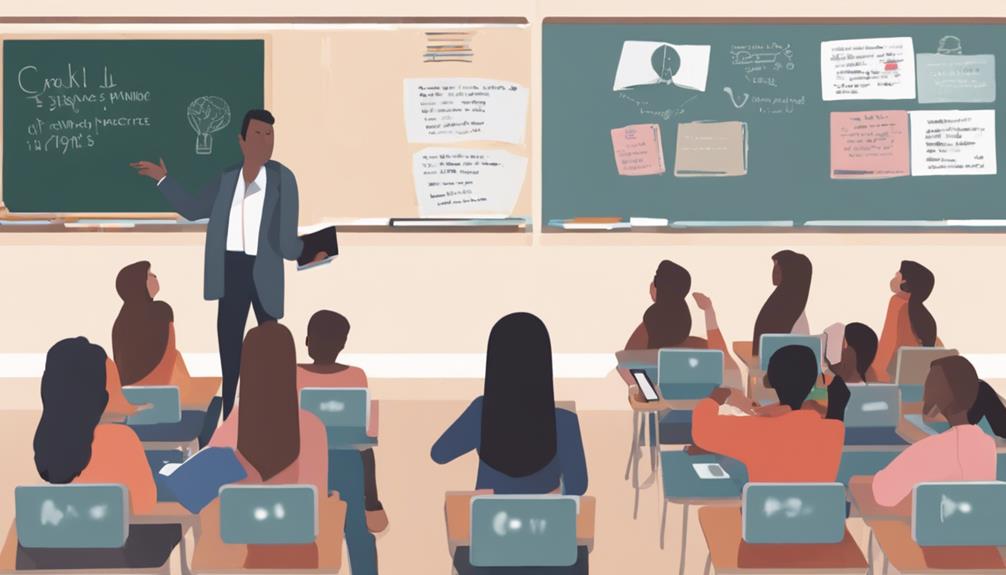
Examining the Latest Education Reforms
The latest education reforms prioritize individualized learning, teacher empowerment, and equitable access to quality education. Curriculum overhauls focus on critical thinking and student-centered approaches, whilst competency-based assessments facilitate customized learning pathways. Teacher evaluations now emphasize student learning impact, and technology integration enables innovative learning tools like VR and gamification. STEM education initiatives, teacher recruitment strategies, and parental involvement efforts also take center stage. Moreover, reforms tackle equity and inclusion concerns, seeking to balance accountability and autonomy for student success. As the education environment continues to evolve, a closer examination of these reforms reveals a complex interplay of factors shaping the future of education.
Understanding Curriculum Overhauls
Amidst the backdrop of evolving educational requirements, curriculum overhauls have emerged as a vital aspect of the latest education reforms, necessitating a thorough examination of their implications on teaching and learning outcomes. The primary objective of these reforms is to guarantee that curriculum standards are aligned with the demands of the 21st century, emphasizing skills such as critical thinking, creativity, and problem-solving.
To achieve this, educators and policymakers must collaborate to develop curriculum standards that are relevant, rigorous, and adaptable to the diverse needs of students. This involves a shift from traditional, content-based curricula to more student-centered approaches that prioritize deeper learning and comprehension.
The ultimate goal of these efforts is to enhance learning outcomes, enabling students to thrive in an increasingly complex and interconnected world. By setting clear and measurable standards, educators can design instruction that is personalized to the needs of their students, promoting greater engagement, motivation, and academic achievement. As the education scenery continues to evolve, it is crucial to stay focused on the core purpose of curriculum overhauls: to equip students with the knowledge, skills, and dispositions necessary to succeed in the 21st century. By doing so, we can create a more equitable, effective, and sustainable education system that prepares students for success in an uncertain future.
The Shift to Competency-Based Assessments
As educators redefine curriculum standards to prioritize deeper learning and insight, the need for innovative assessment methods that accurately measure student proficiency has become increasingly apparent, paving the way for the adoption of competency-based assessments. This shift marks a significant departure from traditional, time-bound assessments, which often fail to capture the intricacies of student learning. Competency-based assessments, conversely, focus on measuring students' mastery of specific skills and knowledge, providing a more nuanced grasp of their strengths and weaknesses.
By adopting competency-based assessments, educators can create personalized learning pathways that cater to individual students' needs and abilities. This approach enables students to take ownership of their learning, working at their own pace and demonstrating proficiency in a way that is meaningful to them. As a result, students are empowered to take a more active role in their educational voyage, setting goals and tracking their progress towards mastery.
Moreover, competency-based assessments provide educators with valuable insights into student learning, enabling them to identify areas of improvement and adjust their instructional strategies accordingly. By focusing on the demonstration of competency rather than seat time, educators can create a more equitable and effective learning environment, where students are motivated to learn and grow. As the education scene continues to evolve, the adoption of competency-based assessments is poised to play a critical role in promoting student success and preparing learners for an increasingly intricate and interconnected world.
Teacher Evaluations Under the Microscope
Teacher assessments, long a fundamental aspect of educational accountability, are undergoing a significant transformation as educators and policymakers strive to redefine the measures by which instructor effectiveness is gauged. This change is motivated by the necessity to move beyond simplistic, high-stakes testing and towards a more intricate comprehension of teacher quality. At the core of this reform is a renewed focus on student impact, with assessments now placing greater emphasis on the observable effects teachers have on their students' learning results.
To achieve this, educators are turning to advanced data analysis techniques to pinpoint the specific instructional strategies and practices that propel student success. This data-driven approach enables schools to identify areas of strength and weakness, guiding targeted professional development opportunities that assist teachers in honing their skills. Nevertheless, the implementation of these new assessment systems is not without its challenges. Educators and policymakers must navigate the intricacies of data collection, analysis, and interpretation, all the while ensuring that the assessment process remains just, transparent, and unbiased. As the education sector continues to evolve, it is crucial that teacher assessments keep pace, providing a comprehensive framework for supporting instructor growth and, in the end, improving student achievement. By getting teacher assessments right, we can unleash the full potential of our educators, propelling better outcomes for students and nurturing a more efficient, student-centered education system.
Impact on Special Education Programs
The redefined approach to teacher evaluations, with its emphasis on student impact, raises important questions about the potential implications for special education programs, where the complexity of student needs and diverse instructional strategies require nuanced assessment approaches. The shift towards more individualized and data-driven evaluations may lead to unintended consequences, such as overemphasizing standardized test scores and overlooking the unique needs of students with disabilities.
| Impact Area | Concerns | Potential Solutions |
|---|---|---|
| Funding | Funding challenges may worsen existing resource gaps in special education programs | Allocate additional resources to support inclusive practices and provide targeted funding for special education initiatives |
| Instructional Strategies | Generic approaches may not accommodate diverse learning needs | Develop and provide training on adaptive instructional strategies and technologies to support differentiated instruction |
| Support Services | Insufficient support services may impede student progress | Increase access to support services, such as speech therapy and counseling, and facilitate timely referrals to specialists |
| Advocacy | Advocacy efforts may be compromised by the emphasis on standardized testing | Prioritize family and student advocacy efforts, ensuring that individualized education plans (IEPs) remain student-centered and focused on meaningful outcomes |
| Inclusion | Inclusion practices may be compromised by the focus on student impact metrics | Cultivate inclusive environments by providing professional development on differentiated instruction and culturally responsive teaching practices |
To address these concerns, it is crucial to prioritize funding, support services, and advocacy efforts that cater to the unique needs of students with disabilities. By doing so, we can uphold that special education programs remain student-centered, inclusive, and focused on meaningful outcomes.
Role of Technology in the Classroom
In an effort to improve student learning outcomes and boost instructional efficiency, the strategic integration of technology in the classroom has become an essential component of modern education reform. By incorporating digital tools and resources, teachers can enrich student engagement, nurture digital literacy, and create personalized learning experiences tailored to individual needs. This approach enables educators to cater to diverse learning styles, abilities, and pace, ultimately leading to more effective learning outcomes.
The effective use of classroom technology can also facilitate real-time feedback, enabling teachers to identify areas of improvement and adjust their instruction accordingly. Furthermore, technology-enabled assessments and learning analytics provide valuable insights into student performance, helping educators to refine their teaching strategies and optimize student learning. By leveraging technology to support instruction, educators can create a more inclusive, flexible, and student-centered learning environment. This, in turn, can lead to increased student motivation, improved academic performance, and better preparation for success in the digital age. As education reform continues to evolve, the role of technology in the classroom will remain a crucial component, driving innovation, improvement, and excellence in teaching and learning.
Changing Face of Standardized Testing
As educators increasingly focus on customizing learning experiences, the traditional model of standardized testing is being reexamined to better align with the needs of 21st-century students. The one-size-fits-all approach is no longer sufficient, and educators are seeking innovative solutions to assess student learning.
Adaptive testing is emerging as a promising alternative. This approach uses algorithms to adjust the difficulty and content of test questions based on a student's performance in real-time. This allows for a more accurate and detailed assessment of student knowledge and skills.
| Testing Approach | Key Features | Benefits |
|---|---|---|
| Traditional Testing | Fixed questions, fixed difficulty | Limited insight into student knowledge |
| Adaptive Testing | Dynamic questions, adjustable difficulty | Provides a detailed picture of student strengths and weaknesses |
| Personalized Assessments | Student-centered, competency-based | Aligns with individualized learning goals |
Personalized learning is at the heart of this shift in standardized testing. By recognizing that each student learns at their own pace and in their own way, educators can create assessments that are customized to individual needs. This not only provides a more accurate measure of student learning but also helps to identify areas where students require additional support. As the education field continues to evolve, it is essential to reassess the role of standardized testing and explore innovative approaches that prioritize student-centered learning.
Focus on STEM Education Initiatives
The latest education reforms place a significant emphasis on STEM education initiatives, recognizing the critical role these subjects play in driving innovation and economic growth. To achieve this, the focus is on developing core STEM competencies, equipping teachers with specialized training, and leveraging innovative learning tools to engage students. By addressing these key areas, educators can nurture a new generation of thinkers, creators, and solution-finders.
Core STEM Competencies
Thoroughly integrating core STEM competencies into educational curricula has become a paramount concern for policymakers and educators alike, driven by the pressing need to equip students with the skills necessary to thrive in an increasingly technology-driven economy. This imperative is underscored by the recognition that STEM skill development is vital for meeting future workforce demands. Given that the global economy continues to evolve, industries are becoming increasingly reliant on STEM-based technologies, and the demand for skilled professionals in these fields is soaring.
To address this need, educators are working to develop inclusive STEM education programs that provide students with a strong foundation in science, technology, engineering, and mathematics. This involves integrating coding, data analysis, and critical thinking skills into curricula, alongside providing opportunities for students to engage in project-based learning and collaboration. By prioritizing core STEM competencies, educators can guarantee that students are well-prepared to succeed in the modern workforce, driving innovation and economic growth.
STEM Teacher Training
Effective STEM education initiatives rely on teachers who possess the necessary skills and knowledge to deliver high-quality instruction, making targeted teacher training programs a critical component of successful implementation. To achieve this, hands-on training and interactive workshops are crucial. These experiential learning opportunities enable teachers to develop a deeper grasp of STEM concepts and pedagogies, allowing them to create engaging and effective lesson plans.
Collaborative partnerships with industry connections are also crucial in providing teachers with real-world examples and applications of STEM principles. This exposure helps teachers to contextualize complex concepts, making them more relatable and accessible to students. Additionally, industry connections can provide valuable resources, expertise, and mentorship, enabling teachers to stay updated on the latest developments and trends in STEM fields. By investing in thorough teacher training programs that incorporate hands-on training and collaborative partnerships, educators can guarantee that students receive a high-quality STEM education that prepares them for success in an increasingly complex and technology-driven world.
Innovative Learning Tools
Leveraging cutting-edge technology, groundbreaking learning tools are revolutionizing the way STEM concepts are taught and learned, offering immersive and interactive experiences that simulate real-world scenarios. Virtual reality (VR) is one such tool that allows students to explore intricate concepts in a highly captivating and interactive environment. For example, VR can transport students into the human body to study anatomy, or onto Mars to investigate the red planet's geology. This interactive learning method boosts student engagement, enhances comprehension, and boosts retention rates.
Another creative tool is gamification, which integrates game design elements into learning activities to make them more captivating and enjoyable. By including rewards, challenges, and competition, gamification inspires students to take charge of their learning and cultivate a growth mindset. Furthermore, personalized instruction facilitated by artificial intelligence (AI) and machine learning algorithms can customize learning experiences to individual students' needs, abilities, and learning styles. This customized approach guarantees that each student receives the support they require to excel in STEM subjects, ultimately leading to improved academic results and heightened interest in STEM fields.
Addressing Teacher Shortages and Burnout
The latest education reforms acknowledge the pressing need to address teacher shortages and burnout, which have become significant obstacles to providing quality education. To tackle these issues, it is crucial to implement effective teacher recruitment strategies that attract and retain top talent in the profession. Moreover, preventing burnout techniques must be developed and integrated into school systems to guarantee teachers can maintain their physical and emotional well-being.
Teacher Recruitment Strategies
Across the nation, school districts are grappling with the daunting task of attracting and retaining top teaching talent amidst persistent shortages and alarming rates of burnout. To address these recruitment challenges, districts are implementing innovative teacher retention strategies. One approach is to offer professional development opportunities that cater to teachers' varied needs and interests. This not only boosts their skills but also demonstrates a dedication to their growth and well-being. Mentorship programs are another effective strategy, pairing novice teachers with experienced mentors who offer guidance and support. These programs help build confidence, reduce anxiety, and nurture a sense of belonging among new teachers. By investing in teachers' professional growth and well-being, districts can enhance job satisfaction, reduce turnover rates, and ultimately, attract more talented educators to the profession. By embracing these strategies, schools can rejuvenate their teaching forces and provide students with the high-quality education they deserve.
Preventing Burnout Techniques
School administrators are turning to evidence-based burnout prevention techniques to mitigate the physical and emotional exhaustion that drives many teachers out of the profession. Teacher burnout is a pervasive issue, with consequences for teachers' well-being and student learning outcomes. To address this, schools are implementing strategies that prioritize teacher support, stress management, and mental health.
| Technique | Description | Benefits |
|---|---|---|
| Mindfulness programs | Regular mindfulness exercises to reduce stress and anxiety | Improved mental health, increased job satisfaction |
| Flexible scheduling | Allowing teachers to adjust their schedules to accommodate personal needs | Better work-life balance, reduced burnout |
| Peer mentorship | Pairing experienced teachers with newer colleagues for guidance and support | Increased teacher confidence, improved retention rates |
Parental Involvement in Education Reform
One crucial aspect of successful education reform is engaging parents as active partners in the decision-making process, as they possess invaluable insights into their children's educational needs. By nurturing community partnerships, parents can collaboratively work with educators to develop personalized solutions that cater to the unique requirements of their children. This collaboration can greatly improve student engagement, leading to enhanced academic outcomes and a more positive learning experience.
Furthermore, family support plays a crucial role in education reform. When parents are actively involved in their child's education, they can provide emotional support, encouragement, and guidance, which are indispensable for academic success. Effective school communication is also essential in keeping parents informed about their child's progress, enabling them to identify areas where their child may require additional support. This open communication channel can help to address potential issues promptly, preventing them from escalating into more serious problems.
Effects on Low-Income and Minority Students
The latest education reforms have sparked concerns about their potential impact on low-income and minority students. A critical examination of these reforms reveals that they may worsen existing inequalities, particularly regarding access to resources and cultural sensitivity. As we explore the effects of these reforms, it is crucial to examine how they may perpetuate or alleviate these disparities.
Access to Resources
Disparities in access to educational resources disproportionately impact low-income and minority students, perpetuating existing achievement gaps. Funding disparities between schools in affluent and impoverished areas worsen this issue, resulting in unequal resource allocation. For example, schools in low-income areas often struggle to provide sufficient technology access, widening the digital gap between students from different socio-economic backgrounds. This digital division not just obstructs students' ability to complete assignments and access educational resources but also restricts their exposure to digital literacy skills, vital in today's technology-driven world.
The absence of resources in these schools also influences the quality of education, as teachers may lack the necessary materials or support to provide effective instruction. Additionally, the inadequate resource allocation can result in a scarcity of experienced teachers, counselors, and other support staff, further compromising the educational experience of low-income and minority students. To tackle these disparities, policymakers must prioritize fair funding and resource allocation to make sure all students have access to the resources they need to succeed.
Cultural Sensitivity Gaps
Inadequate cultural sensitivity in educational settings can manifest as tone-deaf lesson plans, alienating low-income and minority students from the learning process. This cultural insensitivity can lead to a lack of engagement, lower academic achievement, and increased dropout rates. The effects are particularly pronounced for students from diverse backgrounds, who may already face systemic barriers to educational success. To address these cultural sensitivity gaps, educators and policymakers must prioritize cultural awareness and diversity training.
Balancing Accountability and Autonomy
Presently, educators and policymakers are grappling with the delicate task of finding a balance between holding schools accountable for student outcomes and granting them the freedom to innovate and adapt to their unique contexts. This equilibrium is vital, as it directly impacts the quality of education and student empowerment. On one side, data-driven accountability measures are necessary to ensure schools are meeting academic standards and equipping students with the skills they need to succeed. Conversely, excessive external control can suppress innovation and restrict schools from responding to the diverse needs of their students.
Effective school leadership plays a pivotal role in achieving this equilibrium. When school leaders are given autonomy, they can make well-informed decisions about curriculum, instructional strategies, and resource allocation, enabling them to customize their approach to meet the distinct needs of their students. This, in turn, empowers teachers to exercise their professional judgment and adjust their teaching methods to best support student learning. By granting teachers autonomy, schools can cultivate a culture of collaboration, creativity, and continuous improvement, ultimately leading to enhanced student outcomes. Striking the right balance between accountability and autonomy is vital to cultivate an education system that genuinely supports student empowerment and prepares them for success in an ever-evolving world.
Long-Term Consequences for Education Policy
The significant implications of balancing accountability and autonomy in education will resonate throughout the entire education system, reshaping the policy environment and influencing the trajectory of future reforms. As policymakers navigate this delicate balance, they must consider the long-term consequences for education policy. One of the most notable policy implications will be the need for sustained funding to support innovative approaches to teaching and learning. Nevertheless, funding challenges may arise as governments struggle to allocate resources effectively, potentially hindering the implementation of new reforms. To address these challenges, it will be crucial for stakeholders to foster collaboration between public and private sectors, ensuring diverse funding sources are available to enhance educational initiatives. Additionally, as the landscape of education evolves, continuous evaluation and adaptation will be necessary to keep pace with future trends in education. This proactive approach will help ensure that accountability measures do not stifle creativity and innovation but instead promote a dynamic learning environment that prepares students for the challenges of tomorrow.
Implementation hurdles will also emerge as educators, administrators, and policymakers work to translate policy into practice. Effective stakeholder feedback mechanisms will be vital in identifying and addressing these challenges, ensuring that the voices of teachers, students, and parents are heard. Additionally, policymakers must be prepared to adapt and refine policies in response to emerging issues and unintended consequences.
In the end, the long-term consequences of balancing accountability and autonomy will depend on the ability of policymakers to navigate these intricacies and prioritize evidence-based decision making. By doing so, they can create a policy environment that supports educational excellence, equity, and innovation, eventually leading to better outcomes for students and society as a whole.
Frequently Asked Questions
Will Education Reforms Lead to a Decrease in Teacher Morale?
The prospect of decreasing teacher morale is a pressing concern. With the increasing focus on standardized testing and accountability measures, teachers may feel overwhelmed, leading to burnout. Additionally, the pursuit of educational equity can be a significant source of stress, as teachers work to meet the diverse needs of their students. If not managed effectively, these pressures can erode teacher morale, ultimately impacting the quality of education.
How Will Reforms Affect Students With Learning Disabilities?
Students with learning disabilities may face significant challenges in adapting to education reforms. Inclusive classrooms, which provide accommodations and support, are vital for their success. Furthermore, individualized education plans (IEPs) and specialized instruction can help tailor learning to their unique needs. Effective implementation of these measures is necessary to guarantee that students with learning disabilities receive the support they need to thrive academically and socially.
Are Education Reforms Driven by Political or Educational Goals?
The driving forces behind education reforms are a subject of ongoing debate. Are they propelled by political or educational goals? Although policymakers often emphasize the latter, critics argue that reforms are often politically motivated, prioritizing policy implications over academic outcomes. A closer examination reveals that both factors are at play, with educational goals often being leveraged to justify politically driven initiatives.
Will Standardized Testing Still Be Required for College Admissions?
The necessity of standardized testing for college admissions is being reevaluated. Alternative assessments that better gauge college readiness are being explored, moving beyond the limitations of traditional standardized tests. This shift acknowledges that test scores alone do not accurately reflect a student's preparedness for higher education. By incorporating more holistic measures, colleges can gain a more in-depth insight into applicants, leading to a more inclusive and accurate admissions process.
Can Education Reforms Address Socioeconomic Achievement Gaps?
Addressing socioeconomic achievement gaps is a pressing concern in education. Academic disparities persist, with marginalized groups facing significant opportunity gaps. To bridge these gaps, specific intervention strategies are crucial. Equity-focused initiatives, such as customized support programs and culturally responsive curricula, can help level the playing field. By acknowledging and addressing the root causes of these disparities, we can work to create a more inclusive and equitable education system that provides opportunities for all students to succeed.

Related Posts

Why Understanding the Context Matters in Today’s News

The Power of Curiosity in Uncovering Hidden Stories