Exploring the Role of Art in Documenting Current Events
Art is an essential medium for documenting current events, capturing the emotions and narratives that define pivotal moments in society. Various forms, such as murals, performance art, and digital installations, offer unique perspectives on urgent issues, effectively engaging audiences and sparking dialogue. Historical movements illustrate how art highlights marginalized voices and preserves significant moments in activism. In the present digital era, social media broadens the reach of protest art, nurturing connections and collaborative efforts. As artists navigate challenges, their work continues to resonate emotionally, shaping the discourse on pressing social issues. Explore further to uncover the evolving impact of art on contemporary activism.
Historical Context of Art and Events
Throughout history, a significant number of artists have utilized their craft to respond to and document current events, reflecting the societal and political climates of their times. This interplay between art and contemporary issues has manifested in various art movements, each representing a distinct cultural response to the world around them. From the social realism of the Great Depression to the provocative expressions of Dadaism during World War I, artists have often taken it upon themselves to translate the tumult of their environments into impactful visual narratives.
The historical context of art is replete with examples where creative expression has served as a mirror to society, capturing the essence of human experience in times of conflict, anxiety, and change. The Harlem Renaissance, for instance, emerged as a cultural response to the racial injustices faced by African Americans, celebrating their identity through literature, music, and visual arts. Similarly, the feminist art movement of the 1970s sought to challenge gender norms and advocate for women's rights, emphasizing the importance of representation and equality.
As societies continue to grapple with issues such as climate change, political upheaval, and social justice, contemporary artists remain committed to this legacy. They leverage their creative platforms to provoke thought, inspire action, and cultivate discourse, ensuring that art remains a vital vehicle for documenting not just events, but the very spirit of freedom and progress that defines humanity's ongoing expedition.
Different Artistic Mediums Explored
Artistic expression takes many forms, each medium offering unique ways to convey messages and evoke emotions. In the domain of documenting current events, diverse artistic mediums play an important role in reflecting societal issues and inspiring change. Painting techniques, for instance, can significantly illustrate narratives while allowing for deep personal interpretation, connecting viewers with the artist's intent.
Digital installations bring a modern twist, utilizing technology to engage audiences in immersive experiences that challenge perceptions of reality. Performance art transcends traditional boundaries, creating ephemeral moments that capture the urgency of the present. Mixed media combines various materials, allowing artists to juxtapose contrasting elements, thereby emphasizing complex themes in contemporary discourse.
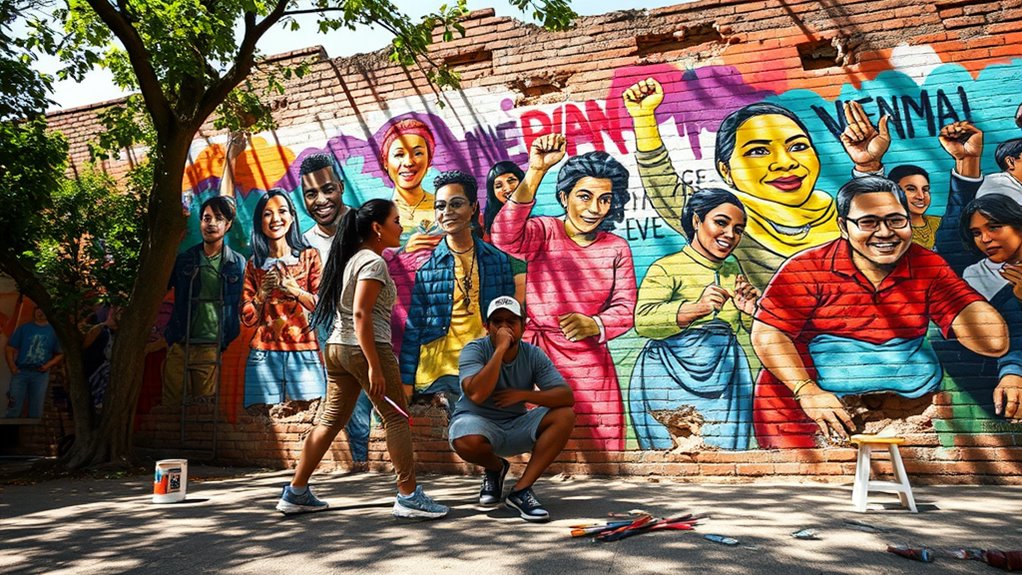
Street murals serve as public canvases, transforming urban spaces into lively platforms for social commentary, whereas diverse photography styles capture raw emotions and pivotal moments, preserving them for posterity. Sculpture expressions add a three-dimensional aspect to storytelling, inviting viewers to engage with art in tangible ways.
Graphic design, often overlooked, plays an fundamental role in crafting visually striking campaigns that resonate across digital environments, making information accessible and compelling. Textile art, with its tactile qualities, evokes a sense of intimacy, connecting viewers to the artist's narrative through the intricacies of fabric and thread. Finally, sound art utilizes auditory experiences to improve the emotional environment of current events, creating a multi-sensory awareness that transcends visual art alone. Collectively, these mediums reflect the dynamic interplay between art and the world, underscoring the influence of creative expression in advocating for freedom and change.
Case Studies of Impactful Art
Art has long served as a potent medium for visual narratives, particularly during protests, capturing the essence of social movements and the sentiments of the time. Through compelling imagery, artists have not only documented current events but likewise created historical records that resonate across generations. Examining specific case studies reveals how art can influence public perception and encourage dialogue around critical issues.
Visual Narratives From Protests
The strength of visual narratives in documenting protests has been profoundly evident in recent years, as artists utilize their creativity to convey the urgency and emotional weight of social movements. Through protest murals and street installations, artists transform public spaces into significant platforms for expression, engaging communities in dialogue about pressing social issues. These lively expressions often employ cultural symbolism and visual rhetoric, capturing the essence of grassroots movements and amplifying their messages.
Activist photography serves as another critical medium, providing visual documentation that resonates deeply with viewers, nurturing empathy and collective memory. The images captured during protests not only reflect the struggles of the moment but likewise immortalize the voices of those demanding change. Narrative artistry in these works serves to unite individuals, encouraging community engagement and solidarity in the pursuit of freedom.
Art as Historical Record
Numerous case studies illustrate how art serves as a crucial historical record, capturing pivotal moments and movements in society. One notable example is Pablo Picasso's "Guernica," which artistically interprets the horrors of the Spanish Civil War. This monumental piece transcends mere representation, conveying the emotional turmoil and societal upheaval caused by conflict, thereby asserting its cultural significance.
Similarly, the murals of Diego Rivera in Mexico reflect the social struggles of the working class, offering a vivid portrayal of historical narratives that resonate with a desire for justice and equality. These artworks not only document events but additionally inspire collective memory and action, encouraging viewers to engage with their own societal contexts.
In contemporary times, street art has emerged as a formidable medium for documenting socio-political issues, with artists like Banksy using their platform to comment on war, consumerism, and inequality. These creative expressions serve as both a historical record and a call to action, prompting discussions about freedom and human rights. Fundamentally, art remains an indispensable tool for preserving history, nurturing comprehension, and advocating for change, reflecting the constantly changing environment of human experience.
Art as a Form of Protest
Protest art serves as a strong medium for social and political dissent, transforming personal and collective grievances into visual narratives that resonate with audiences. This form of artistic expression utilizes protest symbolism to convey significant messages, allowing artists to articulate their struggles and aspirations in ways that are both accessible and impactful. Through various mediums, including painting, sculpture, and performance, artists create works that challenge the status quo, confront injustices, and inspire collective action.
Creative resistance manifests in numerous ways, often employing humor, irony, or stark realities to provoke thought and stimulate dialogue. Iconic examples, such as the use of murals in urban spaces or installations in public areas, serve to engage communities and amplify marginalized voices. These artistic interventions not only document the struggles of the times but additionally nurture a sense of solidarity among those who seek change.
Moreover, protest art transcends language barriers, communicating universal themes of freedom, equality, and justice. It becomes a rallying cry, an invitation to join in the fight against oppression and inequality. By transforming emotion into imagery, artists ignite passion and urgency within their audiences, encouraging them to reflect on their own roles in societal movements. In this way, the act of creating and experiencing protest art becomes a essential component of activism, reminding us that art is not merely a reflection of society but a catalyst for transformation.
The Role of Social Media
Art and activism have increasingly found a strong ally in social media, which amplifies the reach and impact of protest art. In an age where information travels instantaneously, social media serves as a significant platform for digital art that encapsulates the struggles and aspirations of those yearning for freedom. Artists leverage these channels to create engaging visual narratives that resonate with a global audience, transforming personal expressions of dissent into collective movements advocating for change.
Social media activism enables artists to bypass traditional gatekeepers, allowing their work to circulate among diverse communities. This democratization of art means that impactful images, videos, and graphics can emerge from grassroots movements, illustrating the urgency of current events as well as nurturing a sense of solidarity. For instance, hashtags associated with social movements have become rallying points, uniting individuals across borders and cultures in a shared quest for justice.
The immediacy of social media additionally enables artists to respond to unfolding events in real-time, creating a dynamic interplay between art and activism. Digital art, in particular, thrives in this environment, as it can be easily shared and adapted to convey complex ideas succinctly. The visual language of social media allows for rapid dissemination and reinterpretation, ensuring that the narratives of resistance remain lively and relevant.
Collaborations Between Artists and Journalists
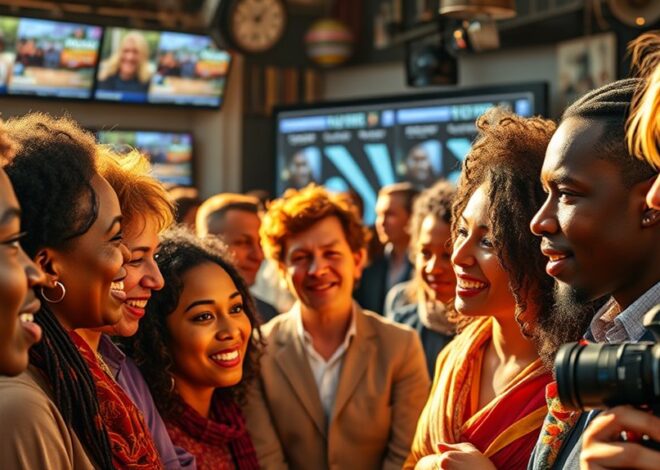
Collaborations between artists and journalists have emerged as a potent means of storytelling, blending artistic expression with factual reporting. These partnerships leverage art-driven techniques to improve the emotional resonance of visual journalism, eventually enriching the audience's comprehension of complex current events. By combining creativity and information, such collaborations can amplify the impact of narratives that reflect societal issues.
Art-Driven Storytelling Techniques
Creativity often flourishes at the intersection of disciplines, where artists and journalists come together to craft compelling narratives that resonate deeply with audiences. This collaboration promotes innovative art-driven storytelling techniques that transcend traditional reporting, allowing for a more immersive experience. By integrating multimedia storytelling, artists can transform raw data and journalistic content into engaging visual narratives that capture the essence of current events.
One prominent method in this fusion is the use of interactive installations. These dynamic spaces invite viewers to engage with the narrative, prompting them to become participants in the storytelling process rather than mere observers. Such installations often blend visual art, sound, and technology, creating a holistic experience that evokes a strong emotional response.
Additionally, multimedia storytelling enables the exploration of complex issues through various channels, including video, audio, and digital platforms. This approach not only improves accessibility but also encourages broader dialogue around pressing topics. In the end, the collaboration between artists and journalists enriches public discourse, empowering audiences to connect with stories on a profound level and nurturing a society that values both artistic expression and informed engagement.
Impactful Visual Journalism Collaborations
At the heart of impactful visual journalism lies the synergy between artists and journalists, who together utilize their distinct yet complementary skills to convey powerful narratives. This collaboration not only improves storytelling but also deepens audience engagement through multimedia storytelling that transcends traditional boundaries.
By merging photojournalism ethics with artistic interpretation, these partnerships create a visual language that resonates universally. Collaborative exhibitions serve as platforms, inviting community engagement and audience participation, nurturing a dialogue around pressing issues. For instance, a project that pairs documentary photographers with contemporary artists can result in strong cultural commentary, challenging perceptions and evoking emotional responses.
Such collaborations encourage viewers to explore beyond the surface, prompting critical thought and reflection on current events. The integration of artistic vision with journalistic integrity provides a rich fabric of perspectives, eventually enriching the narrative environment. As artists and journalists continue to unite, their collective efforts promise to illuminate crucial stories, reinforcing the fundamental role of art in documenting our shared human experience. In this dynamic interplay, freedom of expression flourishes, allowing diverse voices to emerge and thrive amidst a complex world.
Emotional Resonance in Art
Though art often serves as a reflection of society, its true strength lies in its ability to evoke profound emotional responses from viewers. This emotional impact is crucial in the area of documenting current events, as it transforms mere observations into impactful artistic expressions that resonate deeply with audiences. Through various forms, artists capture cultural reflections that speak to shared experiences and the intricacies of human existence.
The influence of art in this situation lies in its ability to weave personal narratives into broader societal commentary. By engaging with the emotional fabric of a moment, artists create pieces that both document and provoke thought and inspire empathy. This visual empathy allows viewers to connect on a personal level, creating a sense of collective memory that transcends individual experiences.
Moreover, the emotional resonance found in art serves as a catalyst for dialogue and comprehension. It encourages audiences to confront uncomfortable truths and reflect on their roles within a dynamic society. In doing so, art becomes a crucial tool for enhancing awareness, challenging perceptions, and promoting freedom of thought.
Ultimately, the emotional dimension of art enriches the narrative it conveys, ensuring that the documentation of current events is not just an academic exercise but a deeply felt exploration of humanity. Through this lens, art emerges as a record and as a transformative force that bridges divides, ignites passions, and champions the freedom of expression.
Future of Art in Activism
Art has long played a pivotal role in activism, serving as both a medium of expression and a catalyst for social change. As we look to the future, the intersection of artistic innovation and activism will continue to evolve, nurturing deeper community engagement and amplifying marginalized voices. Artists are increasingly utilizing technology and social media platforms to reach wider audiences, creating immersive experiences that provoke thought and inspire action.
The future of art in activism is likely to be characterized by collaborative efforts that unite diverse communities. By leveraging the strength of collective creativity, artistic projects can address pressing societal issues and mobilize individuals toward transformative change.
| Artistic Medium | Potential Impact |
|---|---|
| Visual Arts | Raises awareness about social issues through compelling imagery. |
| Performance Art | Engages audiences in real-time, prompting immediate reflection and dialogue. |
| Digital Art | Utilizes technology to create interactive experiences that reach global audiences. |
| Street Art | Transforms public spaces into platforms for political expression and community storytelling. |
| Multimedia Installations | Cultivates immersive environments that invite deep engagement with complex issues. |
In this dynamic setting, the role of artists as activists will be paramount, as they navigate the challenges of our times with creativity and resilience. As communities come together to support these efforts, the future of art in activism promises to be a lively mosaic of voices advocating for freedom, justice, and equality.
Frequently Asked Questions
How Do Artists Choose Which Current Events to Depict?
Artists select current events to depict based on a confluence of cultural context and personal experiences. They often draw inspiration from societal issues that resonate with their own values, beliefs, and emotional realms. This selection process allows them to engage with themes that reflect their perspectives and the zeitgeist of their time. By intertwining their personal narratives with broader cultural dialogues, artists create works that resonate deeply with audiences seeking connection and comprehension.
What Challenges Do Artists Face When Documenting Sensitive Topics?
Artists face numerous challenges when documenting sensitive topics, including censorship issues, emotional impact, and societal backlash. They grapple with balancing personal expression with public reaction, steering through the fine line between provoking thought and causing offense. The emotional weight of their subjects can hinder creative freedom, whereas potential censorship stifles artistic integrity. In the end, artists endeavor to shed light on pressing issues while remaining true to their vision, nurturing dialogue in spite of the risks involved.
How Can Art Influence Public Opinion on Current Events?
Art wields significant influence in shaping public opinion on current events by affecting public perception and evoking emotional impact. Through visual storytelling, artists can present complex issues in a relatable manner, nurturing empathy and comprehension. This emotional engagement encourages audiences to reconsider their views and inspires collective action. In the end, art serves as a catalyst for dialogue, challenging prevailing narratives and enabling individuals to advocate for change as they embrace their inherent freedom.
Are There Ethical Considerations in Art About Current Events?
The ethical considerations in art addressing current events are paramount, particularly regarding emotional impact and cultural sensitivity. Artists must navigate the delicate balance between expression and respect, ensuring that their work does not exploit or misrepresent marginalized voices. Furthermore, the potential for art to evoke strong emotions necessitates a thoughtful approach, as it can shape public perception and discourse. In the end, ethical artistic practice promotes comprehension as it cultivates a climate of freedom and respect.
How Has Technology Changed the Way Art Documents Events?
Technology has greatly transformed the documentation of events through art by utilizing digital media and interactive platforms. Artists can now create immersive experiences that engage audiences in real-time, nurturing a deeper comprehension of current issues. The accessibility of these digital tools allows for diverse perspectives and voices to be shared widely, enhancing the democratic nature of art. As a result, technology not only expands the reach of artistic expression but additionally encourages active participation in contemporary discourse.

Related Posts
Why Understanding the Context Matters in Today’s News

The Power of Curiosity in Uncovering Hidden Stories