Exploring the Role of Media in Shaping Public Opinion
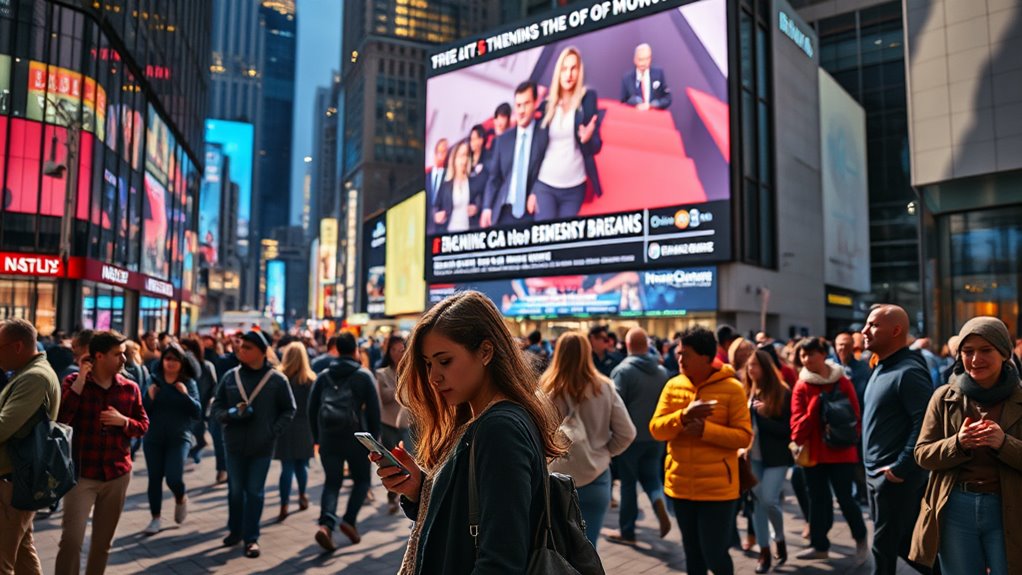
Media plays an essential role in shaping public opinion by influencing perceptions, attitudes, and beliefs. Traditional media, such as newspapers and television, offers curated content that establishes trust but is susceptible to bias because of ownership influences. Meanwhile, social media democratizes information, allowing user-generated content to sway narratives, though it often encourages echo chambers. The rise of misinformation poses significant challenges, undermining trust in media overall. Ethical considerations in journalism remain important to uphold integrity and accountability. Comprehending these dynamics is key to maneuvering today's complex media environment and its impact on society's collective viewpoints.
Historical Context of Media Influence
Throughout history, the media has played a significant role in shaping public opinion, with important milestones occurring over the past several centuries. The evolution of media—from print to digital—has consistently influenced historical narratives and cultural shifts, reflecting societal values and aspirations. Each communication revolution has brought about new possibilities for audience engagement, empowering individuals to voice their opinions and demand accountability from those in authority.
However, this evolution has not been without its challenges. Propaganda techniques have been employed throughout history to manipulate public perception, often undermining journalistic integrity and eroding public trust. Censorship effects have stifled free expression, demonstrating the delicate balance between control and freedom that society must navigate. Technological advancements have both facilitated and challenged this dynamic, as the rise of the internet has opened avenues for unfiltered information while concurrently enabling the spread of misinformation.
In this complex environment, the role of the media remains significant. It serves as a watchdog, holding authorities accountable, in addition to acting as a platform for diverse voices. The commitment to journalistic integrity is fundamental for nurturing public trust, ensuring that the media can effectively inform and engage the populace. As we reflect on the historical context of media influence, it is clear that its capacity to shape public opinion is intertwined with the quest for freedom, underscoring the importance of safeguarding this significant institution in a swiftly changing world.
Types of Media and Their Impact
The influence of various types of media on public opinion is a multifaceted phenomenon that warrants careful examination. Traditional media, such as newspapers and television, has historically shaped perceptions through curated content, whereas social media platforms have introduced new dynamics that allow for rapid information dissemination and user engagement. Furthermore, evolving news consumption trends highlight the shifting preferences of audiences, emphasizing the need to understand these changes in the context of media impact.
Traditional Media Influence
Traditional media's influence on public opinion remains a strong force, manifesting through various types such as newspapers, television, and radio. Print media provides in-depth analysis, whereas broadcast media offers immediacy, considerably shaping how audiences perceive issues. The editorial decisions made by news organizations play a pivotal role in framing narratives, impacting public trust and perceptions of media bias.
| Type of Media | Impact on Public Opinion |
|---|---|
| Print Media | In-depth reporting, cultivates trust |
| Broadcast Media | Quick updates, emotional engagement |
| Media Ownership | Influences editorial decisions |
| Advertising Impact | Shapes consumer opinions |
The media's advertising impact further complicates this environment, influencing content through financial dependencies that can challenge journalistic integrity. Sensationalism effects often drive viewership, leading to a distorted perception of reality. As a result, audience engagement is critical; consumers must critically evaluate sources to navigate potential biases. In the end, the interplay of these factors underscores the enduring relevance of traditional media in shaping public discourse and opinion, reinforcing the fundamental need for responsible reporting in a free society.
Social Media Dynamics
Social media platforms have transformed the realm of public opinion, offering a dynamic space for interaction and information exchange. The rise of user-generated content has empowered individuals to become active participants in shaping narratives, often leading to viral trends that capture widespread attention. Audience engagement is heightened as users interact with content customized by sophisticated content algorithms, which can both amplify voices and inadvertently reinforce platform biases.
Influencer dynamics play a critical role in this arena, as popular figures can sway public sentiment and inspire digital activism. Nevertheless, the prevalence of echo chambers poses challenges, where like-minded individuals gather, limiting diverse perspectives and stifling healthy online discourse. In spite of these pitfalls, social media remains a crucial tool for community building, nurturing connections around shared interests and causes.
As the public navigates this complex environment, critical awareness of how platform biases and content algorithms shape perceptions is fundamental. Ultimately, although social media offers unparalleled opportunities for expression and mobilization, it requires a discerning approach to guarantee a free and informed public discourse.
News Consumption Trends
Increasingly, individuals rely on a diverse array of media sources to consume news, reflecting the evolving framework of information dissemination. This shift in news consumption trends is driven by a combination of digital habits and demographic shifts, which have greatly altered audience engagement patterns. As information saturation becomes commonplace, individuals seek content personalization to navigate their media preferences effectively.
Key trends shaping this environment include:
- Diverse Media Platforms: From traditional outlets to social media, audiences now have multiple avenues for news.
- Shortened Attention Spans: Concise and engaging content is paramount to capture the fleeting attention of consumers.
- Trust Dynamics: As skepticism regarding media grows, audiences increasingly gravitate towards sources they deem trustworthy.
- Interactive Experiences: Engaging content that allows audience participation nurtures deeper connections with news stories.
These trends highlight the necessity for media organizations to adapt to changing consumption patterns. By comprehending the implications of digital habits on news delivery and consumption, media platforms can better serve an audience craving both freedom and authenticity in their news experiences.
Role of Social Media Platforms
Over the past decade, social media platforms have transformed into influential tools for shaping public opinion, influencing political discourse, and facilitating information dissemination. These platforms have nurtured unprecedented levels of social engagement, allowing individuals to share ideas and mobilize for causes in real-time. Nevertheless, the algorithms that underpin these platforms often prioritize sensational content, leading to audience polarization and the formation of echo chambers where users are exposed primarily to views that reinforce their preexisting beliefs.
User-generated content has become a cornerstone of social media, giving rise to diverse voices and perspectives. Yet, this democratization of information comes with the challenge of ensuring platform accountability, as misinformation can spread swiftly and influence public perception. Influencer impact is another critical aspect, as individuals with extensive followings can sway opinions and drive viral trends, sometimes overshadowing traditional media narratives.
Digital activism has gained momentum, with movements utilizing social media to rally support and raise awareness on pressing issues. Although these platforms have the potential to inspire positive change, they must also require vigilance against the negative consequences of content curation that may exclude important viewpoints. The challenge lies in balancing the freedom of expression with the responsibility of platforms to mitigate harmful discourse. As social media continues to evolve, comprehending its role in shaping public opinion remains crucial for nurturing a more informed and engaged society.
Traditional Media's Continued Relevance
The enduring significance of traditional media remains evident in an age dominated by digital platforms. As the environment has undeniably shifted in the direction of online formats, traditional media continues to play a pivotal role in shaping public opinion through its established frameworks of news credibility and audience engagement. The broadcast evolution has led to a symbiotic relationship between the two domains, enhancing the quality of public dialogue.
Key factors contributing to the continued relevance of traditional media include:
- Media Trust: Traditional outlets often enjoy higher levels of trust compared to unverified online sources, bolstering their role in public discourse.
- Content Diversity: These platforms offer a variety of content that caters to diverse audiences, guaranteeing that multiple cultural narratives are represented.
- Advertising Strategies: Traditional media remains an effective channel for advertisers, leveraging its reach to engage consumers in meaningful ways.
- News Credibility: Established journalistic standards guarantee that the information disseminated is accurate, nurturing an informed citizenry.
As the digital sphere continues to expand, traditional media's role in maintaining news credibility and facilitating public dialogue cannot be overstated. It is this combination of trust, diversity, and engagement that empowers individuals to navigate complex societal issues. In recognizing the value of traditional media, society can leverage its strengths to cultivate a balanced and informed public discourse, crucial for a free and democratic society.
Misinformation and Public Perception
Misinformation has emerged as a significant challenge in shaping public perception, particularly with the rise of fake news and its rapid dissemination through social media platforms. This environment complicates the public's ability to discern credible information from falsehoods, highlighting the critical need for effective fact-checking mechanisms. Comprehending these dynamics is crucial for nurturing an informed citizenry and promoting healthy discourse.
Impact of Fake News
How does the proliferation of fake news influence public perception? The rise of misinformation campaigns has created an environment where public trust is increasingly eroded. Sensationalist reporting often capitalizes on emotional manipulation, framing narratives that align with specific agendas. This distortion of truth poses significant challenges for society, as individuals grapple with distinguishing between fact and fiction.
Key factors contributing to the impact of fake news include:
- Fake news detection: The need for advanced tools to identify misleading information.
- Fact-checking strategies: Implementing robust methods to verify claims before dissemination.
- Digital literacy: Educating the public on critically evaluating sources and information.
- Media accountability: Holding media organizations responsible for their reporting standards.
Algorithmic bias in social media platforms amplifies these issues, often favoring sensational content over factual reporting. As a result, the responsibility falls on both consumers and creators of information to advocate for higher standards. Only through collective efforts in promoting digital literacy and rigorous fact-checking can we hope to restore public trust and mitigate the damaging effects of fake news on societal perceptions.
Social Media Influence
With the rise of digital communication platforms, the dynamics of information sharing have shifted dramatically, leading to unprecedented challenges in public perception. Social media algorithms prioritize content that drives user engagement, often cultivating echo chambers that distort reality. Within these spaces, misinformation can thrive, as users gravitate toward influencers whose credibility may be questionable. This raises significant privacy concerns, as personal data is exploited for audience segmentation, amplifying misleading narratives.
The virality of content on social media can swiftly shape collective beliefs, often overshadowing factual information. Although digital activism and community building can empower marginalized voices, they additionally create a fertile ground for the spread of falsehoods. Platform policies play a vital role in regulating content but often fall short in effectively combating misinformation.
| Challenges | Impacts |
|---|---|
| Social media algorithms | Distorted public perception |
| Influencer credibility | Misinformation propagation |
| User engagement | Content virality |
| Privacy concerns | Audience segmentation |
Ultimately, steering through the intricacies of social media is fundamental to cultivating an informed and free society, where the influence of collective opinion is utilized responsibly.
Fact-Checking Importance
As the proliferation of information accelerates in the digital age, the importance of fact-checking becomes increasingly evident in shaping public perception. Fact verification serves as a vital tool in combating misinformation, promoting a more informed citizenry. It not just improves credibility but also strengthens trust building between media outlets and the public. In this situation, several key aspects emerge:
- Misinformation detection: Identifying false claims before they can influence public opinion.
- Source evaluation: Evaluating the reliability of information sources to guarantee accuracy.
- Transparency requirements: Encouraging media organizations to disclose their methodologies and findings.
- Accountability measures: Holding media accountable for disseminating factual content.
Through effective public engagement, fact-checking initiatives contribute to a healthier media ecosystem. They empower individuals to critically analyze information, thereby facilitating informed decision-making. Additionally, narrative framing can be positively influenced when facts are prioritized, leading to a more nuanced comprehension of issues. Ultimately, the commitment to rigorous fact-checking not only combats misinformation but also champions the ideals of freedom and democracy, enabling citizens to navigate the intricacies of information in a responsible manner.
Case Studies in Media Influence
Examining the profound impact of media on public opinion reveals a series of compelling case studies that illustrate how narratives can be shaped and perceptions altered. One prominent example is the media campaign surrounding climate change, where strategic narrative framing has shifted public perception considerably over the past decade. Through targeted message dissemination, news outlets have engaged audiences with visual storytelling that emphasizes the urgency of environmental issues, leading to increased support for climate initiatives.
Similarly, the coverage of social movements, such as Black Lives Matter, demonstrates the influence of media in affecting public sentiment and policy reform. Opinion polls have shown a marked change in attitudes toward racial justice, largely attributable to the media's role in amplifying marginalized voices and providing cultural representation. This case highlights the importance of news credibility and media accountability, as inaccuracies can skew perceptions and undermine trust.
Moreover, the impact of media on political campaigns cannot be overstated. Candidates utilize media platforms to craft their narratives, often employing audience engagement strategies to resonate with voters. The interplay between media campaigns and public opinion underscores the necessity for responsible journalism that prioritizes fact-based reporting over sensationalism.
These case studies collectively illustrate how media not just reflects public sentiment but shapes it, demonstrating the dual responsibility of media professionals to uphold ethical standards while promoting an informed citizenry. The ongoing evolution of media influence necessitates a vigilant approach to comprehending its implications for democratic discourse.
Media Literacy and Critical Thinking
The influence of media on public opinion underscores the pressing need for improved media literacy and critical thinking skills among audiences. As the digital environment continues to evolve, individuals must cultivate the ability to navigate the intricacies of information dissemination. Media education plays a vital role in promoting informed citizenship, equipping people with the tools necessary to engage with content critically.
Key components of media literacy include:
- Content Evaluation: Evaluating the relevance and validity of information presented.
- Source Credibility: Determining the trustworthiness of the sources from which information originates.
- Analytical Thinking: Employing critical analysis to interpret media messages and identify biases.
- Audience Engagement: Developing an active rather than passive relationship with media, encouraging deeper comprehension.
In an age where misinformation is rampant, digital literacy becomes paramount. Individuals must learn to discern fact from fiction, encouraging a culture of analytical thinking that empowers citizens to question and verify the information they consume. This critical analysis not only improves personal comprehension but also cultivates a more engaged and informed society.
The Future of Media Influence
Looking ahead, the terrain of media influence is poised for significant transformation driven by technological advancements and evolving audience behaviors. Emerging technologies will redefine how content is created and consumed, leading to increased audience engagement through immersive experiences such as virtual reality and interactive journalism. As media convergence becomes more prevalent, traditional and digital platforms will intertwine, enriching the storytelling process and allowing for global perspectives.
Predictive analytics will enable media organizations to tailor content personalization, ensuring that what is disseminated aligns with individual preferences and interests. Nonetheless, this additionally raises concerns about algorithmic bias, where the algorithms that determine content visibility may inadvertently reinforce existing prejudices, limiting diverse viewpoints.
The following table summarizes key trends shaping the future of media influence:
| Trend | Description | Implications |
|---|---|---|
| Emerging Technologies | Innovations like AI and VR augmenting content creation | New forms of storytelling and audience interaction |
| Audience Engagement | Increased interactivity and participation | Greater investment in user-generated content |
| Predictive Analytics | Data-driven insights for personalized content | Improved relevance but risks of exclusion |
| Media Convergence | Blending traditional and digital media | Broader reach and accessibility of diverse narratives |
| Digital Storytelling | Engaging narratives delivered through various formats | Greater empathy and comprehension of global issues |
As these dynamics evolve, the potential for media to influence public opinion remains both potent and complex, demanding a critical examination of its role in society.
Ethical Considerations in Media Reporting
Five significant ethical considerations shape media reporting in today's complex information environment. Upholding journalistic integrity is paramount, as it promotes trust between media outlets and their audiences. Nevertheless, ethical dilemmas frequently arise, demanding that journalists navigate the fine line between responsible reporting and sensationalism.
To guarantee the media fulfills its role as a pillar of democracy, several key aspects must be prioritized:
- Bias Awareness: Acknowledging personal biases and working for objectivity.
- Source Verification: Rigorously checking facts and sources before publication.
- Transparency Standards: Clearly communicating the methods and motives behind reporting.
- Media Accountability: Holding journalists and organizations responsible for their content.
In this environment, audience responsibility also plays a significant role. Consumers of media must engage critically with the information presented to them, cultivating a culture of informed discourse. Adherence to ethical guidelines is fundamental, but it must be coupled with audience vigilance to combat misinformation effectively.
The critique of sensationalism remains a crucial component of ethical reporting. By prioritizing accuracy over shock value, journalists can contribute to a more informed society. In the end, the path to responsible media lies in embracing these ethical considerations, guaranteeing that the information disseminated is not just accurate but also improves public comprehension. As the media environment evolves, the commitment to ethical principles will determine its capacity to shape public opinion responsibly.
Frequently Asked Questions
How Does Media Influence Individual Decision-Making Processes?
In the vast ocean of media consumption, individuals often find themselves steering through turbulent waters of information overload. This incessant flow of data shapes decision-making processes, as people sift through waves of content to discern truth from distortion. The media acts as both lighthouse and siren, illuminating options as it simultaneously complicates choices. In the end, the ability to utilize this information empowers individuals, allowing them to chart their own courses toward informed, liberated decisions amidst the chaos.
What Role Do Celebrities Play in Shaping Public Opinion?
Celebrities considerably influence public opinion through their visibility and reach, particularly via social media platforms. Celebrity endorsements can sway consumer behavior, as followers often aspire to emulate their favorite figures. This social media influence amplifies their messages, allowing them to shape perceptions on various issues, from fashion to social justice. As public figures, their advocacy can cultivate awareness, encourage dialogue, and eventually inspire individuals to engage more deeply with societal concerns, promoting a sense of freedom and agency.
How Can Media Bias Be Identified and Addressed?
In the vast ocean of information, discerning the currents of bias is akin to steering through treacherous waters. To identify and address media bias, promoting media literacy is paramount. Individuals must cultivate the ability to detect bias through critical analysis of sources, language, and framing. Engaging with diverse perspectives improves this skill, empowering audiences to anchor their beliefs in truth rather than manipulation. Consequently, the pursuit of unbiased information becomes a quest for intellectual freedom.
Are There Differences in Media Influence Across Demographics?
Yes, there are significant differences in media influence across demographics. Variations in media consumption patterns, particularly among age groups, shape how individuals engage with information. Younger audiences often favor social media platforms, which can amplify diverse perspectives, whereas older demographics may rely on traditional news sources. Cultural context and news accessibility further contribute to these differences, leading to distinct interpretations and responses to media content, eventually influencing public discourse and individual beliefs.
How Does Advertising Impact Public Perceptions of Issues?
Advertising greatly influences public perceptions of issues, with studies indicating that 70% of consumers feel more informed about social issues as a result of targeted advertising strategies. These strategies shape narratives and frame topics, often leading to changes in public attitudes and behaviors. By leveraging emotional appeal and persuasive messaging, advertisements can create a sense of urgency or importance around specific issues, thereby empowering individuals to engage with and respond to societal challenges.

Related Posts
Why Understanding the Context Matters in Today’s News

The Power of Curiosity in Uncovering Hidden Stories