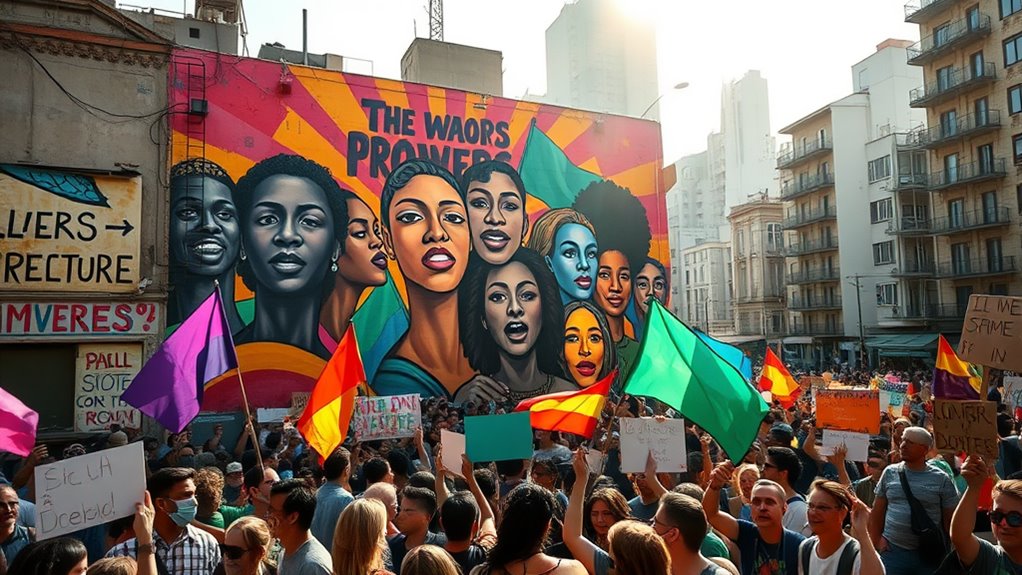
What Cultural Movements Reveal About the State of the World
Cultural movements provide crucial insights into the state of the world, reflecting prevailing social values, ongoing struggles for justice, and transformations in collective identity. They respond to historical events and current socio-political conditions, often advocating for marginalized voices. Technology greatly amplifies these movements, allowing for greater engagement and global solidarity. Furthermore, they tackle critical issues such as environmental sustainability, exploring the intersections of social justice and ecological awareness. By celebrating diverse perspectives and artistic expressions, cultural movements nurture ongoing dialogue and change, paving the way for future generations. Discovering their evolution reveals even more about our societal terrain.
Defining Cultural Movements
Defining cultural movements requires a nuanced comprehension of the complex interplay between societal values, artistic expression, and collective action. At their core, cultural movements are driven by the desire to reshape cultural identity and nurture social transformation. They emerge as responses to prevailing societal norms, often challenging established paradigms and advocating for change.
Movement dynamics are characterized by grassroots activism, where individuals unite to promote a shared vision of freedom and equality. This collective expression becomes a potent vehicle for artistic innovation, allowing diverse voices to contribute to a richer, more inclusive narrative evolution. As artists and activists collaborate, they create works that not only reflect their experiences but additionally resonate with broader societal struggles, forging a sense of community and solidarity.
Furthermore, cultural movements play a critical role in cultural preservation. By reclaiming and celebrating marginalized histories and traditions, they assert the importance of diverse cultural identities in a globalized world. This preservation is not merely an act of nostalgia; it serves as a foundation for future generations to build upon, encouraging ongoing dialogue and engagement.
Historical Context and Evolution
Cultural movements have deep historical roots that can be traced back to specific societal needs and aspirations. Key historical influences, such as political upheavals, technological advancements, and social reforms, have shaped the trajectory and evolution of these movements. Comprehending their origins and ongoing impact is fundamental to grasping how they continue to affect contemporary society.
Origins of Cultural Movements
Throughout history, cultural movements have emerged as potent responses to the prevailing social, political, and economic conditions, shaping societies and influencing collective identities. These movements often originate from grassroots organizations that utilize artistic expression to articulate the aspirations and grievances of marginalized communities. By promoting community engagement, they reinforce cultural identity and evoke a sense of belonging, ultimately driving social change.
The historical roots of these movements reveal a complex interplay between collective memory and identity politics, where art becomes a vehicle for transformation. Below is a table illustrating key elements in the origins of cultural movements:
| Element | Description |
|---|---|
| Grassroots Organization | Community-driven initiatives that empower individuals. |
| Artistic Expression | Creative outputs that reflect societal issues and aspirations. |
| Community Engagement | Involvement of individuals in shared activities and dialogues. |
| Cultural Identity | The shared values and beliefs that define a community. |
As cultural movements evolve, they continue to address the pressing issues of their times, empowering individuals to reclaim their narratives and assert their rights within the larger societal framework.
Key Historical Influences
How have historical events shaped the trajectory of cultural movements? The interplay between significant historical moments and cultural evolution is profound. Major revolutions, wars, and social upheavals often serve as catalysts, igniting new ideas and expressions. Historical figures, such as Martin Luther King Jr. and Frida Kahlo, have emerged from these contexts, embodying the aspirations and struggles of their times. Their contributions have not merely shaped cultural narratives but likewise inspired future generations to seek freedom and justice.
Cultural artifacts, ranging from literature to visual art, reflect these historical influences. They capture the zeitgeist and offer insight into the values and conflicts of their eras. For instance, the Harlem Renaissance produced a wealth of artistic expression that challenged racial stereotypes and celebrated African American culture, rooted in the historical struggle for civil rights.
Furthermore, the evolution of technology has played a critical role in disseminating these cultural movements, allowing voices once silenced to reach broader audiences. As we examine the past, it becomes clear that the interplay of historical events and cultural movements forms a dynamic mosaic, illustrating humanity's ongoing quest for freedom and expression.
Impact on Society Today
The legacy of past cultural movements continues to resonate in contemporary society, shaping values, identities, and social dynamics across the globe. These movements have forged a collective memory that informs current social identity, reinforcing the interconnectedness of individual and communal experiences. The echoes of the civil rights movement, feminism, and environmental advocacy, among others, have cultivated a widespread quest for justice and equity, inspiring new generations to challenge the status quo.
Today, the impact of these cultural movements is evident in the increasing emphasis on social justice, diversity, and inclusion. Societal values have shifted, highlighting the importance of voices that were historically marginalized. Movements such as Black Lives Matter and the Me Too movement serve as significant reminders of the ongoing struggle for liberation and representation. They have not only transformed public discourse but in addition influenced policy changes and institutional reforms.
As society grapples with complex issues like climate change and systemic inequality, the lessons from past movements instill a sense of urgency and responsibility. Ultimately, the evolution of cultural movements shapes our collective future, emphasizing the need for continued activism and engagement in the pursuit of freedom and justice for all.
Key Themes in Cultural Movements
Cultural movements often arise as influential responses to prevailing social, political, and economic conditions, reflecting the collective sentiments and aspirations of a society. These movements serve as impactful catalysts for change, offering platforms for individuals to engage in identity formation and to express shared values and beliefs. They highlight the importance of collective consciousness, allowing communities to articulate their experiences and challenges during the promotion of a sense of belonging and interconnectedness.
One prominent theme in cultural movements is the quest for authenticity and self-expression. Participants often seek to reclaim narratives that have been marginalized or overlooked, challenging dominant paradigms and asserting their identities. This aspect of identity formation not only empowers individuals but additionally encourages dialogue on broader societal issues, such as race, gender, and sexuality.
Another key theme is the call for social justice and equity. Cultural movements frequently emerge in response to injustices, mobilizing collective action to address systemic inequalities. This drive for justice is deeply intertwined with the movement's identity, as it seeks to redefine societal values and norms to guarantee inclusivity and fairness.
Moreover, cultural movements often emphasize the significance of community and solidarity. By promoting a collective consciousness, these movements create spaces for shared experiences and mutual support, strengthening the bonds among individuals who aspire for a common purpose. Therefore, the interplay of identity formation and collective consciousness within cultural movements not only reflects the state of the world but additionally serves as a blueprint for envisioning a more equitable future.
The Role of Technology
In recent years, an unprecedented surge in technology has considerably transformed the terrain of cultural movements, shaping how individuals connect, organize, and advocate for change. Technological advancements have given rise to digital activism, empowering people to mobilize around issues of significance with unprecedented speed and efficiency. Social media platforms serve as crucial arenas for dialogue, facilitating the creation of virtual communities that transcend geographical boundaries. This online culture nurtures a sense of belonging and collective identity, enabling individuals to express their values and aspirations as they challenge societal norms.
However, the impact of these innovations is not without its intricacies. The connectivity effects of technology can improve engagement but also raise critical concerns regarding data privacy and tech ethics. As individuals navigate their digital identity, the balance between freedom of expression and the safeguarding of personal information becomes increasingly precarious. Engaging with these challenges necessitates a nuanced comprehension of the innovation impact on cultural movements, where the promise of liberation through technology must be weighed against potential exploitation.
Ultimately, the role of technology in cultural movements reflects a dual-edged sword. It offers remarkable opportunities for connection and advocacy, yet it requires vigilant stewardship to guarantee that the freedoms gained are not overshadowed by the risks inherent in an interconnected world. As society continues to grapple with these dynamics, it is imperative that we advocate for ethical practices and policies that protect our digital spaces while promoting the values of freedom and justice.
Social Justice and Activism
Numerous social justice movements have emerged globally, each driven by a shared commitment to address systemic inequalities and advocate for marginalized voices. These movements utilize grassroots activism and community organizing to effect systemic change. By engaging in intersectional advocacy, activists recognize the interconnectedness of various social issues, thereby nurturing inclusive dialogues that uplift diverse perspectives.
The table below highlights key aspects of social justice movements:
| Aspect | Description |
|---|---|
| Grassroots Activism | Mobilization of local communities to drive change |
| Youth Engagement | Involvement of younger generations in activism efforts |
| Policy Reform | Advocacy for changes in laws and regulations |
| Allyship Strategies | Methods to support marginalized groups effectively |
Collective empowerment is at the heart of social justice initiatives, as communities unite to amplify their voices and secure their rights. Activists employ various allyship strategies to guarantee that their advocacy is inclusive and representative of all affected groups. Youth engagement has proven to be an influential force, as younger individuals bring fresh perspectives and energy to movements.
Ultimately, the pursuit of social justice is not merely about addressing individual grievances but enacting broader policy reforms that dismantle oppressive structures. By nurturing a culture of solidarity and comprehension, activists work to create a world where marginalized voices are heard, and equitable opportunities are accessible to all. In this pursuit, the commitment to systemic change remains unwavering, as communities endeavor for a just and inclusive society.
Environmental Awareness Movements
Social justice movements and environmental awareness initiatives are often intertwined, as both seek to address systemic issues that affect vulnerable populations. The rise of ecological activism has underscored the urgent need for sustainability initiatives that prioritize not just environmental health but also social equity. Grassroots movements have emerged as influential vehicles for change, advocating for climate justice and the rights of marginalized communities disproportionately impacted by environmental degradation.
Central to these efforts is environmental education, which empowers individuals with knowledge about their carbon footprint and the importance of conservation efforts. Such awareness cultivates a culture of responsibility and stewardship that is essential for sustainable living. Furthermore, initiatives promoting renewable energy sources are vital in reducing reliance on fossil fuels, thereby mitigating climate change and its impacts.
Urban gardening has likewise gained traction, enabling communities to cultivate their own food and promote biodiversity awareness. These practices not only improve local food security but also strengthen community ties and nurture resilience in the face of environmental challenges. The intersection of social and environmental goals highlights the necessity of inclusive approaches to ecological activism, ensuring that all voices are heard in the quest for a sustainable future.
Ultimately, the synergy between environmental awareness movements and social justice not only reflects the intricacies of our world but also offers a pathway toward a more equitable and sustainable society. Through collective action and advocacy, we can drive meaningful change that honors both the planet and its people.
Globalization and Cultural Exchange
Globalization has markedly reshaped cultural terrains, facilitating cross-cultural influences that enrich societies worldwide. The advent of digital connectivity plays an essential role in this exchange, enabling instantaneous access to diverse traditions, values, and practices. As a result, the interplay between local and global cultures nurtures both innovation and tension in contemporary cultural identities.
Cross-Cultural Influences Today
The intricate fabric of today's world is woven together by the threads of cross-cultural influences, which have become increasingly prominent in the age of rapid communication and travel. This dynamic environment nurtures cross-cultural collaborations, enabling diverse communities to share ideas and innovate collectively. As a result, cultural hybridity emerges, creating a rich mosaic of artistic expressions, culinary delights, and social practices that transcend traditional boundaries.
To illustrate these influences, consider the following table:
| Aspect | Description |
|---|---|
| Art and Music | Fusion genres blending elements from different cultures, e.g., Reggaeton. |
| Cuisine | Dishes that combine ingredients and techniques from various culinary traditions, e.g., sushi burritos. |
| Fashion | Styles that incorporate global influences, leading to unique, hybrid fashion statements. |
These examples highlight how globalization encourages the exchange of cultural elements, promoting a deeper comprehension and appreciation among diverse populations. As we engage with these cross-cultural interactions, we embrace the freedom to explore, adapt, and redefine our identities in a shared global environment.
Digital Connectivity Impact
How does digital connectivity reshape our grasp of cultural exchange in an interconnected world? The rise of the internet has transformed how individuals construct their digital identity, nurturing the emergence of online communities that transcend geographical boundaries. Social media platforms serve as lively arenas for digital storytelling, enabling users to share their narratives and experiences, thereby enriching the global fabric of internet culture.
This digital environment has catalyzed tech-driven movements that advocate for social change and inclusivity, exemplifying the influence of virtual activism. Activists leverage social media to mobilize support, raise awareness, and dismantle barriers, while concurrently addressing the pressing issue of the digital divide that separates those with access from those without.
As cultural exchange becomes increasingly fluid, the blending of diverse perspectives cultivates a more profound insight into our shared humanity. Nonetheless, this interconnectedness also raises questions about authenticity and representation within online spaces. In the end, digital connectivity empowers individuals to assert their voices and engage in a dynamic dialogue, highlighting the potential for cultural enrichment and promoting a collective pursuit of freedom in a constantly changing global environment.
Impact on Art and Media
Art and media have experienced profound transformations as a result of various cultural movements, with these shifts often reflecting broader societal changes. In this dynamic environment, artistic expression has evolved to embrace diverse voices and narratives, challenging traditional norms and broadening the boundaries of creativity. The emergence of movements such as feminism, environmentalism, and racial justice has sparked a reevaluation of media representation, compelling artists and creators to authentically depict the intricacies of human experience.
Key impacts on art and media include:
- Inclusion of Marginalized Voices: Cultural movements have amplified underrepresented perspectives, nurturing a richer fabric of artistic expression.
- Innovative Storytelling: New narratives emerge that challenge the status quo, reflecting societal values and struggles.
- Digital Platforms: The rise of social media has democratized artistic expression, allowing for rapid dissemination and engagement with diverse audiences.
- Cross-Cultural Collaboration: Increased global connectivity promotes collaborative art forms that celebrate cultural hybridity.
- Activism through Art: Artists increasingly use their work as a conduit for social change, addressing pressing issues and inspiring action.
These developments signify a critical shift in how art and media interact with culture. As creators navigate the intricacies of representation, they contribute to a lively dialogue that reflects the evolving state of society. In the end, the interplay between cultural movements and artistic expression serves as a significant reminder of the resilience and dynamism inherent in the human spirit.
Future Trends and Predictions
As cultural movements continue to reshape artistic expression and media representation, the future promises further development in these domains. Future predictions suggest that emerging trends will be heavily influenced by technological advancements and demographic shifts, redefining how art is created and consumed. The growing accessibility of digital tools enables a diverse array of voices, facilitating artistic evolution that reflects a broader spectrum of human experience.
Societal shifts in the direction of inclusivity and social justice are likely to drive cultural forecasts, prompting artists to engage with themes that resonate on a global scale. These global changes will not only diversify the narratives we encounter but additionally challenge existing authority structures within the art world. As we move forward, expect to see a rise in collaborative projects that transcend geographical and cultural boundaries, encouraging a sense of community and shared purpose.
Moreover, the integration of artificial intelligence and virtual reality into artistic practices may transform how audiences interact with creative works. Such technological advancements will offer immersive experiences that blur the lines between creator and spectator, inviting deeper engagement with the art.
Ultimately, as cultural movements continue to evolve, they will serve as a mirror reflecting the intricacies of contemporary society. The interplay between emerging trends and the ever-changing global environment will shape a future where art remains an essential instrument for dialogue, freedom, and transformation, echoing the aspirations of a world in flux.
Frequently Asked Questions
How Do Cultural Movements Influence Individual Identity Formation?
Cultural movements often claim to liberate individual identity, yet they paradoxically shape it within predefined narratives. Through identity expression, individuals find themselves maneuvering the tension between personal aspirations and collective expectations. Cultural nostalgia plays a pivotal role, invoking a longing for bygone eras that can simultaneously empower and constrain identity formation. Ultimately, these movements serve as both a canvas for self-discovery and a mirror reflecting societal values, underscoring the intricacies inherent in personal identity development.
What Role Do Youth Play in Shaping Cultural Movements?
Youth play a pivotal role in shaping cultural movements, often serving as catalysts for change. Through youth activism, they express their values and aspirations, leveraging social media to amplify their voices and mobilize support. Platforms like Instagram and Twitter allow young individuals to connect, share ideas, and raise awareness about significant issues, nurturing a collective identity that challenges the status quo. Their engagement not merely influences contemporary culture but additionally paves the way for future generations.
Are Cultural Movements Effective in Enacting Policy Changes?
Cultural movements play a pivotal role in policy advocacy by shaping public discourse and influencing decision-makers. Their cultural impact often mobilizes communities, nurturing a collective identity that demands change. By raising awareness around pressing issues, these movements can create a ripple effect, leading to legislative action. In the end, when individuals unite for a common cause, they amplify their voices, compelling governments to respond to the aspirations of a society yearning for justice and progress.
How Do Economic Factors Impact Cultural Movements?
As economic inequality widens, the tension between aspiration and reality deepens, igniting cultural movements that challenge the status quo. These movements often stem from a collective response to disparities, reflecting discontent with consumer culture that prioritizes profit over people. Economic factors shape these movements by providing both the impetus for activism and the resources necessary for mobilization. Ultimately, they serve as both a mirror and a catalyst for societal change, revealing underlying truths and desires for freedom.
Can Cultural Movements Foster Global Cooperation and Understanding?
Cultural movements can certainly cultivate global cooperation and comprehension through the mechanism of cultural diplomacy. By promoting shared values and narratives, these movements can bridge divides and encourage dialogue among diverse populations. They create global narratives that resonate across borders, nurturing empathy and collaboration. In an increasingly interconnected world, cultural diplomacy serves as an essential tool for enhancing mutual respect and appreciation, ultimately contributing to a more harmonious and free global society.

Related Posts
Why Understanding the Context Matters in Today’s News

The Power of Curiosity in Uncovering Hidden Stories