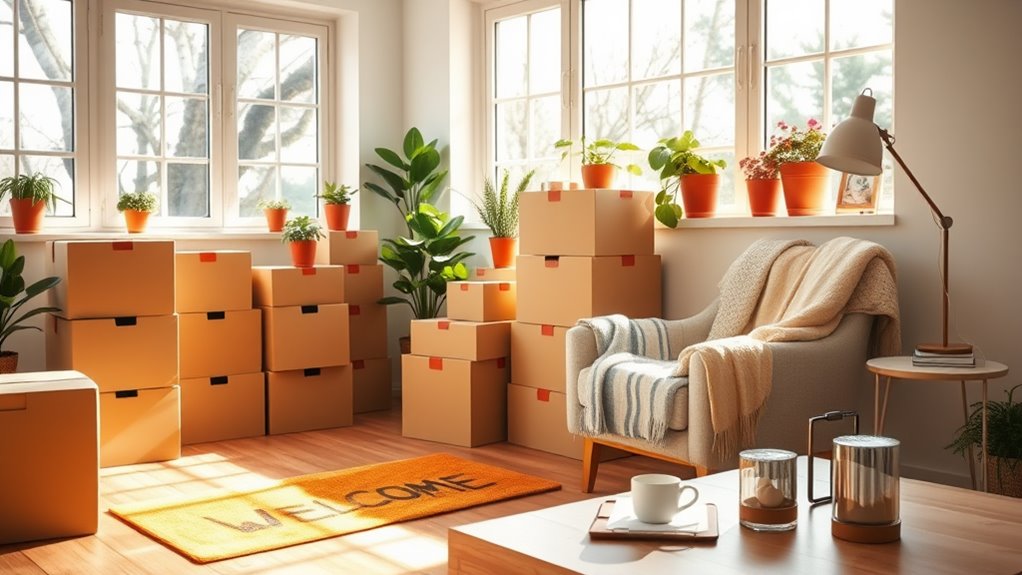
How to Prepare for a Smooth Transition to a New Home
To prepare for a smooth shift to your new home, start by creating a moving timeline that outlines your tasks. Declutter your belongings, deciding what to keep and what to donate. Gather crucial packing supplies and label your boxes clearly. Inform utility companies and update your address with important contacts, including banks and subscription services. If possible, consider hiring professional movers to ease the process. Finally, on moving day, stick to your checklist and keep important items accessible. These steps can make your move less stressful, leading to a fresh start in your new space. There's much more to discover that can help!
Set a Moving Timeline
Setting a moving timeline is crucial for a smooth change into your new home. When you plan your move, you're not simply organizing boxes; you're crafting a pathway to a place where you'll create memories and feel a sense of belonging. Start by identifying your moving date and work backward. This gives you a clear target and helps you maintain your moving motivation.
Next, break down the tasks involved into manageable steps. Don't forget about timeline flexibility—life happens, and sometimes, you may need to adjust your plans. Incorporate buffer days for unexpected delays or last-minute changes. This adaptability will lessen your stress and keep you focused on the excitement of your new beginning.
Consider key tasks like notifying utility companies, changing your address, and scheduling a moving truck. List these tasks with deadlines, and prioritize them based on their urgency. It's also a great idea to involve family or friends; their support can make the process more enjoyable and strengthen your sense of community.
Lastly, as you tick off tasks from your timeline, celebrate small victories. Each completed item brings you closer to your new home and encourages a feeling of accomplishment. Remember, a well-structured timeline helps you stay organized and fills your experience with purpose, making your change smoother and more fulfilling. You're not just moving; you're stepping into a new chapter where you'll truly belong.
Declutter Your Belongings
Before you pack up for your new home, it's essential to declutter your belongings. Start by sorting your items by category, which makes it easier to identify what you really need. Don't forget to donate anything unwanted and gather your packing supplies to keep everything organized.
Sort by Category
Decluttering your belongings can feel like a challenging task, but sorting items by category makes it manageable and efficient. Start by gathering everything from a specific area and categorize them. This way, you can see what you have and decide what to keep, donate, or discard.
To make the sorting process smoother, consider these categories:
- Clothing
- Kitchenware
- Books and media
- Furniture
- Sentimental items
As you sort, keep in mind your new home and neighborhood research. Think about how these items will fit into your new space. Are there utilities you need to set up that require specific items? For instance, if you're downsizing, you might want to keep only necessities that work in your new layout.
Don't rush; take your time with each category. The clearer you are about what you genuinely need, the easier it becomes to shift. Plus, you'll feel lighter and more organized, making your move to the new home a smoother experience. Remember, it's about creating a space filled with belongings that truly matter to you.
Donate Unwanted Items
As you sort through your belongings, consider the positive impact of donating unwanted items. Not just does decluttering create space for your new home, but it helps those in need. By giving to local charities or donation centers, you're providing valuable resources to your community as you make your move easier.
Here's a simple guide to help you decide what to donate:
| Item Type | Condition | Donation Options |
|---|---|---|
| Clothing | Gently used | Local shelters, thrift stores |
| Furniture | Good condition | Donation centers, charities |
| Household goods | Unused or unbroken | Local charities, churches |
Take a moment to reflect on each item. If it no longer serves you or brings you joy, it's time to let it go. By donating, you're not merely clearing out clutter; you're making a difference in someone else's life. Furthermore, you'll feel lighter and more organized as you prepare for your new adventure. Embrace the opportunity to give back as you simplify your move!
#
Organize Packing Supplies
Getting your packing supplies organized is a crucial step in preparing for your move. By gathering the right materials in advance, you'll streamline the packing process and guarantee your belongings are well-protected. Start by identifying the various packing supply types you need, which can greatly influence how smoothly your move goes.
Here's a handy list to take into account:
- Boxes of various sizes for different items
- Bubble wrap or packing paper to cushion fragile belongings
- Tape for sealing boxes securely
- Markers for labeling each box clearly
- Furniture pads or blankets to protect larger items
Once you know what you need, you can find packing supply sources. Local stores, online retailers, or even friends and neighbors might have supplies you can borrow or buy. Don't forget to check for recycled boxes to keep costs down and promote sustainability. Organizing your packing supplies not just saves time but also brings peace of mind, knowing you're ready for the next chapter in your new home. So, gather your supplies, label everything, and get ready for a smooth changeover!
## Organize Packing Supplies
Once you've decluttered, it's time to gather your packing supplies. You'll need crucial materials like boxes, tape, and markers to keep everything organized. Let's explore some efficient packing techniques to streamline your move.
Essential Packing Materials
When preparing for a move, having the right packing materials can make all the difference in keeping your belongings safe and organized. Investing in crucial tools is key to effective packing strategies that minimize stress and maximize efficiency. You'll want to gather a few critical items before you start packing.
Here's a list of crucial packing materials you shouldn't overlook:
- Sturdy boxes: Opt for various sizes to accommodate items from books to larger appliances.
- Bubble wrap: Perfect for protecting fragile items like glassware and electronics.
- Packing tape: Use high-quality tape to secure your boxes properly.
- Markers: Label your boxes clearly to identify contents and room destinations.
- Packing paper: Great for wrapping delicate items and filling empty spaces in boxes.
Having these materials on hand will streamline your packing process, making it easier to pack efficiently and keep everything organized. Plus, it'll give you peace of mind knowing your belongings are secure during the move. So, take the time to gather these crucial tools, and you'll find the change to your new home much smoother.
Efficient Packing Techniques
Packing efficiently is essential for a smooth move, and organizing your packing supplies can save you valuable time and effort. Start by gathering all your materials in one designated area. This includes boxes, tape, bubble wrap, and markers. Having everything in one spot will streamline your packing process.
Next, use effective packing strategies. Label each box with its contents and the room it belongs to. This little step will make unpacking a breeze. You can additionally color-code your boxes for quick identification, which is one of the best unpacking tips you'll find.
When packing, stack heavier items at the bottom of the boxes and lighter ones on top. This prevents damage and makes transporting easier. Don't forget to fill any gaps with soft materials like towels or blankets to keep items secure.
As you pack, consider what you truly need and what can be donated or discarded. This not only lightens your load but helps you declutter. By organizing your packing supplies and implementing these efficient techniques, you'll set yourself up for a successful move and a quicker shift into your new home.
Hire Professional Movers
Hiring professional movers can make a world of difference in your relocation experience. When you're moving to a new home, it's easy to feel overwhelmed by the logistics. By opting for a moving company, you not only simplify the process but also improve your overall peace of mind. Here are some key benefits of professionals that you should consider:
- Expertise: Professional movers know how to handle your belongings safely and efficiently.
- Time-Saving: They can expedite the moving process, allowing you to focus on settling into your new space.
- Stress Reduction: Letting experts handle the heavy lifting minimizes your stress, letting you enjoy this new chapter.
- Insurance Coverage: Many companies offer insurance options, protecting your belongings during transit.
- Customized Services: You can choose from various moving company options customized to your specific needs, whether local or long-distance.
Ultimately, hiring professionals means you can trust that your possessions are in capable hands. You'll find it easier to shift into your new home when you're not bogged down by the logistics of the move. Instead of worrying about the details, you can focus on creating a warm, inviting space that feels like home. Embracing this support not only eases your burden but also lets you step into your new life with excitement and anticipation. So, consider the benefits of professionals and make the smart choice for your upcoming move.
Notify Important Contacts
As you prepare for your move, notifying important contacts is vital to guarantee a smooth shift. You'll want to start by informing utility providers about your upcoming relocation. This includes electricity, gas, water, internet, and cable services. Reach out to them well in advance to schedule disconnections at your current address and set up new services at your new home. It's imperative to avoid any interruptions, so make sure everything's squared away before moving day.
Next, don't forget to notify medical professionals that you're moving. This can include your doctors, dentists, and any specialists you see regularly. Inform them of your new address and, if necessary, ask for referrals to local practitioners in your new area. This way, you'll maintain your health care continuity and have a support system in place when you settle in.
Additionally, consider informing your employer, schools, and any other organizations you're involved with. Keeping them in the loop helps maintain important connections that contribute to your sense of belonging.
Lastly, think about your friends and family—letting them know your new address can help keep those important ties strong. A simple message or call can go a long way in making sure they feel included in this next chapter of your life. By taking these steps, you'll not only simplify your move but also nurture the connections that make any new place feel like home.
Update Your Address
Once you've informed your important contacts, it's time to update your address across various platforms. This step is vital for guaranteeing that your new home truly feels like yours and that you stay connected with your community. By updating your address, you'll additionally avoid missing out on fundamental correspondence and packages. Here's a handy list to guide you through the process:
- Postal Services: Set up address forwarding with your local post office to guarantee you receive all your mail at your new place.
- Utilities: Update your address with electric, water, gas, internet, and other service providers to avoid service interruptions.
- Financial Institutions: Notify your bank, credit card companies, and any investment accounts to guarantee your statements reach you.
- Subscriptions: Update your address for any magazine, subscription box, or online shopping accounts to keep enjoying your favorite items.
- Government Agencies: Don't forget to inform the DMV, tax office, and any other relevant agencies about your new address.
You can streamline this process by using change services that help consolidate updates across multiple platforms. This not just saves time but likewise helps you feel settled in your new environment faster. Remember, the more proactive you are in updating your address, the less stress you'll face as you move into your new home. Embrace this new chapter, and soon enough, your new address will feel like the warm and welcoming space you've always wanted.
Prepare for Moving Day
Moving day can feel like a whirlwind, but with the right preparation, you can navigate it smoothly. A solid moving checklist is vital, and it starts with effective packing strategies. Begin by organizing your belongings into categories—this not only helps during packing but likewise makes unpacking a breeze in your new home.
Here's a simple table to guide you on packing necessities:
| Before Moving Day | On Moving Day |
|---|---|
| Create a packing schedule | Confirm moving truck time |
| Label boxes clearly | Keep important documents handy |
| Pack an essentials bag | Walk through your old home |
As you pack, consider what items will make your new space feel like home. Keep sentimental items and comfort objects accessible, so you can set up your space with a sense of belonging. When you pack, think about the layout of your new home; it'll make unpacking much easier.
On moving day, stay organized and stick to your checklist. Delegate tasks if you have help, and remember to take breaks to avoid feeling overwhelmed. Use this day to create new memories, whether it's sharing laughter with friends or enjoying a moment of reflection in your new space. A smooth moving day sets the foundation for a welcoming, cozy home, so embrace the experience and look forward to the fresh start ahead!
Frequently Asked Questions
How Can I Reduce Stress During the Moving Process?
To reduce stress during the moving process, focus on decluttering first. Sort through your belongings and decide what you really need; it'll lighten your load. Use smart packing strategies, like labeling boxes and packing room by room. Create a timeline for your tasks to avoid last-minute panic. Keep crucial items separate so you can easily access them. By taking these steps, you'll make your move more manageable and less overwhelming.
What Are the Best Ways to Handle Moving With Pets?
Moving with pets can feel like herding cats, but it doesn't have to be chaotic! Start with some pet relocation tips: keep their necessities handy during the pet-friendly packing process. Make certain to pack their favorite toys, food, and bedding separately to ease their anxiety. Familiarize them with the new space gradually, and guarantee they have a safe area to retreat to. With a little prep, you'll help your furry friends adjust smoothly!
How Do I Manage Utility Transfers Effectively?
To manage utility transfers effectively, start with a utility checklist to keep track of what you need to set up. Research your options and conduct a provider comparison to find the best deals and services that suit your needs. Contact your current providers to schedule disconnections, and set up new accounts at your new home. By staying organized and proactive, you'll guarantee a seamless changeover into your new space, making it feel more like home.
What Should I Do if I Encounter Moving Delays?
Envision you're stuck in traffic, delaying your move for hours. It's frustrating, but you can handle it! First, create moving backup plans, like securing temporary storage for your belongings. Use communication strategies with your movers and friends to keep everyone informed. If delays happen, stay calm and adaptable. You're building a new beginning, and these hiccups are just part of the expedition. Embrace the process, and soon you'll feel right at home.
How Can I Make My New House Feel Like Home Quickly?
To make your new house feel like home quickly, start by adding personal touches—hang your favorite artwork, arrange family photos, or display cherished souvenirs. These elements create warmth and familiarity. Next, explore your neighborhood; visit local shops, parks, and cafés to discover hidden gems. Meeting neighbors can likewise help you feel more connected. Engaging with your surroundings and infusing your space with memories will cultivate a sense of belonging in no time.