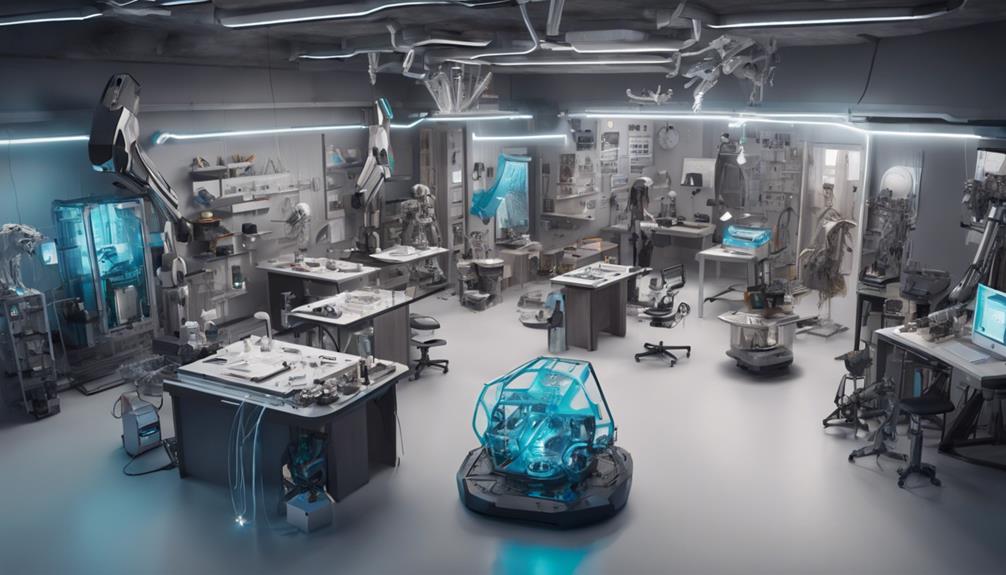
The Magic of 3D Printing: Beyond Prototyping
Beyond rapid prototyping, 3D printing has evolved into a transformative technology with far-reaching implications for various industries, environmental sustainability, and the future of mass production. It enables the creation of complex geometries, improves customization capabilities, and facilitates on-demand production, reducing inventory expenses. The aerospace, healthcare, automotive, architecture, and fashion industries are already benefiting from 3D printing's unique advantages. Additionally, it promotes a circular economy approach, reduces material waste, and lowers energy consumption. As the technology continues to advance, its potential to innovate manufacturing, healthcare, and beyond will only continue to unfold.
3D Printing in Aerospace Industry
The aerospace industry has been at the forefront of 3D printing adoption, leveraging the technology to produce lightweight, complex aircraft components that cannot be manufactured using traditional methods. This shift toward additive manufacturing has been driven by the need for reduced fuel consumption, increased performance, and improved safety. 3D printing enables the creation of lightweight structures that minimize weight without compromising on strength, resulting in fuel-efficient aircraft that decrease operating costs and environmental impact.
The aerospace industry's adoption of 3D printing has also led to the development of customizable parts that cater to specific aircraft requirements. This level of customization is unachievable through traditional manufacturing methods, where standardization is often the norm. With 3D printing, aircraft components can be customized to specific designs, reducing the need for assembly and enabling a more streamlined production process. Additionally, 3D printing allows for the rapid production of spare parts, reducing lead times and enabling faster maintenance and repair.
The benefits of 3D printing in aerospace are undeniable. By leveraging this technology, manufacturers can produce complex, lightweight structures and customizable parts that improve aircraft performance, decrease costs, and enhance safety. As the industry continues to push the boundaries of 3D printing, we can expect to see even more innovative applications that transform the aerospace sector.
Revolutionizing Healthcare With 3D
Transforming Healthcare With 3D
As medical professionals and researchers explore the extensive potential of 3D printing, they are discovering innovative ways to change healthcare, from producing custom prosthetics and implants to printing functional organs and tissues. This technological breakthrough has wide-ranging implications for personalized medicine, enabling healthcare providers to customize treatments to individual patients' unique needs. Medical implants, for example, can be designed to perfectly match a patient's anatomy, reducing the risk of complications and improving overall outcomes.
One of the most significant benefits of 3D printing in healthcare is its ability to facilitate quick prototyping and production. This allows for the rapid creation of personalized medical devices, such as prosthetic limbs, that can be customized to a patient's specific requirements. Additionally, 3D printing enables the development of intricate structures, like scaffolds for tissue engineering, that can support the growth of new tissue.
The potential applications of 3D printing in healthcare are extensive and diverse. From producing customized surgical models to printing functional organs for transplantation, this technology has the capability to transform the way we approach healthcare. As researchers continue to push the boundaries of what is achievable, we can anticipate significant advances in personalized medicine, leading to improved patient outcomes and improved quality of life.
Complex Geometries Made Possible
How do 3D printing's capabilities to produce intricate structures and complex geometries open up new avenues for medical innovation? The answer lies in the technology's ability to create customized solutions that cater to individual needs. In the medical field, 3D printing enables the creation of personalized implants, prosthetics, and surgical models that accurately replicate patient-specific anatomy. This level of precision is unmatched by traditional manufacturing methods, allowing for more effective treatment and improved patient outcomes.
Beyond medical applications, 3D printing's capabilities to produce complex geometries have given rise to innovative designs in other industries. Artistic sculptures that were previously unfeasible to create by hand can now be brought to life with precision and accuracy. Custom jewelry designers can now push the boundaries of creativity, crafting intricate pieces that were previously restricted by traditional manufacturing limitations. The freedom to design and produce intricate structures has opened up new possibilities for creatives and innovators alike.
As the technology continues to evolve, we can expect to see even more groundbreaking applications of 3D printing in various fields. From medical breakthroughs to artistic masterpieces, the ability to produce intricate structures is redefining what is possible. With its limitless potential, 3D printing is poised to transform industries and transform the way we live and work. As we continue to push the boundaries of what is possible, one thing is certain – the magic of 3D printing has only just begun.
Sustainability Through 3D Printing
By reducing material waste and enabling the production of localized, on-demand products, 3D printing is positioned to make a significant impact on the environmental sustainability of various industries. Traditional manufacturing processes often result in substantial waste generation, whereas 3D printing's additive nature guarantees that material is only used as needed, minimizing excess and reducing waste. Moreover, the use of eco-friendly materials in 3D printing enables the creation of sustainable products that are environmentally conscious.
The shift towards sustainable manufacturing is essential in today's era, and 3D printing is at the forefront of this movement. By adopting a circular economy approach, industries can reduce their environmental footprint and promote a culture of sustainability. 3D printing enables the production of products with minimal material usage, reducing the need for raw materials and the subsequent waste generated during traditional manufacturing processes. This paradigm shift has the potential to transform industries, promoting a more sustainable and environmentally responsible approach to production.
As the world moves towards a more sustainable future, 3D printing is poised to play a crucial role in driving this change. By reducing waste, promoting the use of eco-friendly materials, and enabling sustainable manufacturing practices, 3D printing is revolutionizing the way we think about production. As industries continue to adopt 3D printing technologies, we can expect to see a significant reduction in environmental impact, paving the way for a more sustainable future.
The Future of Mass Production
As industries increasingly embrace additive manufacturing technologies, the future of mass production is poised to experience a radical transformation, defined by unparalleled levels of flexibility, customization, and efficiency. This shift will empower the production of personalized consumer goods on a large scale, enabling companies to address individual preferences and requirements. With 3D printing, manufacturers can create intricate products with detailed designs, minimizing material waste and energy consumption.
Industrial automation will play a crucial role in this change, as machines and robots collaborate to optimize production processes. With the capacity to print on-demand, companies can lower inventory expenses and promptly adapt to evolving market needs. This adaptability will empower businesses to stay ahead of the competition, while simultaneously decreasing their environmental impact.
The future of mass production will also be characterized by a notable reduction in supply chain complexity. By being able to print locally, companies can eliminate the necessity for extensive logistics chains, lowering transportation expenses and carbon emissions. This decentralized approach to manufacturing will democratize the availability of goods, allowing communities to manufacture what they require, when they require it.
Ultimately, the fusion of 3D printing and industrial automation will transform the way we manufacture goods, making it quicker, more effective, and more sustainable. As this shift gains momentum, we can anticipate witnessing a new era of innovation and expansion, fueled by the enchantment of 3D printing.
Frequently Asked Questions
How Does 3D Printing Reduce Material Waste in Production Processes?
In traditional manufacturing, material waste is a significant concern. Nevertheless, 3D printing transforms production processes by promoting material efficiency. This innovative technology enables the creation of intricate shapes and products with minimal waste generation. By constructing layer upon layer, 3D printing guarantees that material is only utilized where essential, lowering scrap rates and supporting sustainable manufacturing practices. This fundamental change in production methodology is crucial in reducing environmental impact, preserving resources, and driving cost savings.
Can 3D Printing Be Used for Large-Scale Infrastructure Projects?
In large-scale infrastructure projects, 3D printing is increasingly being explored for its potential to transform architectural applications and construction projects. This innovative technology offers unprecedented opportunities for urban development, enabling the rapid creation of complex structures and reducing construction times. By leveraging 3D printing, cities can realize novel, sustainable, and efficient infrastructure solutions, revolutionizing the built environment and redefining the future of urban planning.
Are 3D Printed Products as Strong as Traditionally Manufactured Ones?
When evaluating the viability of 3D printed products, an important consideration is their strength compared to traditionally manufactured counterparts. Through rigorous durability testing, research has shown that 3D printed materials can exhibit comparable, and in some cases, superior strength properties. This is because of the ability to tailor internal structures and optimize material distribution, allowing for improved performance under various loads. Strength comparison studies have consistently demonstrated the potential for 3D printed products to match or surpass traditional manufacturing methods.
Can I 3D Print Using Recycled or Biodegradable Materials?
'In a world where waste dominates our planet, 3D printing offers a revolutionary solution: printing with recycled and biodegradable materials! Envision a future where plastic waste is a thing of the past, replaced by sustainable, eco-friendly products. The answer is yes, you can 3D print using recycled materials, reducing waste and conserving natural resources. Additionally, biodegradable materials offer a guilt-free alternative, allowing for responsible production and disposal. The possibilities are endless, and the environmental benefits are undeniable.'
Are There Any Intellectual Property Concerns With 3D Printing?
As the 3D printing industry evolves, intellectual property concerns emerge as a significant threat. Copyright infringement and the proliferation of counterfeit products pose significant risks to innovators and businesses. Moreover, patent violations and design theft can result in substantial financial losses. It is crucial for stakeholders to prioritize IP protection, ensuring that their creations and designs are safeguarded from unauthorized reproduction and misuse. To address these challenges, companies must implement robust legal frameworks and stay informed about emerging technologies that can help protect their intellectual property. Additionally, fostering a culture of respect for originality within the industry is vital, particularly as 3D printing intersects with areas like ux design in digital products, where innovative ideas can be easily replicated. By promoting awareness and collaboration among stakeholders, the 3D printing sector can mitigate risks and encourage a more sustainable and ethical environment for creative expression.

Related Posts
The Top Tools for Empowering Creative Developers in 2024
How Creative Coding Is Bridging Art and Technology
