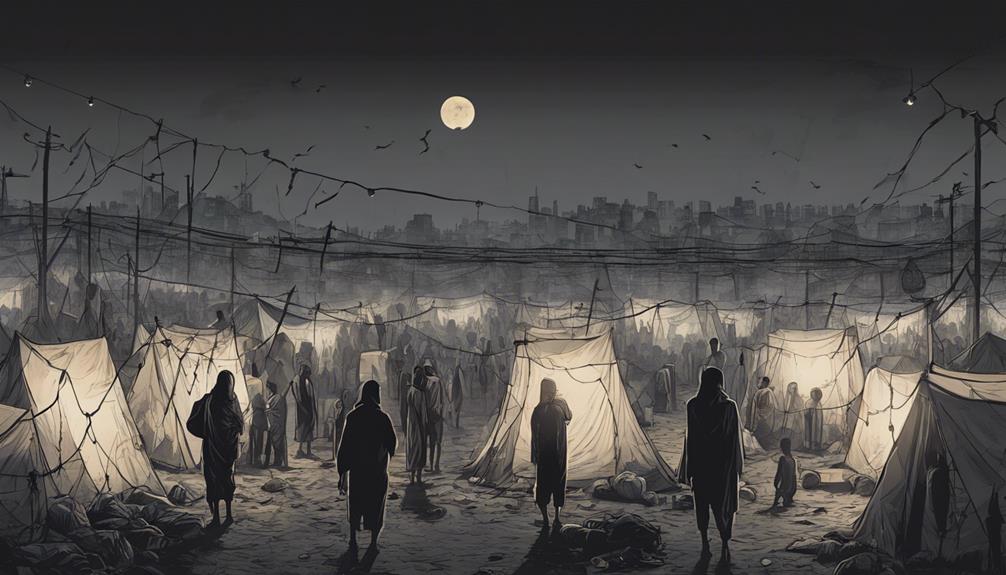
Understanding the Global Refugee Crisis
The global refugee crisis, driven by persecution, conflict, natural disasters, and economic inequality, has resulted in a staggering 70.8 million people being forcibly displaced worldwide, with 25.4 million classified as refugees. The majority of refugees originate from developing countries, with Syria, Afghanistan, and South Sudan being top countries of origin. Humanitarian aid efforts are necessary because of the overwhelming scale of the crisis, with organizations like UNHCR, Red Cross, and Doctors Without Borders providing vital support. As the international community collaborates to provide aid, grasping the root causes and challenges faced by refugees is essential for developing effective solutions to this complex issue, and exploring the intricacies of this crisis will reveal the path forward.
Causes of the Refugee Crisis
Persecution, conflict, and natural disasters have triggered a global refugee crisis, compelling millions to flee their homes in search of safety and security. The intricacy of this crisis is multifaceted, with various factors contributing to the displacement of people worldwide. One of the primary causes is political instability, which often leads to violence, persecution, and human rights violations. When governments fail to protect their citizens or engage in oppressive methods, people are compelled to flee to escape harm.
Moreover, economic inequality plays a significant role in the refugee crisis. Poverty, lack of opportunities, and income disparity can drive individuals to seek better living conditions elsewhere. When economic systems fail, people may be urged to migrate to countries with more promising economic prospects. Yet, this frequently leads to further displacement and exploitation.
The intersection of political instability and economic inequality can create a perfect storm, driving people to desperation and compelling them to seek refuge in other countries. The consequences of these factors are far-reaching, resulting in the displacement of millions of people worldwide. Understanding the root causes of the refugee crisis is crucial in developing effective solutions to address this global issue. By acknowledging the intricacies of political instability and economic inequality, we can strive towards creating a more stable and equitable world, where people can live without fear of persecution and with access to basic human rights.
Refugee Statistics and Trends
According to the United Nations High Commissioner for Refugees (UNHCR), a staggering 70.8 million people were forcibly displaced worldwide in 2019, with 25.4 million of them classified as refugees. This alarming figure highlights the severity of the global refugee crisis, with millions of individuals forced to flee their homes because of conflict, persecution, or natural disasters.
Delving deeper into the statistics, we see that the majority of refugees, approximately 84%, originate from developing countries. Syria, Afghanistan, and South Sudan are among the top countries of origin, with many fleeing war-torn regions. Regarding migration patterns, the majority of refugees seek asylum in neighboring countries, with Turkey, Pakistan, and Uganda hosting the largest numbers.
Asylum seekers, who account for 3.7 million of the displaced population, are awaiting the outcome of their refugee status determination. Refugee demographics reveal a disproportionate impact on vulnerable groups, including women, children, and the elderly. Children, in particular, make up 52% of the refugee population, highlighting the urgent need for targeted support and protection.
Understanding these statistics and trends is vital for informing effective responses to the refugee crisis. By examining the migration patterns, displaced populations, and demographics of refugees, policymakers and humanitarian organizations can develop targeted strategies to address the complex needs of this vulnerable population. Additionally, analyzing the impact of recent immigration policies is crucial, as these regulations can significantly shape the experiences of refugees seeking asylum. By evaluating how these policies affect access to resources and legal protections, stakeholders can identify gaps and barriers that need to be addressed. Ultimately, this comprehensive approach will enable more equitable and effective support systems, ensuring that the dignity and rights of refugees are upheld amidst the challenges they face.
Regional Refugee Hotspots
Roughly 15 million refugees are concentrated in five regional hotspots, where ongoing conflicts, political instability, and natural disasters have created an unbearable environment, forcing masses to flee in search of safety. These hotspots, including the Syria-Jordan border, the Democratic Republic of Congo, South Sudan, Somalia, and Afghanistan, are characterized by intricate displacement patterns, with refugees often moving multiple times in search of safety.
Humanitarian aid efforts are essential in these regions, as refugees rely on assistance to meet their basic needs. Nonetheless, the scale of the crisis often overwhelms available resources, leaving many without access to adequate food, shelter, and healthcare. The impact on host communities is also significant, as they often struggle to absorb the influx of refugees, straining local resources and infrastructure.
Integration challenges are another vital aspect of the regional refugee hotspots. Refugees often face difficulties adapting to new cultures and languages, and may experience discrimination and social exclusion. Moreover, the lack of opportunities for education and employment can lead to feelings of frustration and hopelessness among refugees. Understanding the intricacies of these regional hotspots is essential for developing effective responses to the global refugee crisis, and for providing meaningful support to both refugees and host communities.
Challenges Faced by Refugees
Refugees face a multitude of challenges that impact their well-being and resilience. One of the most pressing concerns is the struggle to access basic needs such as food, water, shelter, and healthcare, which are often scarce in refugee camps and urban areas. Moreover, the trauma and mental health consequences of displacement, persecution, and violence can have long-lasting effects on refugees' psychological and emotional stability.
Access to Basic Needs
In the midst of displacement, one of the most pressing concerns for refugees is securing access to basic necessities like food, water, shelter, and healthcare, which are often in scarce supply. The absence of these fundamental needs exacerbates the already precarious situation, making refugees vulnerable to malnutrition, disease, and exploitation. Humanitarian aid plays a critical role in bridging this gap, providing emergency assistance to those in dire need. Nonetheless, the response is often inadequate, and refugees are frequently left to fend for themselves.
Shelter provision is a significant aspect of humanitarian aid, as it provides a sense of safety and security. Refugee camps and settlements often struggle to accommodate the influx of displaced individuals, leading to overcrowding, poor sanitation, and inadequate living conditions. The lack of proper shelter leaves refugees exposed to the elements, making them susceptible to harsh weather conditions, violence, and sexual exploitation. Addressing the shortage of basic necessities, particularly shelter, is essential to alleviating the suffering of refugees and ensuring their dignity is preserved.
Trauma and Mental Health
Beyond the struggle to access basic needs, the experience of displacement and trauma can have a profound impact on the mental health and well-being of refugees. The psychological impact of fleeing war, persecution, and natural disasters can lead to anxiety, depression, and post-traumatic stress disorder (PTSD). Refugees often employ coping strategies, such as social support networks and cultural practices, to mitigate the effects of trauma. Nevertheless, these strategies may not be sufficient to address the complexity of their mental health needs.
Some key challenges faced by refugees regarding trauma and mental health include:
- Limited access to mental health services and interventions
- Stigma associated with mental illness, preventing many from seeking help
- Cultural and linguistic barriers hindering effective communication with healthcare providers
- Inadequate training of healthcare providers in addressing refugee-specific trauma and mental health needs
- Insufficient funding for mental health interventions and programs catered to refugee populations
International Response and Aid
As the global refugee crisis continues to unfold, a patchwork of international agreements, humanitarian organizations, and government initiatives has emerged to provide crucial support to displaced populations. The international community has come together to provide humanitarian aid, with donor contributions playing a pivotal role in funding relief efforts. Organizations such as the United Nations High Commissioner for Refugees (UNHCR) and non-governmental organizations (NGOs) like the Red Cross and Doctors Without Borders have been at the forefront of providing emergency assistance, including food, shelter, and medical care.
| Organization | Initiative | Focus |
|---|---|---|
| UNHCR | Resettlement Programs | Asylum seekers |
| Red Cross | Humanitarian Aid | Emergency Assistance |
| Doctors Without Borders | Medical Care | Refugee Health |
| European Union | Border Management | Refugee Protection |
In addition to humanitarian aid, resettlement programs have been established to provide a safe haven for asylum seekers. These programs aim to relocate refugees to countries where they can rebuild their lives and contribute to their new communities. Governments have furthermore established initiatives to manage borders and provide protection to refugees, ensuring they are not forced to return to countries where they face persecution or violence. Amid challenges persisting, the international response to the refugee crisis has been crucial in providing life-saving assistance to those in need.
Finding Solutions for the Future
Sustainable solutions to the global refugee crisis require a multi-faceted approach that addresses the root causes of displacement, bolsters international cooperation, and supports resilient communities. The crisis demands a thorough response that goes beyond immediate humanitarian aid, focusing on long-term integration and community support.
To achieve this, several key strategies must be employed:
- Policy reform: Overhauling outdated policies to provide a clearer pathway to resettlement and citizenship, reducing bureaucratic barriers and promoting social cohesion.
- Humanitarian assistance: Providing sustained support to refugee-hosting countries, ensuring they have the resources to accommodate and integrate newcomers.
- Community-driven initiatives: Empowering local communities to take ownership of refugee integration, nurturing social connections and economic opportunities.
- Education and skills development: Equipping refugees with the skills and knowledge necessary to thrive in their new environments, enhancing their employability and self-sufficiency.
- Long-lasting solutions: Investing in sustainable infrastructure, such as housing and healthcare facilities, to support refugees in their countries of asylum.
Frequently Asked Questions
Can Refugees Return to Their Home Countries After the Conflict Ends?
Notably, only 3.2% of refugees globally have returned to their home countries in the past decade. When pondering if refugees can return home after conflict ends, various obstacles arise. Challenges in repatriation and struggles in reintegration impede refugees' ability to resettle, as psychological barriers and cultural adjustments additionally add to the challenge. These intricacies underscore the necessity for all-encompassing support systems to aid in successful returns, guaranteeing refugees can reconstruct their lives in a sustainable and dignified way.
How Do Refugees Access Education and Healthcare Services?
Refugees often face significant challenges in accessing vital services, including education and healthcare. Language barriers and cultural differences can hinder their ability to navigate these systems, leading to healthcare barriers and limited education opportunities. Moreover, refugees may struggle to obtain required documents, such as identification papers, to access these services. To address these challenges, targeted programs and initiatives can facilitate cultural integration and provide linguistic support, ensuring refugees receive the education and healthcare they need to rebuild their lives.
Can Refugees Work Legally in Their Host Countries?
As the ancient Greek philosopher, Aristotle, once said, 'We are what we repeatedly do. Excellence, then, is not an act, but a habit.' In the context of refugees, this habit of excellence is often hindered by restrictive labor laws. In many host countries, refugees face significant barriers to securing work permits, limiting their employment opportunities. Whilst some countries offer temporary work permits, others restrict refugees from working altogether, leaving them in a state of limbo, devoid of the dignity and purpose that comes with meaningful employment.
Are Refugees Entitled to Compensation for Lost Properties?
Refugees' entitlement to compensation for lost properties is a complex issue. In addition, there is no universal right to compensation, refugees may pursue property claims through various mechanisms. The 1951 Refugee Convention and its 1967 Protocol provide a framework for restitution and compensation, but implementation varies by country. National laws, international treaties, and humanitarian organizations may additionally offer avenues for refugees to seek redress for lost properties, underscoring the importance of compensation rights in refugee protection.
Can Refugees Apply for Citizenship in Their Host Countries?
As the ancient Greek philosopher, Diogenes, once said, 'I am not a citizen of Athens, nor of Greece, but a citizen of the world.' Today, refugees seeking citizenship in their host countries face a more complex reality. To apply for citizenship, refugees must navigate citizenship eligibility criteria and meet legal requirements, such as residency periods, language proficiency, and background checks. Meeting these requirements can be a challenging task, but for those who succeed, citizenship offers a sense of belonging and a chance to rebuild their lives.

Related Posts
Why Understanding the Context Matters in Today’s News

The Power of Curiosity in Uncovering Hidden Stories