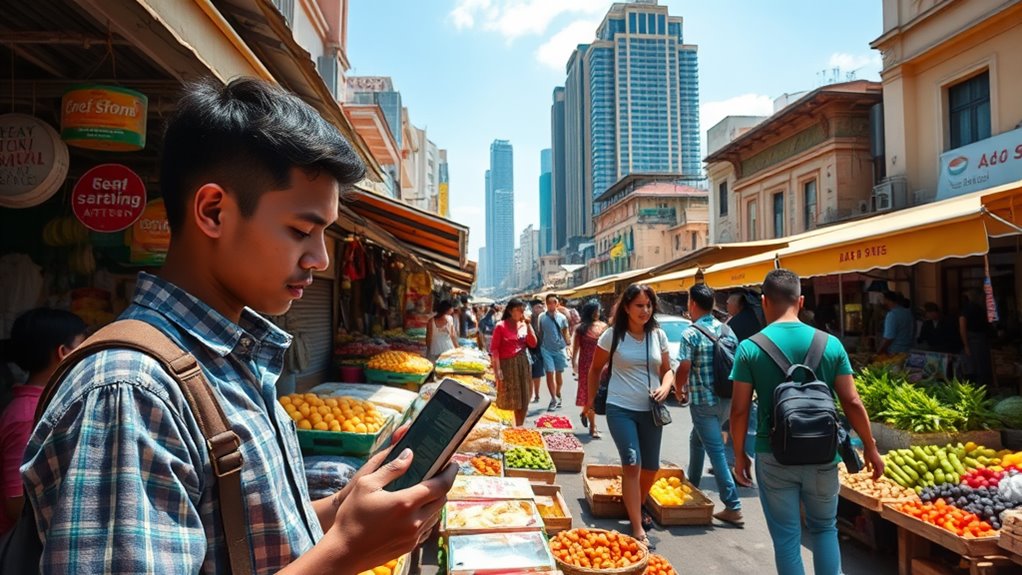
How Emerging Markets Are Changing the Global Economy
Emerging markets are markedly altering the global economy through their rapid growth and industrialization. Countries like India and Brazil, with their youthful populations, are driving innovation and consumer demand. Technological advancements, particularly in mobile and fintech, are enhancing financial inclusion and changing consumer behavior. Moreover, these markets are reshaping global trade dynamics by reevaluating tariffs and establishing new partnerships. Although investment opportunities are rising, political stability remains essential to sustaining growth. Comprehending the unique characteristics of these markets is indispensable for success, setting the stage for a deeper exploration of their impact on the global environment.
Overview of Emerging Markets
Emerging markets represent a diverse group of economies that are in the process of swift growth and industrialization, often characterized by their potential for higher returns compared to developed markets. These economies exhibit unique market dynamics shaped by a combination of cultural influences and regulatory frameworks, which can vary considerably from one region to another.
As these markets evolve, demographic shifts play a critical role, with younger populations driving consumption and innovation. Urbanization trends further amplify this effect, as cities expand and create new opportunities for businesses and labor markets. Infrastructure development is crucial in supporting this growth, ensuring that transportation, energy, and communication systems can meet the rising demands of urban populations.
Resource management becomes increasingly important in this scenario, as emerging markets aim to balance economic growth with environmental sustainability. Effective management of natural resources is crucial to prevent depletion and maintain ecological integrity. Additionally, education systems must adapt to equip a skilled workforce capable of maneuvering through the intricacies of a swiftly changing global economy.
Economic Growth Trends
As various nations shift from developing to more advanced economies, distinct economic growth trends have begun to surface, highlighting the unique trajectories of these markets. One of the most significant trends is the influence of demographic shifts on economic output. A youthful population can drive innovation and consumer demand, whereas aging demographics may impose constraints on growth. Countries such as India and Brazil exhibit potential for robust growth fueled by their increasing workforce, finally improving their positions within the global economy.
Additionally, currency fluctuations play a vital role in shaping the economic environment of emerging markets. As these nations navigate the intricacies of international trade and investment, their currencies often experience volatility that can either bolster or hinder economic performance. For instance, a weaker currency can improve export competitiveness, attracting foreign investment, whereas excessive depreciation may lead to inflationary pressures that stifle domestic consumption.
Moreover, the adoption of technology in various sectors is an important factor propelling growth. Innovative solutions in agriculture, finance, and manufacturing have allowed emerging markets to leapfrog traditional development stages, creating more efficient processes and encouraging entrepreneurship.
Shifts in Global Trade
A significant transformation is underway in the terrain of global trade, reshaping how countries interact economically. As emerging markets gain prominence, the trade dynamics are evolving, leading to new patterns of engagement and collaboration. Tariff impacts, once a significant barrier to trade, are being reevaluated as nations seek to improve market access and encourage economic growth through more favorable trade agreements.
Countries are increasingly prioritizing the establishment of global partnerships that facilitate smoother and more efficient supply chains. This shift not only boosts the resilience of these networks but also allows for better alignment of export strategies with regional demands. Emerging economies are leveraging their unique positions to innovate trade practices, often favoring bilateral agreements that yield mutual benefits.
In this new environment, import trends are likewise changing, as nations diversify their sources and seek competitive pricing without compromising quality. As a result, businesses must adapt their strategies to navigate these intricacies, ensuring they remain agile in the face of fluctuating market conditions. The focus has shifted toward building robust trade frameworks that prioritize sustainability and inclusivity, allowing for a freer flow of goods and services.
Ultimately, these shifts in global trade not only empower emerging markets but also create opportunities for established economies to rethink their approaches. By embracing change and promoting cooperation, nations can improve their economic freedoms, paving the way for a more interconnected and prosperous global economy.
Investment Opportunities
Investment opportunities within emerging markets are on the rise, driven by shifting economic environments and evolving consumer demands. As traditional markets reach saturation, investors are increasingly looking to these burgeoning economies for potential growth and diversification. Emerging markets present unique prospects for those seeking to capitalize on the dynamic shifts in global trade and consumption patterns.
One significant trend is the growing emphasis on sustainable investments. With a rising awareness of environmental and social governance (ESG) factors, investors are drawn to projects that not only promise financial returns but likewise contribute positively to society and the planet. Emerging markets are often at the forefront of this transformation, with governments and businesses actively pursuing initiatives that align with sustainable development goals. This shift not only addresses pressing global challenges but additionally opens new avenues for investment.
Moreover, market diversification remains a key strategy for investors aiming to mitigate risk and improve portfolio performance. By allocating resources to emerging markets, investors can access a range of asset classes and industries that may not be available in more established economies. This diversification is particularly valuable in times of geopolitical uncertainty or economic downturns, as emerging markets may exhibit different growth trajectories and resilience.
Technological Innovations
Technological innovations are reshaping emerging markets, with mobile technology adoption playing a pivotal role in bridging the digital divide. The rapid growth of e-commerce is transforming consumer behavior and market dynamics, whereas the fintech revolution is enhancing financial inclusion and accessibility. Together, these trends are not just driving economic growth but additionally nurturing a more interconnected global economy.
Mobile Technology Adoption
Emerging markets are experiencing a transformative wave of mobile technology adoption, reshaping the terrain of communication and commerce. This evolution is characterized by a rapid increase in smartphone penetration, enabling millions to access information and services that were previously out of reach. As smartphones become more ubiquitous, they empower individuals and businesses to connect and transact in unprecedented ways.
The rise of mobile payment systems has been particularly significant. These platforms not only facilitate transactions but also improve financial inclusion, allowing users to participate in the economy without the need for traditional banking infrastructure. Entrepreneurs in emerging markets leverage these technologies to create innovative solutions, disrupting existing business models and promoting economic growth.
Moreover, mobile technology adoption is driving a cultural shift. It cultivates a sense of empowerment, offering individuals the freedom to manage their finances, communicate swiftly, and access resources. This digital revolution is not merely a technological advancement; it represents a profound shift in the direction of autonomy and opportunity. As emerging markets continue to embrace mobile technology, they are carving out new paths in the global economy, redefining what is possible for millions of people.
E-commerce Growth Trends
The rapid expansion of e-commerce in emerging markets is largely driven by innovative technologies that improve user experience and streamline operations. As more consumers embrace online shopping, the demand for seamless digital payments has surged, with mobile wallets becoming a preferred choice. This shift boosts market accessibility, allowing previously underserved populations to engage in cross-border transactions with greater ease.
Consumer trust is another critical factor nurturing e-commerce growth. Platforms are increasingly focusing on building confidence through secure payment options and transparent policies, which in turn boosts user engagement. The rise of social commerce, where social media platforms facilitate buying and selling, has further catalyzed this movement, creating new avenues for regional marketplaces to thrive.
However, the environment is not without challenges. Logistics challenges remain a significant hurdle, necessitating innovative solutions to guarantee timely deliveries. Moreover, platform competition intensifies as businesses endeavor to capture market share, compelling them to continually improve their offerings. Overall, the interplay of these dynamics positions emerging markets as lively arenas for e-commerce, reshaping the global economic environment and enabling greater freedom for consumers and entrepreneurs alike.
Fintech Revolution Impact
Disrupting traditional financial systems, the fintech revolution is reshaping the terrain of financial services in emerging markets. By utilizing blockchain technology and digital currencies, these regions are witnessing a surge in innovative payment solutions that improve accessibility and convenience. Fintech partnerships are emerging between startups and established financial institutions, promoting collaboration that accelerates growth and drives financial inclusion.
As the demand for efficient financial services increases, regulatory frameworks must adapt to support this evolution without stifling innovation. Countries that embrace flexible regulations can create a conducive environment for startup ecosystems to flourish, attracting venture capital that fuels further advancements. This dynamic interplay encourages the development of diverse financial products customized to local needs, empowering individuals and businesses alike.
The fintech revolution not just democratizes access to financial services but also improves economic resilience in emerging markets. By utilizing technology, these economies can leapfrog traditional banking hurdles, paving the way for a future characterized by greater financial freedom and opportunity. In this situation, the impact of fintech extends beyond mere convenience; it is a catalyst for transformative change in the global economy.
Consumer Behavior Changes
In recent years, shifts in consumer behavior have greatly influenced the dynamics of the global economy, particularly within emerging markets. As access to technology and the internet continues to expand, consumers are increasingly enabled to make informed choices, driven by a desire for authenticity and value. The influence of social media has been particularly profound, reshaping how brands communicate and engage with their audiences. Platforms such as Instagram and TikTok have become crucial tools for brands aiming to capture the attention of a younger, more discerning demographic.
This shift towards digital engagement has led to heightened expectations regarding transparency and ethical practices. Consumers are now more likely to support brands that align with their personal values, nurturing a new kind of brand loyalty that prioritizes connection over mere transactions. In emerging markets, where traditional retail channels may have limited reach, social media serves as a critical bridge, allowing brands to cultivate relationships and build trust with consumers in real-time.
Moreover, the growing prevalence of e-commerce in these regions reflects a significant change in purchasing habits. Shoppers are increasingly favoring convenience and personalization, seeking customized experiences that resonate with their individual preferences. As a result, businesses are compelled to adapt their strategies to not just meet these evolving demands but to leverage the influence of social media to improve brand visibility and loyalty. The interplay between technology and consumer behavior is revolutionizing the environment, making it imperative for brands to stay agile and responsive in this swiftly changing setting.
Future Outlook and Challenges
As emerging markets continue to shape the global economy, the future outlook presents both opportunities and challenges. Economic growth trends indicate potential for expansion, yet political stability remains a vital concern that could impact investment climates. Identifying and capitalizing on investment opportunities will be important for maneuvering through these intricacies and nurturing sustainable growth in these regions.
Economic Growth Trends
Emerging markets are poised at a critical juncture, where their economic growth trends hold significant implications for the global economy. As these nations navigate their paths to sustainable development, they face both opportunities and challenges driven by demographic shifts. The youth population in many emerging markets presents a unique advantage, promoting innovation and consumption. Nevertheless, this demographic dividend too necessitates job creation and infrastructure development to utilize its potential effectively.
The following table illustrates the projected growth rates and challenges facing various emerging markets:
| Region | Projected Growth Rate (2024) | Key Challenge |
|---|---|---|
| Southeast Asia | 5.2% | Infrastructure deficits |
| Sub-Saharan Africa | 4.5% | Political instability |
| Latin America | 3.8% | Economic inequality |
| Eastern Europe | 3.0% | Aging population |
As we look ahead, emerging markets must embrace strategic policies that capitalize on their demographic advantages as they address sustainable development goals. The path forward is fraught with challenges, but the potential for transformative growth remains substantial, shaping a more interconnected global economy.
Political Stability Issues
Political stability remains a fundamental factor influencing the future outlook of emerging markets, greatly impacting their economic trajectories. Political unrest and governance challenges can undermine social stability, deterring investment and hindering sustainable growth. In many regions, corruption issues exacerbate these challenges, creating a regulatory environment that is often unpredictable and fraught with obstacles.
Civic engagement plays an important role in addressing these challenges, as active citizen participation can drive demand for transparency and accountability in governance. Moreover, democratic shifts, although promising, can introduce geopolitical risks that complicate international relations and economic cooperation. The potential for policy reforms in emerging markets is significant, yet the success of such initiatives relies heavily on the ability to mitigate existing instability.
Looking ahead, the interplay of political stability and economic growth will be vital for emerging markets. Countries that prioritize effective governance and encourage civic engagement are better positioned to navigate the intricacies of the global economy. By addressing corruption and enhancing the regulatory environment, these markets can build resilience against political turbulence, paving the way for a more prosperous future.
Investment Opportunities Ahead
Even though challenges persist, the terrain for investment opportunities in emerging markets is increasingly promising. Investors are now focusing on sustainable and impact investing, aiming to generate positive social and environmental outcomes alongside financial returns. This strategy encourages sector diversification, allowing portfolios to withstand currency fluctuations and demographic shifts.
A thorough regional analysis is crucial for effective market entry. By grasping the unique regulatory environment of each market, investors can conduct extensive risk assessments that inform asset allocation decisions.
Here's a concise overview of key investment considerations:
| Investment Considerations | Key Insights |
|---|---|
| Sustainable Investing | Focus on ESG factors |
| Sector Diversification | Spread risk across industries |
| Currency Fluctuations | Monitor exchange rates |
| Demographic Shifts | Adapt to changing consumer needs |
Frequently Asked Questions
What Defines an Emerging Market?
An emerging market is defined by a combination of economic indicators, including GDP growth rates, market volatility, and evolving consumer behavior. These markets often present unique investment opportunities driven by technological advancements and improved trade relations. Moreover, infrastructure development plays a vital role, alongside a regulatory environment that may still be maturing. Comprehending these elements is fundamental for investors seeking to navigate the intricacies of emerging markets and leverage their potential for growth. Additionally, investors must remain cognizant of infrastructure challenges in emerging economies, which can hinder growth despite the promising indicators. Addressing these challenges requires innovative approaches and partnerships that can foster development and enhance connectivity. By strategically aligning with local businesses and understanding regional dynamics, investors can better position themselves to capitalize on the long-term potential of these vibrant markets.
How Do Emerging Markets Influence Developed Economies?
Emerging markets greatly influence developed economies through evolving trade dynamics and currency fluctuations, which can alter competitive advantages. Their unique consumer behavior drives demand for innovative products, prompting developed nations to adapt their offerings. Furthermore, technological innovation in these markets promotes new investment strategies, as investors seek opportunities in regions with improved market accessibility. This interplay not just reshapes global economic environments but likewise encourages a more collaborative and interconnected approach to growth and sustainability.
What Role Do Demographics Play in Emerging Markets?
Demographics in emerging markets shape economic environments through significant population growth and a pronounced youth bulge. This dynamic fuels labor force expansion, often accompanied by urban migration, as young individuals seek opportunities in cities. As a result, evolving consumer trends emerge, driven by increased education access and technological adoption. Nevertheless, health disparities persist, influencing productivity and quality of life. Comprehending these demographic factors is crucial for utilizing potential and nurturing sustainable development in these lively economies.
How Do Political Factors Affect Emerging Markets?
Political factors profoundly influence emerging markets, as political stability is essential for attracting investment. Governance issues, such as corruption levels and regulatory environment, can deter foreign entities. Additionally, trade policies and election outcomes shape economic environments, affecting investor confidence. Frequent policy changes may create uncertainty, whereas strong foreign relations can improve market opportunities. Ultimately, the interplay between these factors determines the viability and growth potential of emerging economies, nurturing a climate conducive to economic freedom.
What Are the Risks of Investing in Emerging Markets?
Investing in emerging markets presents several risks, including currency volatility that can erode returns and regulatory challenges that hinder market entry. Furthermore, market liquidity may be limited, complicating asset conversion during downturns. Investors must consider their investment horizon, as economic instability and infrastructure deficits can impact growth prospects. Geopolitical tensions may further disrupt market conditions, whereas shifting consumer behavior can create unpredictability, necessitating a cautious and informed investment approach.

Related Posts

Why Understanding the Context Matters in Today’s News

The Power of Curiosity in Uncovering Hidden Stories