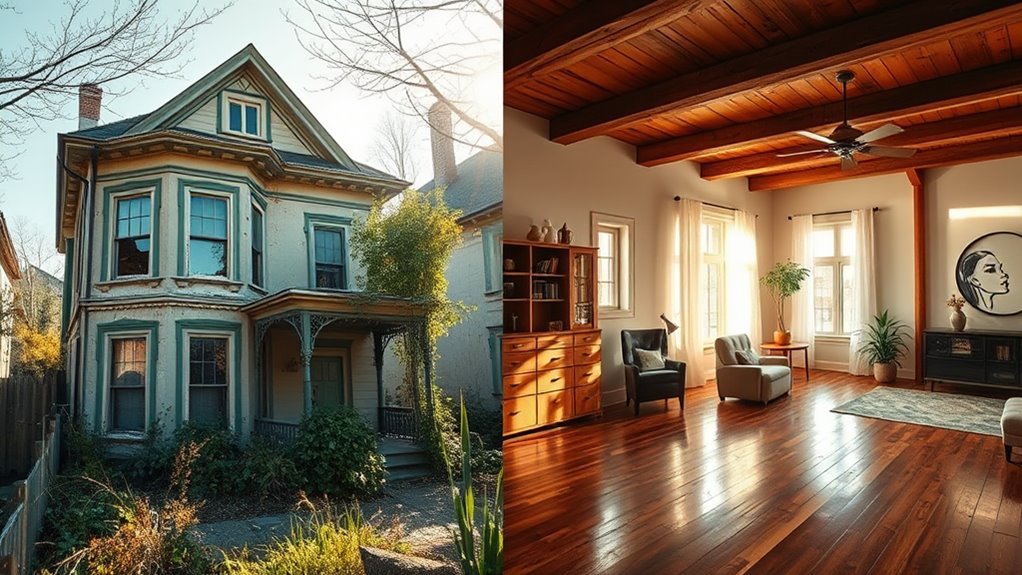
The Pros and Cons of Buying a Fixer-Upper
Buying a fixer-upper can be both thrilling and challenging. You get the chance to personalize a space and potentially increase its value through smart renovations. Nevertheless, hidden problems may arise, and renovation costs can soar beyond your budget. Time commitments for DIY projects are significant, and contractor reliability can impact your plans. You'll need to juggle financing options and local zoning regulations, too. Still, the emotional investment and sense of ownership can be deeply rewarding. If you're curious about how to navigate this expedition effectively, there's more to explore that can help guide your decision.
Understanding Fixer-Uppers
When considering a fixer-upper, it's vital to comprehend what this term really means. A fixer-upper isn't just a house in need of a little love; it's a canvas for your home renovation dreams. This investment strategy can be rewarding, but it requires some awareness of neighborhood trends and what's worth your time and money.
You'll want to assess your DIY skills honestly. Some projects can be tackled with enthusiasm and creativity, whereas others may demand the expertise of a professional. Your design choices will directly impact the home's charm and functionality, which can improve its resale value down the line. When you choose the right upgrades, you're not just enhancing your living space; you're additionally making a smart financial move.
Next, consider your financing options. A traditional mortgage might not cover the costs of extensive renovations, so exploring other avenues can be vital. Contractor selection is another key aspect; you'll want someone reliable who comprehends your vision and can work within your project timelines.
Don't forget about zoning regulations, either. They can dictate what changes you can make and can affect your entire renovation plan. Grasping these rules can save you from headaches later on. All these elements come together to help you create a welcoming home that reflects your unique style and meets your community's standards. With your heart and mind focused on these details, you can turn a fixer-upper into your dream space.
Financial Advantages
When you buy a fixer-upper, you often snag it at a lower purchase price compared to move-in-ready homes. This initial savings can lead to potential equity growth as you invest in renovations. Plus, don't overlook the tax incentives that might be available to you, further enhancing your financial benefits.
Lower Purchase Price
Buying a fixer-upper often means snagging a property at a lower purchase price compared to move-in ready homes. This can be a game-changer if you're working within budget constraints. With the right approach, you can invest the savings into renovation costs that align with your vision, making the space truly yours.
As you navigate neighborhood trends, consider how your chosen design choices might impact future resale value. Your buyer motivation will drive your selections, but keep in mind that inspection surprises can pop up. It's essential to have a solid plan for financing options that cover both the initial purchase and renovation expenses.
When it comes to contractor selection, do thorough research to find someone who understands your timeline expectations and can deliver quality work. A well-thought-out renovation can create a space where you feel at home, nurturing a sense of belonging in your community. In the end, during the lower purchase price is attractive, it's your vision and effort that will transform that fixer-upper into a cherished sanctuary.
Potential Equity Growth
Investing in a fixer-upper not just offers the advantage of a lower purchase price but likewise opens the door to significant potential equity growth. By implementing a smart renovation strategy, you can see equity appreciation that might far exceed your initial investment. Market timing plays a vital role here; if you buy in a neighborhood with upward trends, your home's value could rise quickly.
Conduct a thorough investment analysis to determine which renovations will yield the best resale potential. Consider cost estimation carefully, as knowing how much to spend on improvements can make or break your profit margins.
Exploring different financing options is also fundamental, as some loans are particularly designed for renovations, allowing you to fund your vision during building equity. By choosing wisely and staying attuned to market conditions, your fixer-upper can transform into not just a home but a valuable asset. This process can create a sense of belonging in a community that you've helped to improve, making both your investment and your lifestyle richer in the long run.
Tax Incentives Available
Tax incentives can greatly enhance the financial advantages of purchasing a fixer-upper. By taking advantage of various tax deductions, you can greatly offset your renovation costs. Many states offer renovation grants that can help you with repairs, especially if you're part of a neighborhood revitalization effort.
If your home qualifies for historical incentives, you could enjoy additional savings during the preservation of its charm. Plus, federal programs and local initiatives often provide homeowner assistance aimed at encouraging energy efficiency upgrades. These energy credits can lower your tax bill when you install energy-efficient appliances or insulation.
You might additionally benefit from property tax breaks, which can ease your financial burden as you invest in improvements. By comprehending these options, you can make your fixer-upper not merely a dream home but likewise a smart financial move. Don't overlook the potential savings available to you; utilizing these tax incentives can bring you closer to feeling at home in your newly renovated space. Embrace the experience, knowing you're part of a community that values restoration and revitalization.
Customization Opportunities
A fixer-upper offers countless customization opportunities that let you create a space tailored to your unique taste and lifestyle. Instead of settling for someone else's vision, you can adjust every detail to reflect your personal design preferences. This freedom not only permits you to craft a home that feels truly yours, but it additionally nurtures a sense of belonging as you infuse your character into every corner.
Here are three key areas where you can make personalized renovations:
- Layout Changes: You can knock down walls or create open-concept spaces that improve flow and functionality, making your home more inviting for family and friends.
- Interior Design: From choosing paint colors to selecting fixtures, you can curate every aspect of your home's aesthetic. Whether you love modern minimalism or cozy rustic charm, the choices are all yours.
- Outdoor Spaces: Transform your yard into an oasis that reflects your lifestyle. Create a garden, outdoor entertainment area, or a tranquil retreat—whatever helps you feel at home.
Emotional Investment
When you choose a fixer-upper, you're not just buying a house; you're investing emotionally in a space that could become your home. This adventure can bring both stress and frustration as you navigate renovations and setbacks. Nevertheless, keeping your long-term vision and goals in mind can help you stay focused and connected to your new place.
Personal Attachment to Home
Investing your heart in a fixer-upper can transform a mere house into a cherished home. When you pour your energy into renovations, you create an emotional connection that weaves your personal history into the very walls. Each room becomes a canvas for your aesthetic vision, where every design preference reflects your unique identity.
Here are three ways to cultivate that personal attachment:
- Nostalgic Memories: As you restore the space, think about the memories you'll create. Envision family gatherings, laughter, and love filling the rooms, turning them into a backdrop for cherished moments.
- Family Legacy: A fixer-upper can serve as a family legacy. Your efforts can inspire future generations to appreciate the home and the stories woven into its fabric.
- Neighborhood Ties: Embrace the community around you. The connections you build with neighbors can enrich your experience, making the home feel even more like a belonging.
Every renovation story adds depth to your experience, making the house a significant part of your life. Investing emotionally in your fixer-upper not just improves its beauty but also cements your place within your community.
Stress and Frustration Levels
Renovating a fixer-upper can often lead to heightened stress and frustration, as the emotional investment you make can amplify the challenges that arise. You might find yourself grappling with project expectations that don't always align with reality. To manage this stress, it's crucial to adopt effective stress management and frustration coping strategies. Building emotional resilience is key; remember, it's okay to feel overwhelmed at times.
Establishing realistic timelines can help you navigate the unpredictability of renovations. You'll want to practice adaptive planning, adjusting your approach as obstacles come up. Lean on your support systems—friends, family, or even online communities can provide both practical help and emotional encouragement. Effective communication strategies with your loved ones can ease potential tension, especially when family dynamics come into play.
Don't forget about self-care practices during this process. Taking time for yourself can recharge your energy and help maintain a positive mindset. By addressing stress proactively, you can create an environment that nurtures connection and support throughout your renovation experience, making it a more enjoyable time for everyone involved.
Long-Term Vision and Goals
Having a clear long-term vision and set goals can greatly improve your emotional investment in a fixer-upper. When you approach your renovation project with purpose, it aligns your aspirations with your family needs and future planning. This alignment not only boosts your motivation but additionally improves your overall satisfaction with the experience.
To maximize your emotional commitment, consider these three key elements:
- Renovation Goals: Define what you want to achieve. Are you looking for a cozy family space or an investment strategy for resale potential?
- Neighborhood Vision: Envision the community you want to be part of. Does it match your lifestyle? Think about the environment you want for your family and how it fits into your long-term plans.
- Long-Term Satisfaction: Reflect on how this project will impact your future. Will it meet your family's evolving needs? A well-thought-out approach guarantees that your efforts translate into lasting happiness.
Potential Risks
Buying a fixer-upper can be a rewarding venture, but it comes with its share of potential risks. One of the most significant concerns is hidden problems. You might think you've found the perfect home, only to discover costly issues lurking beneath the surface, like mold or structural damage. These unexpected costs can quickly drain your budget, leaving you feeling overwhelmed.
Renovation delays can likewise become a headache. What you hoped would be a quick project might stretch on for months, impacting your plans and forcing you to adapt. Be mindful of neighborhood dynamics, too. The area's development may influence your home's value, so research local trends to avoid resale challenges down the line.
Contractor reliability is another critical factor. Not all contractors are equal, and hiring someone who doesn't deliver can lead to frustration and additional expenses. You'll additionally need to be aware of zoning issues that could affect your renovation plans, potentially limiting what you can do with the property.
Financing options may seem straightforward, but market volatility can impact your investment's worth. Fluctuations in the real estate market might make it harder to sell when the time comes, especially if you've poured money into renovations without seeing a corresponding increase in value. Finally, don't ignore safety concerns. Older homes might have outdated electrical systems or plumbing, which can pose risks if not addressed quickly. By considering these factors, you can make a more informed decision about your fixer-upper expedition.
Time Commitment
Time is a significant factor when evaluating a fixer-upper. You might be drawn to the charm and potential of an older home, but don't underestimate the time commitment involved. A successful renovation isn't just about vision; it requires careful planning and effective project management. Comprehending your renovation timeline can help you set realistic expectations and avoid feeling overwhelmed.
Here are three key aspects to reflect on when assessing the time commitment of a fixer-upper:
- Scope of Work: Assess how extensive the renovations are. A minor cosmetic update might take a few weekends, whereas major structural changes could stretch over several months. Knowing what you're getting into helps you plan accordingly.
- Personal Availability: Think about how much time you can realistically dedicate to the project. Whether you plan to engage fully or tackle it during evenings and weekends, your schedule will play a significant role in determining the pace of renovations.
- Team Coordination: If you're hiring professionals, effective project management is fundamental. You'll need to coordinate schedules, track progress, and make decisions on the fly. This could add considerable time to the overall timeline, so be prepared for that.
Ultimately, a fixer-upper can be a fulfilling expedition if you're aware of the time commitment involved. By planning ahead and staying organized, you'll create a space that truly feels like home.
Market Considerations
Comprehending market considerations is fundamental when investing in a fixer-upper. You want to grasp neighborhood trends and market demand to guarantee your investment aligns with what buyers are seeking. Check the resale value of similar homes in the area; this can give you insight into potential profits down the line.
Consider renovation costs carefully. It's tempting to underestimate what it'll take to transform a property, but a realistic budget will help you avoid financial strain. Additionally, be aware of buyer competition in your chosen market. High demand might drive prices up, whereas low competition could mean better deals, but you need to act quickly when the right property comes along.
Local amenities play a significant role in property value. Homes near parks, schools, and shopping centers tend to attract more buyers, enhancing your investment potential. Keep zoning regulations in mind, too; they can affect what renovations you can undertake and how the property might appreciate.
Financing options are another important aspect. You'll want to explore different types of loans, including those tailored for fixer-uppers, to secure the best rates. Finally, don't overlook market timing. Grasping when to buy can influence your overall success. By comprehending these market considerations, you can make informed decisions that fulfill your desire for a home and create a solid investment for your future.
Tips for Success
Comprehending market considerations lays the groundwork for your success with a fixer-upper. To turn your new house into a beloved home, you'll need to implement a strategic approach. Here are some crucial tips to guide you:
- Neighborhood Research: Understand the area you're moving into. Look into local amenities, schools, and future developments. Knowing the neighborhood can help you make informed decisions and improve your home's resale value.
- Renovation Budgeting: Set a realistic budget that includes all costs—materials, labor, and unexpected expenses. Factor in your DIY projects to save money, but make sure you're prepared for professional help when needed.
- Contractor Selection: Take the time to choose the right contractors. Read reviews, check references, and confirm they adhere to safety regulations. A good contractor will not only deliver quality work but will also assist in timeline management to keep your project on track.
As you gather design inspiration, remember to create a cohesive vision that reflects your personality. By following these tips, you'll navigate the fixer-upper process with confidence, turning challenges into opportunities. You'll connect with your new home and community, creating a space that feels truly yours. Embrace the process—your hard work will pay off when you finally settle into your dream home.
Frequently Asked Questions
What Is the Average Cost to Renovate a Fixer-Upper?
When you're looking at the average cost to renovate a fixer-upper, it really depends on your renovation budget and the scope of work. Typically, you might spend anywhere from $15,000 to $50,000, but it can go higher for extensive projects. Don't forget to factor in DIY considerations; tackling some tasks yourself can save money. Just remember, every dollar counts when transforming your space into a place that feels like home.
How Do I Find Reliable Contractors for Renovations?
To find reliable contractors for your renovations, start by checking contractor reviews online. Look for feedback that highlights their work quality and adherence to renovation timelines. Don't hesitate to ask friends or neighbors for recommendations; word-of-mouth is influential. Once you've narrowed down your options, schedule interviews to gauge their communication styles and professionalism. Trust your instincts—finding the right contractor can make all the difference in your renovation experience!
Can I Live in a Fixer-Upper During Renovations?
Yes, you can live in a fixer-upper during renovations, but it requires careful planning. Consider your living arrangements and how they'll fit with the renovation timelines. You might want to tackle one area at a time to minimize disruption. Make sure to set up a comfortable space for yourself, even though it's a bit chaotic. Embracing the process can help you feel more at home, regardless of the ongoing changes around you.
What Permits Do I Need for Renovations?
Before starting your renovations, you'll need to check local renovation regulations. Obtaining the right permits is essential, as it guarantees your project meets building codes. You might need permits for structural changes, electrical work, or plumbing. Don't skip this step; it keeps your project safe and compliant. Reaching out to your local building department can help clarify what you need. You want your home to feel right, and following these steps aids you achieve that.
How Do I Determine a Fixer-Upper's Resale Value?
So, you wanna know how to figure out a fixer-upper's resale value? Well, it's not like you're attempting to predict the next big trend in fashion! Start with appraisal methods like the sales comparison approach—comparing similar homes in your area—and keep an eye on market trends. You'll want to see what's hot and what's not. Trust me, knowing the local scene will save you from a total flop!