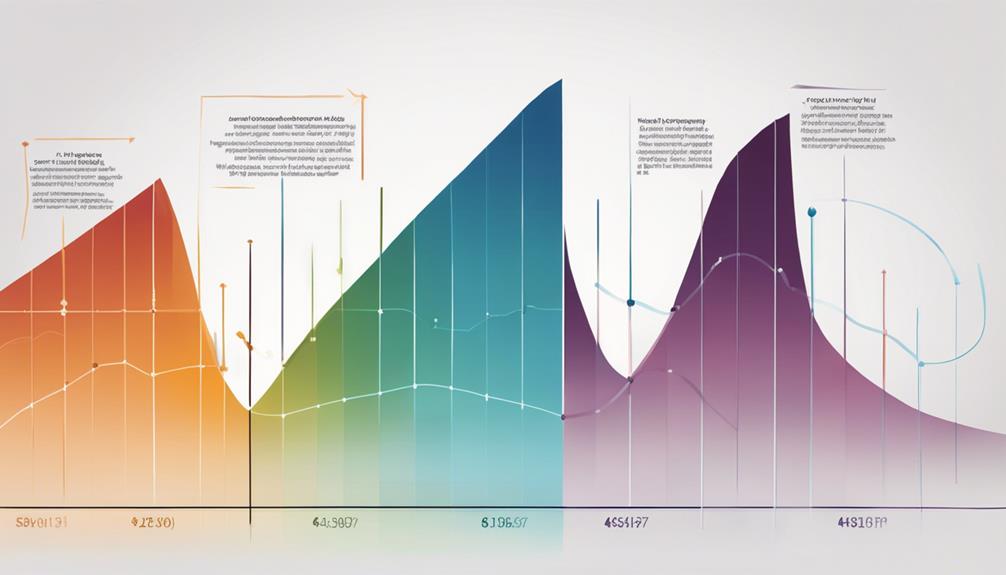
Understanding Real Estate Market Cycles
You're likely unaware that real estate market cycles are influenced by a complex interplay of economic, demographic, and psychological factors, which can either make or break your investment decisions. To navigate these cycles, you need to understand the phases, from expansion to recession, and the indicators that shape them, such as housing prices, sales volumes, and interest rates. Economic indicators like GDP, inflation, and unemployment rates also play a pivotal role, as do government policies, demographic shifts, and market sentiment. As you gain insight into these factors, you'll uncover the strategies and opportunities that can help you thrive in any market – and that's just the beginning.
Identifying Market Cycle Phases
You can identify a real estate market cycle phase by examining key indicators, such as housing prices, sales volumes, and interest rates, which reveal the market's current position within the cycle. By analyzing these indicators, you'll gain insights into the market's trends and potential risks. Recognizing market trends is important in comprehending the cycle phase, as it enables you to make informed decisions. For instance, if prices are increasing, it may indicate an upswing, whereas decreasing prices could signal a downturn.
Examining risk is also crucial in identifying the market cycle phase. You should consider factors like the overall economy, government policies, and demographic changes that can impact the market. By understanding these factors, you can predict potential risks and opportunities. Grasping market behavior is essential in predicting cycles. You need to identify patterns and correlations between indicators to anticipate the next phase. For example, if interest rates are low, and sales volumes are increasing, it may indicate an upswing.
Economic Indicators at Play
As the real estate market fluctuates, a delicate interplay of economic indicators orchestrates the cycle's rhythm, with gross domestic product (GDP), inflation, and unemployment rates playing lead roles in shaping the market's trajectory. You need to grasp how these indicators influence the market to make well-informed investment decisions.
GDP, a broad measure of economic activity, impacts the overall demand for housing. When GDP growth is robust, people have more disposable income, and the demand for housing increases. Conversely, a slowing GDP can result in reduced demand and softer prices. Inflation, which gauges the rate of price increases, also affects the market. High inflation can diminish purchasing power, making it more challenging for people to afford homes, whereas low inflation can stimulate demand.
Unemployment rates, a vital indicator of economic health, directly influence the real estate market. Low unemployment rates typically lead to enhanced consumer confidence, increased demand, and rising prices. Conversely, high unemployment rates can lead to reduced demand and lower prices. Furthermore, interest rates, which impact the cost of borrowing, play a pivotal role in shaping the market. When interest rates are low, borrowing becomes more affordable, and demand increases, driving prices up. By comprehending how these economic indicators interact, you'll be better prepared to navigate the real estate market and make intelligent investment decisions.
Government Policies and Regulations
As you analyze the real estate market cycles, you'll find that government policies and regulations play a significant role in shaping the market's trends. You'll need to take into account how monetary policy decisions, regulatory body oversight, and taxation impact analysis influence the market's fluctuations. By grasping these factors, you'll be better equipped to navigate the complex world of real estate market cycles.
Monetary Policy Effects
The Federal Reserve's manipulation of interest rates and money supply greatly influences the real estate market, causing ripples that affect property values, rentals, and investments. You see, when interest rates are low, it becomes more affordable for you to borrow money to invest in real estate, which can drive up demand and prices. Conversely, high interest rates can make borrowing more costly, reducing demand and prices. The inflation impact of monetary policy is also vital. When the Fed increases the money supply, it can lead to inflation, which can diminish the purchasing strength of your money. This, in turn, can impact the real estate market, as higher inflation can lead to elevated interest rates, reducing demand and prices.
As you navigate the real estate market, understanding how monetary policy impacts your investments is crucial. You should keep a close eye on interest rates and inflation, as they can significantly influence your returns. By doing so, you can make well-informed decisions, adjusting your strategy to maximize your gains and minimize your losses. Remember, staying ahead of the curve necessitates a deep comprehension of the intricate interplay between monetary policy and the real estate market.
Regulatory Body Oversight
Your investment properties are subject to a complex web of government policies and regulations, which can greatly impact your real estate portfolio's performance. As an investor, it's important to stay informed about the regulatory landscape to mitigate risks and capitalize on opportunities. Regulatory bodies, such as the Federal Reserve and state-specific agencies, oversee the real estate industry to ensure consumer protection and maintain industry standards.
These bodies implement policies and regulations that affect everything from lending practices to property development. For instance, the Dodd-Frank Act introduced stricter lending standards to prevent another housing market crash. Similarly, local zoning laws and building codes dictate how properties can be developed and used.
Understanding these regulations is essential to navigating the real estate market successfully. You must stay up-to-date on changes to regulations, such as those related to environmental sustainability and accessibility. By doing so, you can avoid costly compliance issues and identify opportunities to diversify your portfolio. Effective regulatory body oversight is crucial to maintaining a healthy and thriving real estate market, and as an investor, it's your responsibility to stay informed and adapt to these changes.
Taxation Impact Analysis
You'll need to factor in taxation when analyzing the impact of government policies and regulations on your real estate investments, since tax laws and incentives can greatly influence your portfolio's performance. Taxation impact analysis is vital in comprehending how government policies affect your investments. You should consider how changes in tax laws and incentives can influence property values, rental income, and overall returns on investment.
For instance, if the government introduces tax breaks for real estate investors, it may lead to increased demand, driving up property values. Conversely, if tax laws become more stringent, it may lead to decreased demand, causing property values to plummet. You should stay up-to-date with changes in tax laws and regulations to adjust your investment strategy accordingly. A thorough taxation impact analysis will help you make informed decisions, minimizing risks and maximizing returns. By understanding the taxation impact of government policies, you'll be better equipped to navigate the intricate world of real estate investing and achieve your financial goals.
Demographic Shifts and Trends
As you explore the real estate market cycles, you'll notice that demographic shifts and trends play a significant role in shaping the industry. You're likely wondering how changes in population demographics will impact the market, and what trends are emerging as a result. Let's take a closer look at how an aging population, urbanization and migration, and shifting family dynamics are influencing the real estate market.
Aging Population Impact
The aging population's significant impact on the real estate market is becoming increasingly evident, with demographic shifts and trends emerging that will shape the industry's future. As you explore the realm of real estate, you'll notice that the growing number of seniors is driving changes in healthcare demands and housing preferences. You'll see a surge in demand for age-friendly homes, senior living communities, and healthcare facilities, particularly in areas with high concentrations of older adults. This shift will also influence the types of amenities and services that developers and investors prioritize, such as accessibility features, community programs, and on-site healthcare services. Additionally, you'll observe a greater emphasis on intergenerational living, with seniors seeking to live near family members or in communities that cater to multiple age groups. As you navigate the intricate world of real estate, it's crucial to understand these demographic trends and adapt your strategies to meet the evolving needs of an aging population.
Urbanization and Migration
As you explore the realm of real estate market cycles, it's vital to comprehend the impact of urbanization and migration. Urbanization's relentless pace is reshaping real estate markets, driven by people flocking to cities for improved job opportunities, cultural diversity, and access to amenities, which in turn ignites a surge in demand for housing, infrastructure, and services.
This demographic change has significant implications for city development and the real estate market. You'll observe:
- A rural exodus, with individuals departing rural areas for urban hubs, leading to a concentration of population and economic activity in cities.
- An escalating demand for housing, pushing up prices and rents, and exerting pressure on developers to construct more units.
- Stress on existing infrastructure, necessitating substantial investments in transportation, utilities, and public services.
- Fresh opportunities for real estate investors and developers, as they meet the requirements of a growing urban population.
As you navigate the intricate realm of real estate market cycles, it's critical to stay abreast of these trends and adjust your strategies accordingly.
Shifting Family Dynamics
By 2025, you'll likely notice that shifting family dynamics, driven by demographic shifts and trends, are rewriting the rules of real estate demand and supply. Changing lifestyles and generational shifts are transforming the way people live, work, and interact with each other. For instance, the rise of single-person households and multi-generational families is altering the demand for housing types and sizes.
| Demographic Shift | Impact on Real Estate | Examples |
|---|---|---|
| Increasing singles | Growing demand for studio apartments and tiny homes | Urban centers, micro-units |
| Multigenerational families | Need for larger homes with flexible spaces | Suburban areas, multi-story homes |
| Aging population | Focus on accessibility and age-friendly features | Retirement communities, senior living facilities |
| Delayed marriage and parenthood | Shift to urban rentals and shared living spaces | Co-living spaces, communal living |
| Diverse family structures | Growing demand for inclusive and adaptable housing | Flexible floor plans, community-oriented design |
The impact of technology and cultural influences is also significant. Virtual workspaces, online communities, and social media are redefining the concept of 'home' and 'neighborhood.' As a result, you'll see a growing demand for housing that incorporates technology, sustainability, and community engagement. By grasping these shifting family dynamics, you'll be better equipped to navigate the intricacies of the real estate market.
Supply and Demand Imbalance
During periods of rapid economic expansion, you're likely to experience a surge in housing requests, which often surpasses available stock, leading to an imbalance that can greatly influence the real estate market. This imbalance can cause significant price changes, as buyers compete for a limited number of properties. In areas with a housing deficit, prices may soar, making it challenging for first-time buyers or those on a tight budget to enter the market.
On the flip side, when the economy slows down, you may see an excess of inventory, leading to an overflow of properties on the market. In this situation, prices may decline, and sellers may struggle to find buyers. Moreover, shifts in rental demand can also affect the market. For example, if rental requests increase, you may observe a hike in rental rates, which can, in turn, boost property values.
Here are some key takeaways to keep in mind regarding supply and demand imbalances:
- A surge in demand can result in price hikes and a housing deficit
- An excess of inventory can lead to price decreases and a buyer's market
- Changes in rental requests can influence property values and rental rates
- Understanding the balance between supply and demand is essential for making well-informed real estate decisions
Market Sentiment and Psychology
You'll find that market feelings and psychology play a significant role in shaping the real estate market, as emotions and perceptions can influence your buying and selling decisions. As an investor, understanding how market feelings and psychology impact investor behavior and, subsequently, market trends is of utmost importance. When the market is on an upswing, optimism and FOMO (fear of missing out) can drive prices higher, leading to a self-reinforcing cycle. Conversely, when the market is declining, fear and panic can exacerbate the downturn.
Market psychology is a crucial aspect of sentiment analysis, as it helps you understand the emotional drivers behind market trends. By analyzing market feelings, you can identify patterns and trends that may not be immediately apparent from a purely numerical analysis. For instance, if market feelings are overly bullish, it may be a sign of an impending correction. Conversely, if feelings are overly bearish, it could signal a buying opportunity.
As you navigate the real estate market, being conscious of your own emotional biases and those of other investors is essential. By doing so, you can make more informed decisions, rather than being swayed by the whims of the market. By combining market psychology with sentiment analysis, you'll be better equipped to identify opportunities and avoid pitfalls in the ever-evolving real estate terrain.
Historical Market Cycles Analysis
Analyzing historical market cycles helps investors identify recurring patterns and trends, providing valuable insights into the real estate market’s behavior. By examining past cycles, you can gain a deeper insight into how the market responds to various economic and demographic factors. This knowledge enables you to make more informed investment decisions and develop effective strategies for maneuvering through different market conditions. Additionally, understanding these historical patterns allows investors to anticipate potential market shifts and align their investment strategies accordingly. For instance, knowing when to enter or exit the market can significantly enhance profitability and reduce risk. Furthermore, as you navigate the complexities of real estate transactions, being familiar with the steps in the closing process is essential for ensuring a smooth and successful deal.
To conduct a thorough historical market cycles analysis, you'll want to:
- Study case studies of previous market cycles, identifying key characteristics and trends
- Review historical data on market indicators such as prices, sales volumes, and rental yields
- Analyze the impact of external factors like interest rates, GDP growth, and government policies on the market
- Examine the performance of different property types and locations during various market phases
Timing the Market for Success
To time the market for success, pinpointing the best moment to buy or sell is crucial, as it can greatly impact your investment's profitability. You must understand the intricacies of market psychology and investor behavior to make informed decisions. When you're aware of the market's emotional state, you can capitalize on opportunities that others might overlook.
Here's a breakdown of strategic timing and market entry:
| Market Phase | Investor Behavior | Action |
|---|---|---|
| Boom | Fear of missing out (FOMO) | Sell or vary |
| Bust | Panic and desperation | Buy or retain |
| Recovery | Caution and skepticism | Buy or join |
During a boom, investors often experience FOMO, driving prices up. It's an ideal time to sell or diversify your portfolio. Conversely, in a bust, panic and desperation set in, making it a prime opportunity to buy or hold onto your assets. In a recovery phase, investors are cautious and skeptical, making it an attractive time to enter the market.
Frequently Asked Questions
How Do I Protect My Investments During a Market Downturn?
When the market experiences a downturn, you need a solid plan to safeguard your investments. You're wise to think ahead! To protect your assets, spreading out your investments is crucial – don't concentrate all your resources in one area. Implementing risk management strategies, like hedging and spreading out investments, will help you weather the storm. By distributing your investments across various asset classes, you'll decrease your vulnerability to market volatility and lessen potential losses. Stay ahead of the game and secure your financial future.
Can I Time the Market Perfectly to Buy or Sell a Property?
'Ah, you're a mastermind who can time the market perfectly, huh? Sorry to burst your bubble, but no one can consistently predict market ups and downs. Market timing is a risky game, and even the pros get it wrong. Instead of pursuing perfect timing, concentrate on solid investment strategies that work in any market. Embrace the uncertainty and vary your portfolio to minimize risks. You'll sleep better at night, and your investments will thank you.'
Are Real Estate Market Cycles the Same Across Different Regions?
You're wondering if real estate market cycles are consistent across different regions. The answer is no, they're not. Regional differences play a significant role in shaping market trends. What's happening in one area might not be happening in another. You'll find unique factors influencing local markets, such as economic conditions, demographics, and government policies. These variations will impact when and how market cycles unfold, making it essential to understand the specific regional dynamics before making investment decisions.
How Do Interest Rates Impact the Real Estate Market Cycle?
You'd think interest rates would be the last thing on your mind when buying a home, but they're indeed the key to accessing the real estate market cycle. When mortgage rates drop, housing demand surges, and prices rise. But, ironically, low rates can also indicate economic uncertainty, making it a double-edged sword. As economic indicators fluctuate, you must stay ahead of market fluctuations to navigate the cycle successfully.
Can Government Incentives Stabilize the Real Estate Market Cycle?
You're wondering if government incentives can stabilize the real estate market cycle. The answer is, they can, but it's not a certainty. Government intervention, such as tax credits or subsidies, can boost demand and stimulate growth. Yet, if not implemented thoughtfully, these incentives can create artificial markets, leading to long-term instability. You need to contemplate the delicate balance between market stability and government involvement to guarantee sustainable growth.